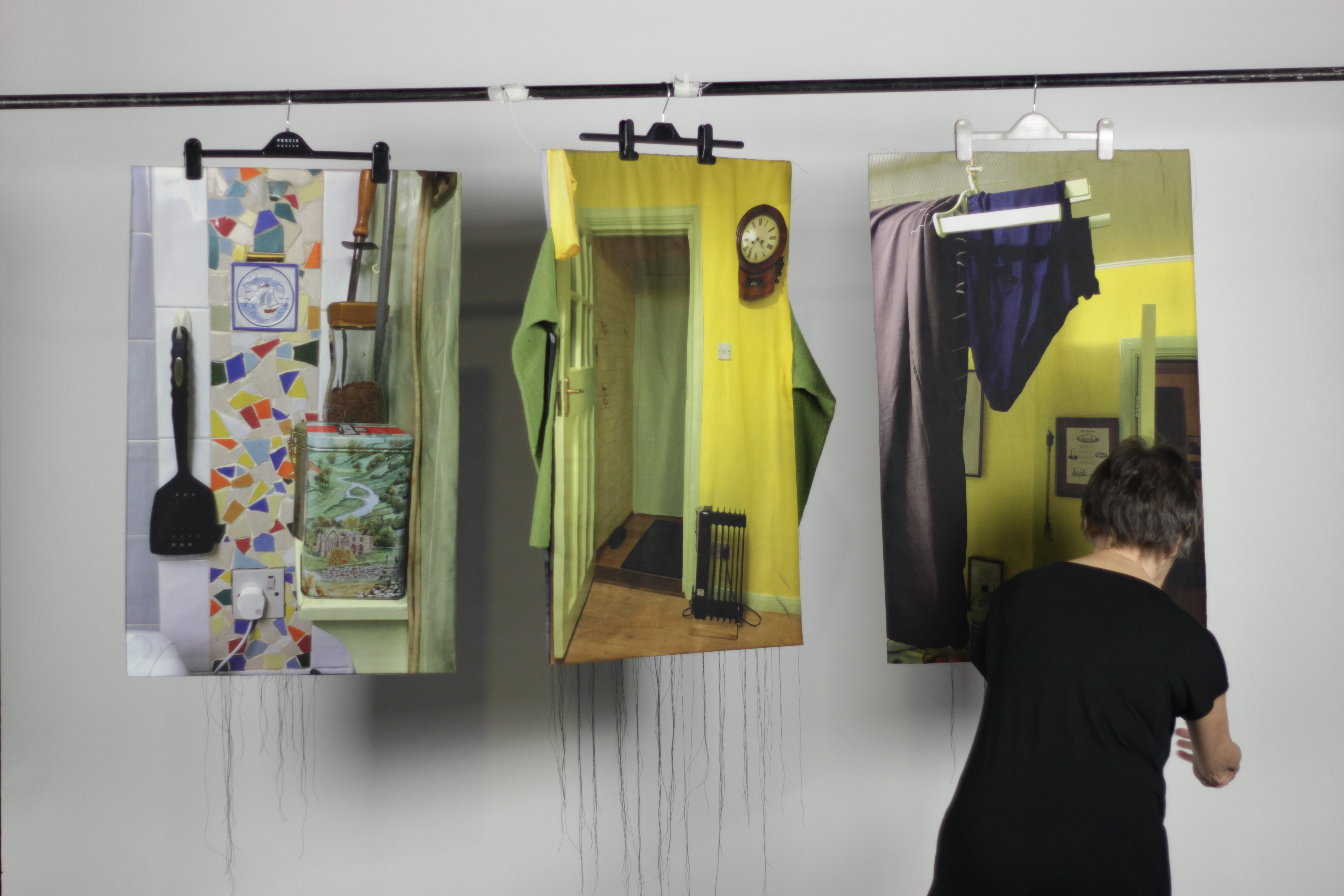
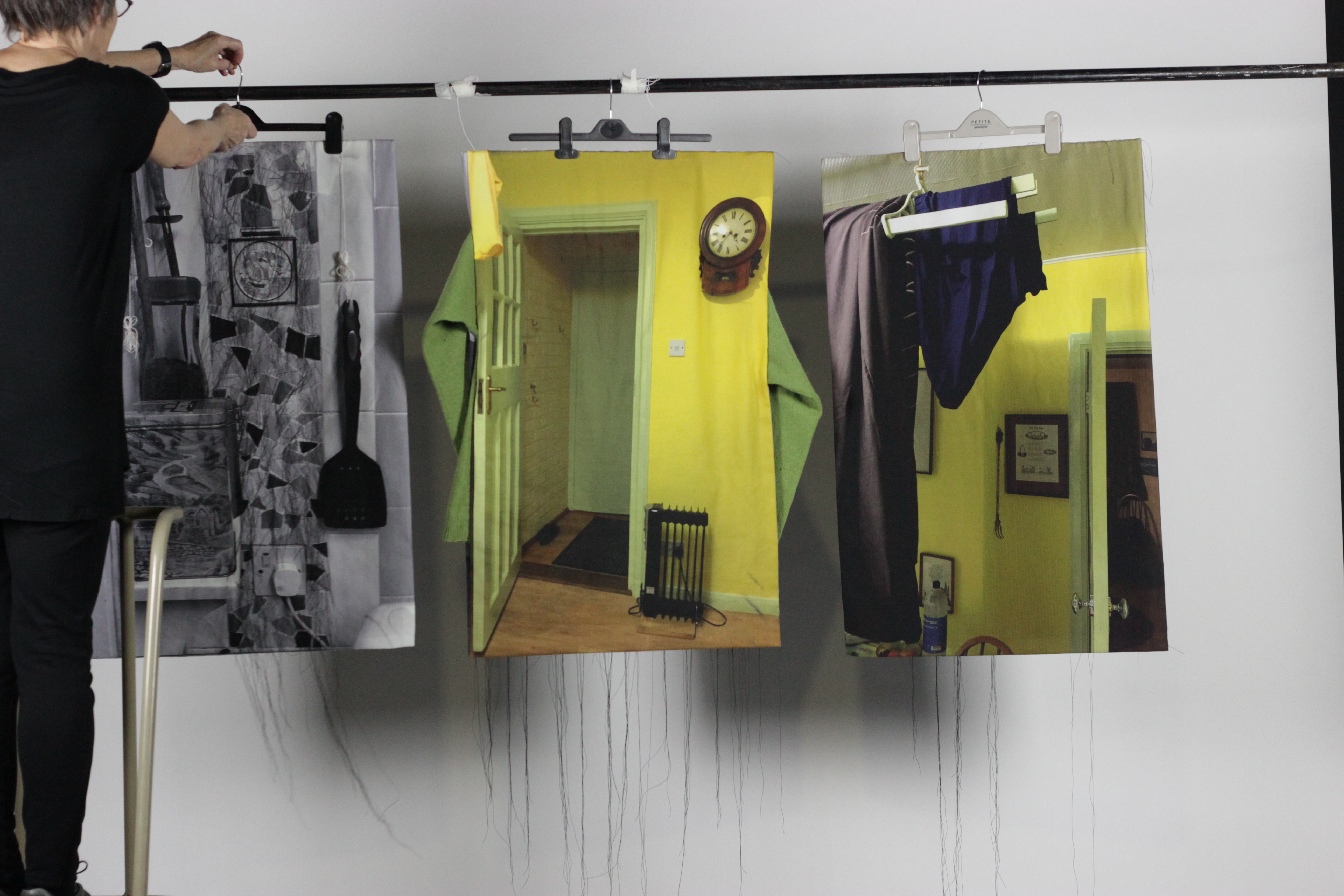
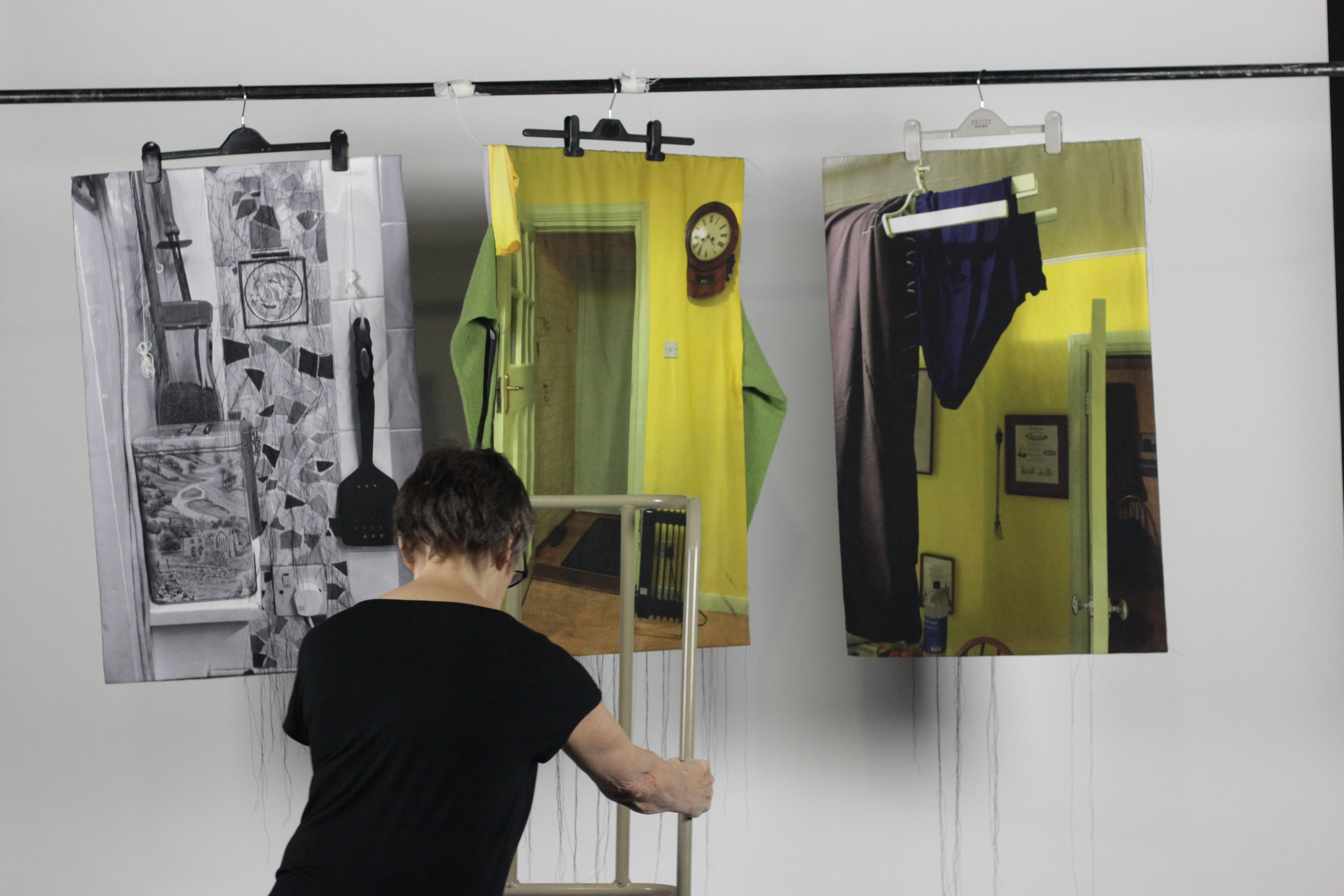
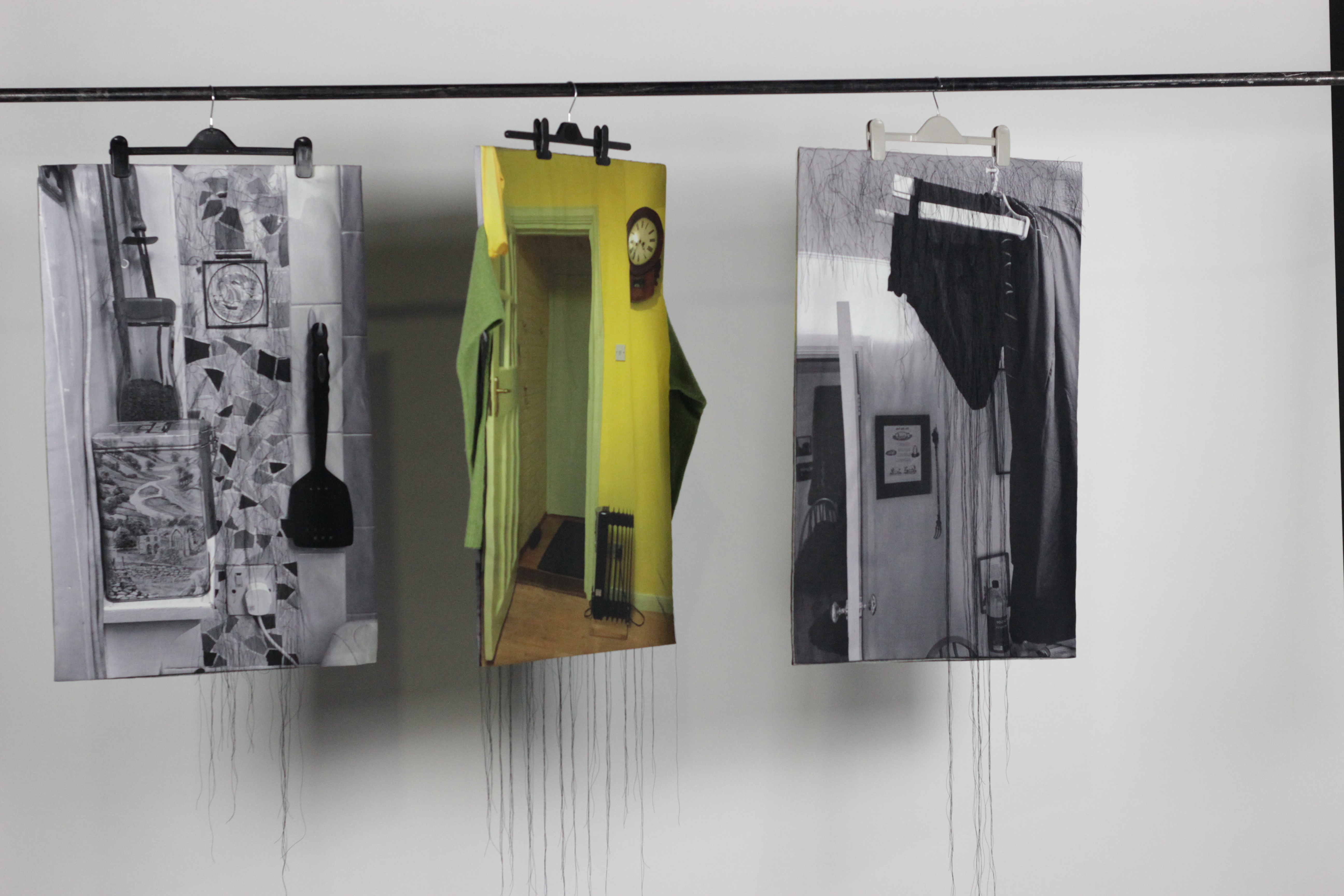
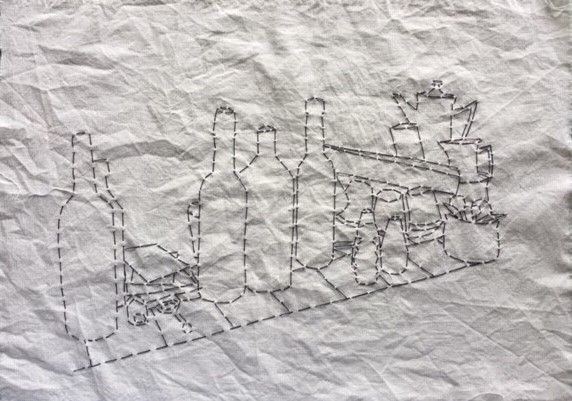
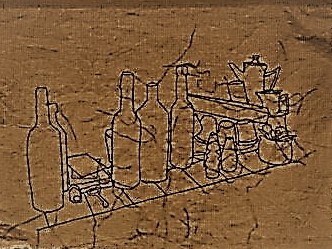
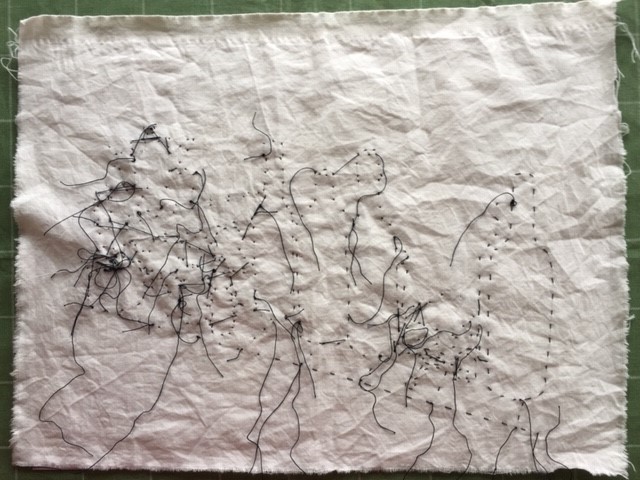
The End of Year Show – Room 101

Goneness and loose ends

Setting up the exhibition has been an emotional affair. Lots of periods of quiet contemplation in the space. Everyone aiming for the best possible outcome, some of us questioning decisions made and directions taken. Still, it has been good to get to this stage, to set up the exhibition space and hang our work.

Didn’t expect to be painting the walls. The room is transformed.
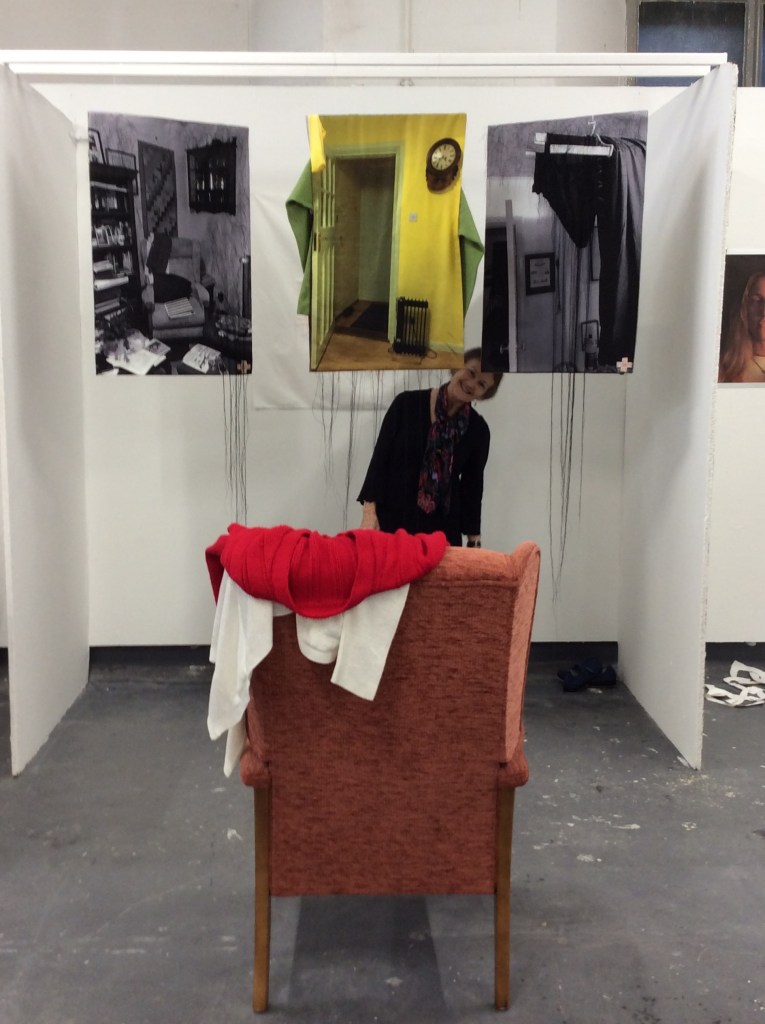
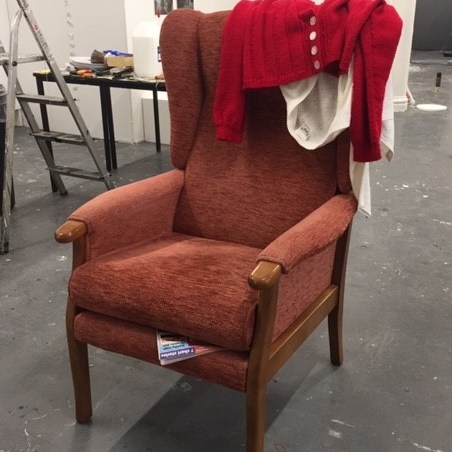
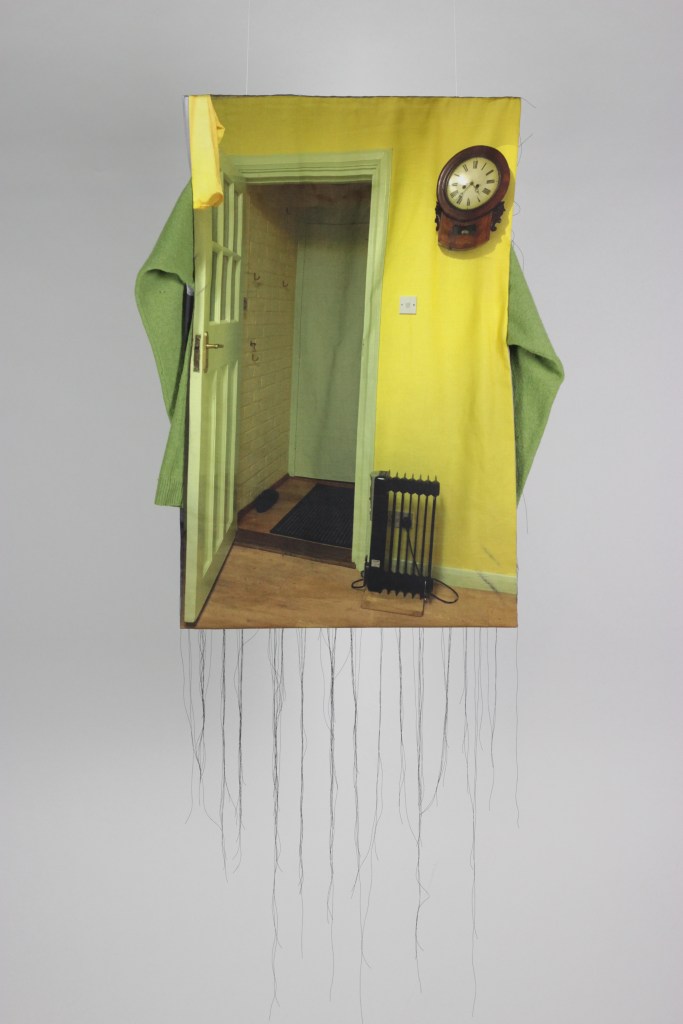
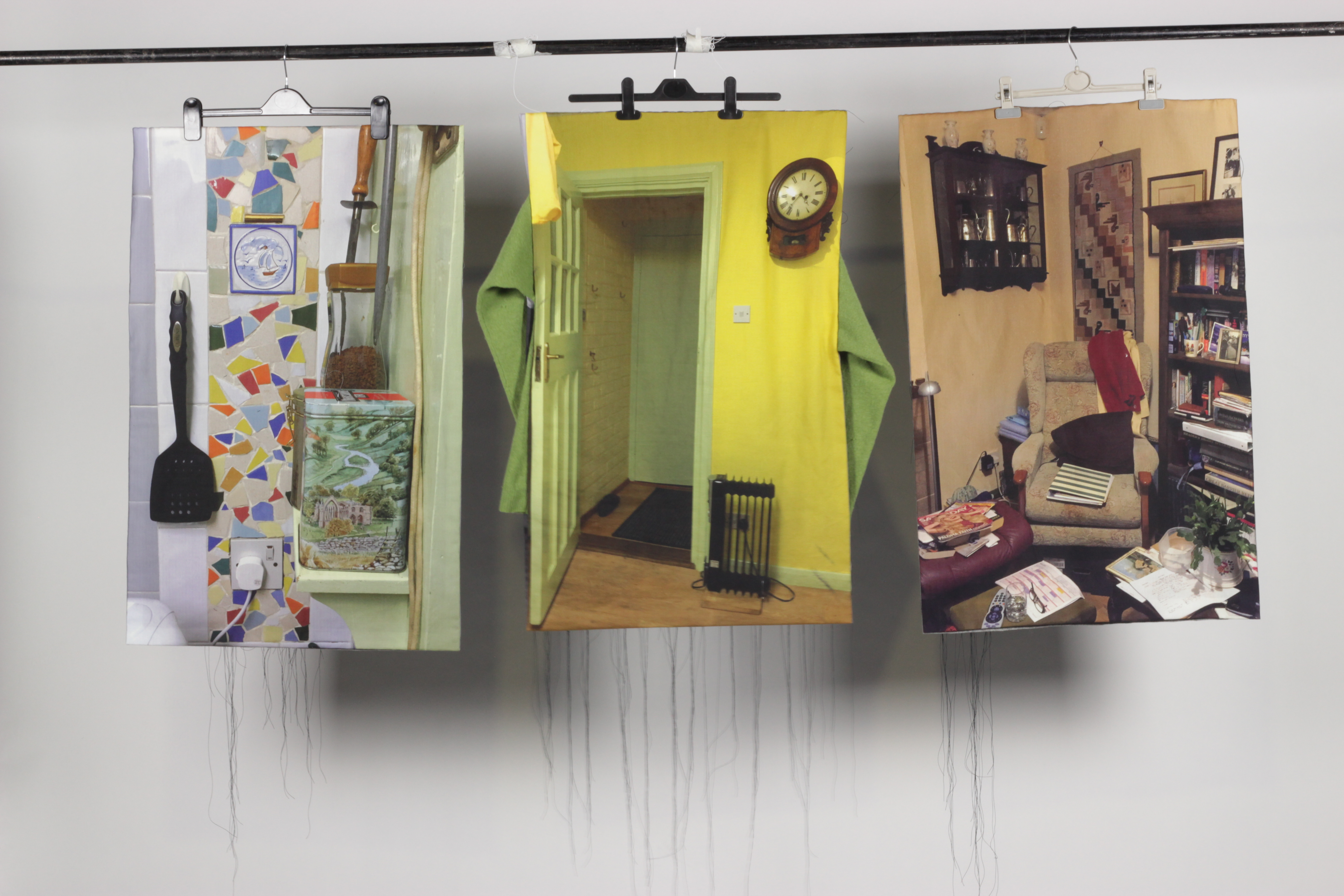
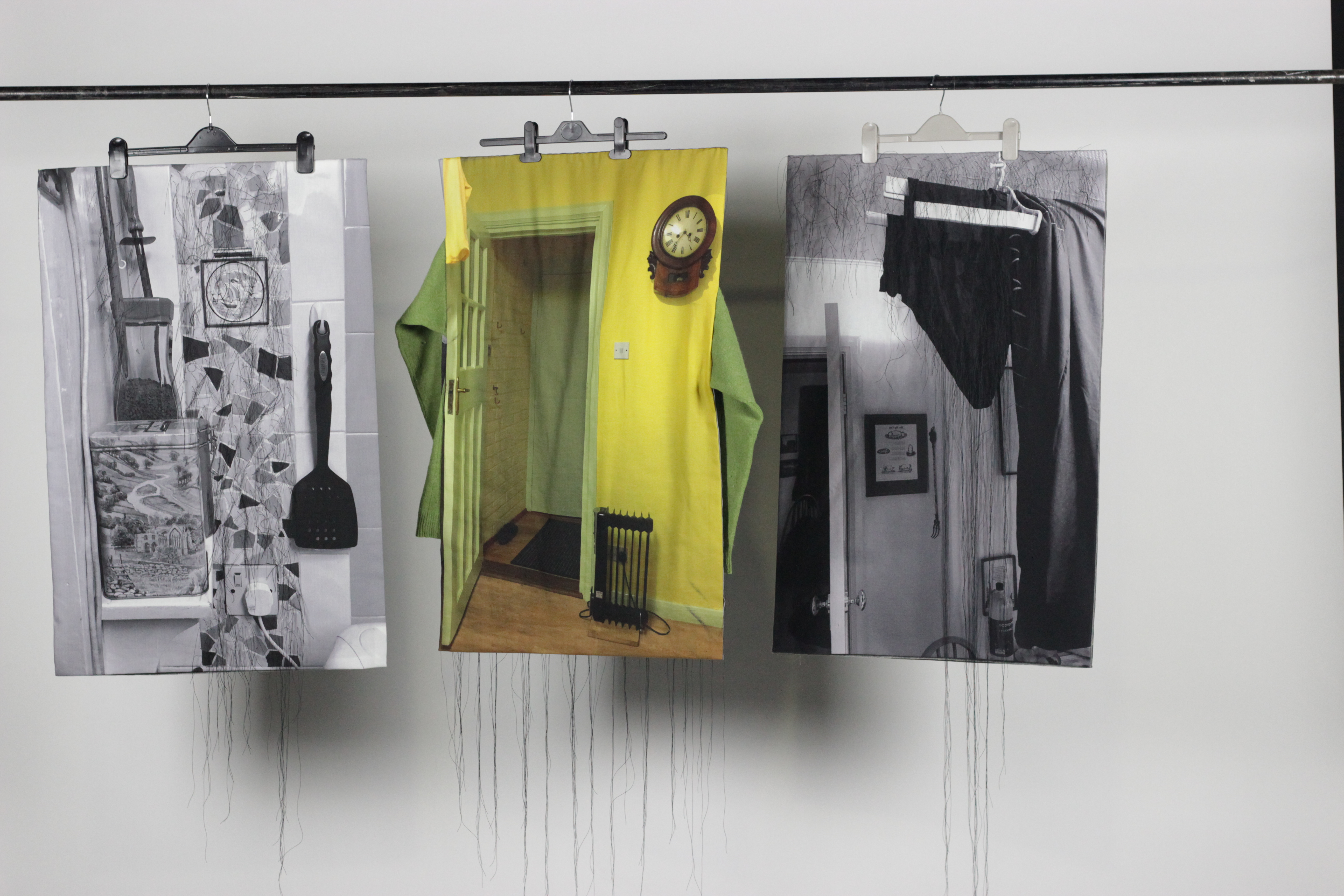
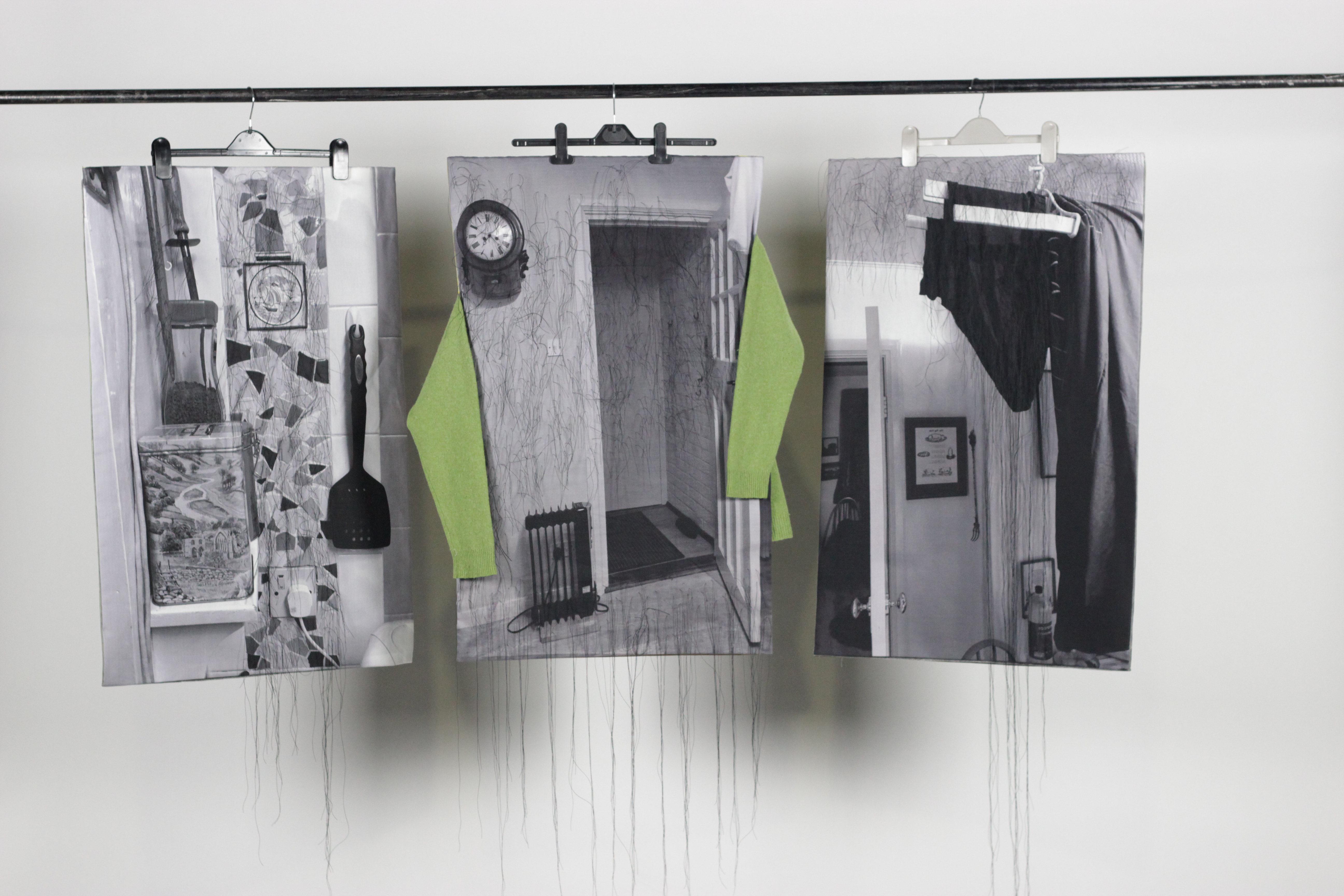
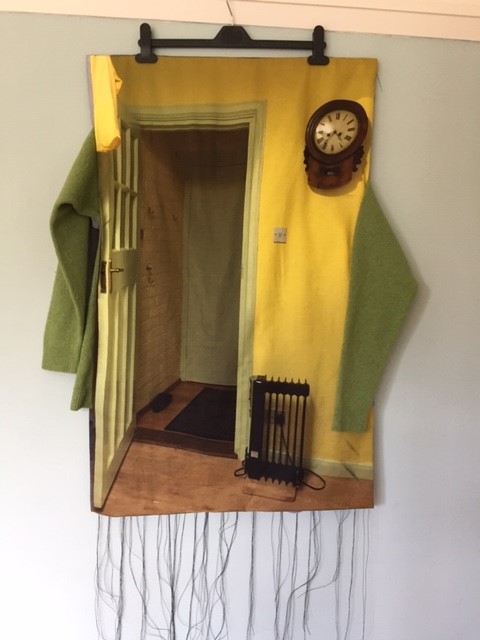
Finally everything is in place. Two large pieces were set aside. I had created more than was needed and so was able to choose the best images for the exhibition. Two more would have crowded the space. The rail seemed heavy at first but it chimes well with the “Sheila Maid” used regularly by my mother to dry clothes in the winter. Her chair which I had envisaged from the outset was used by her in her care home. It belongs to my sister now so I have borrowed it. All three cardigans belonged to my mother. She seemed to have a lot. A mix of bought and hand knitted. Some how they have remained in my home since her death, evidence of her knitting and running a “Kay’s Catalogue” in the village.

The “loose ends” – lots of them – will remain for ever and I guess the state of “goneness” I hoped for might not come, since memory, I have found is so capricious.
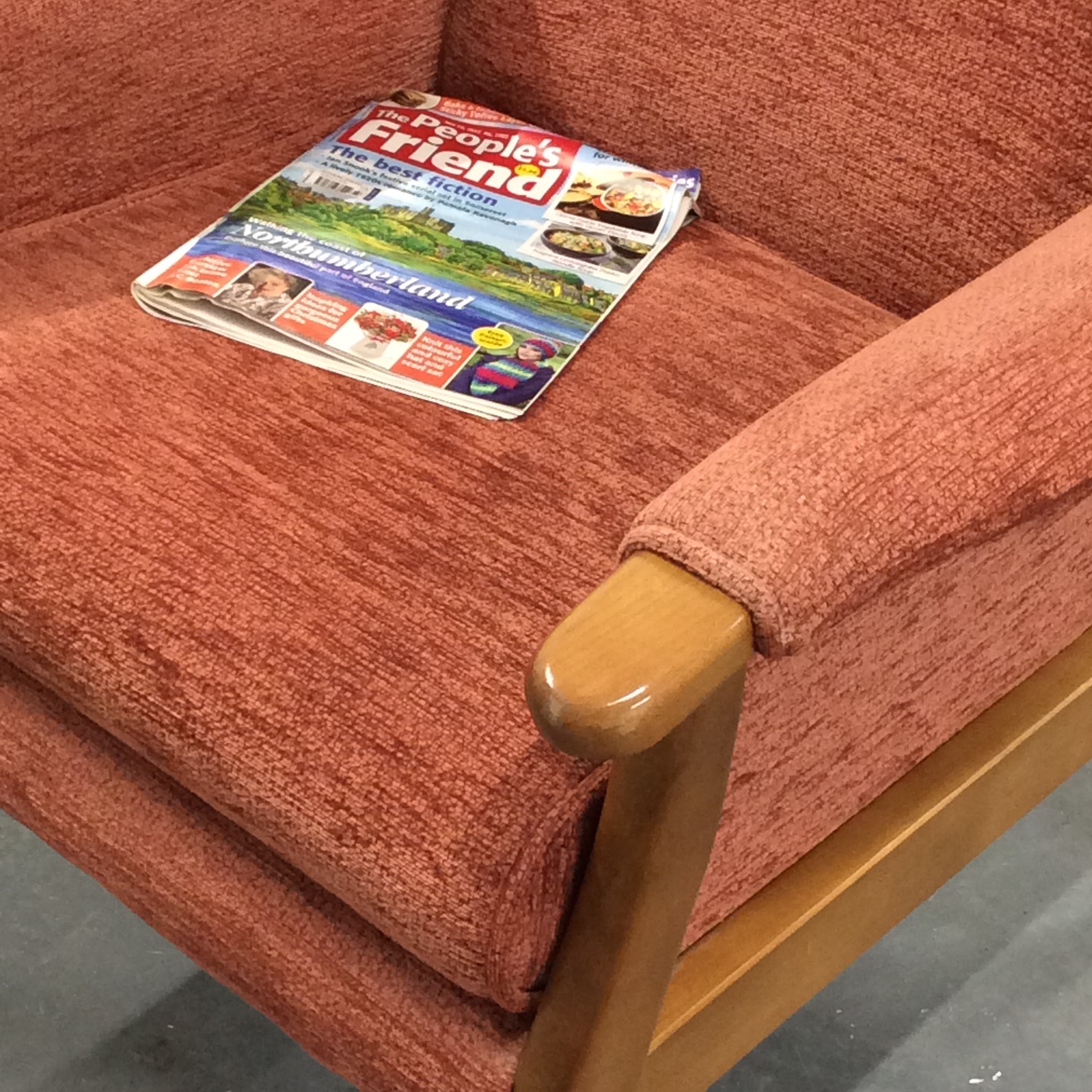
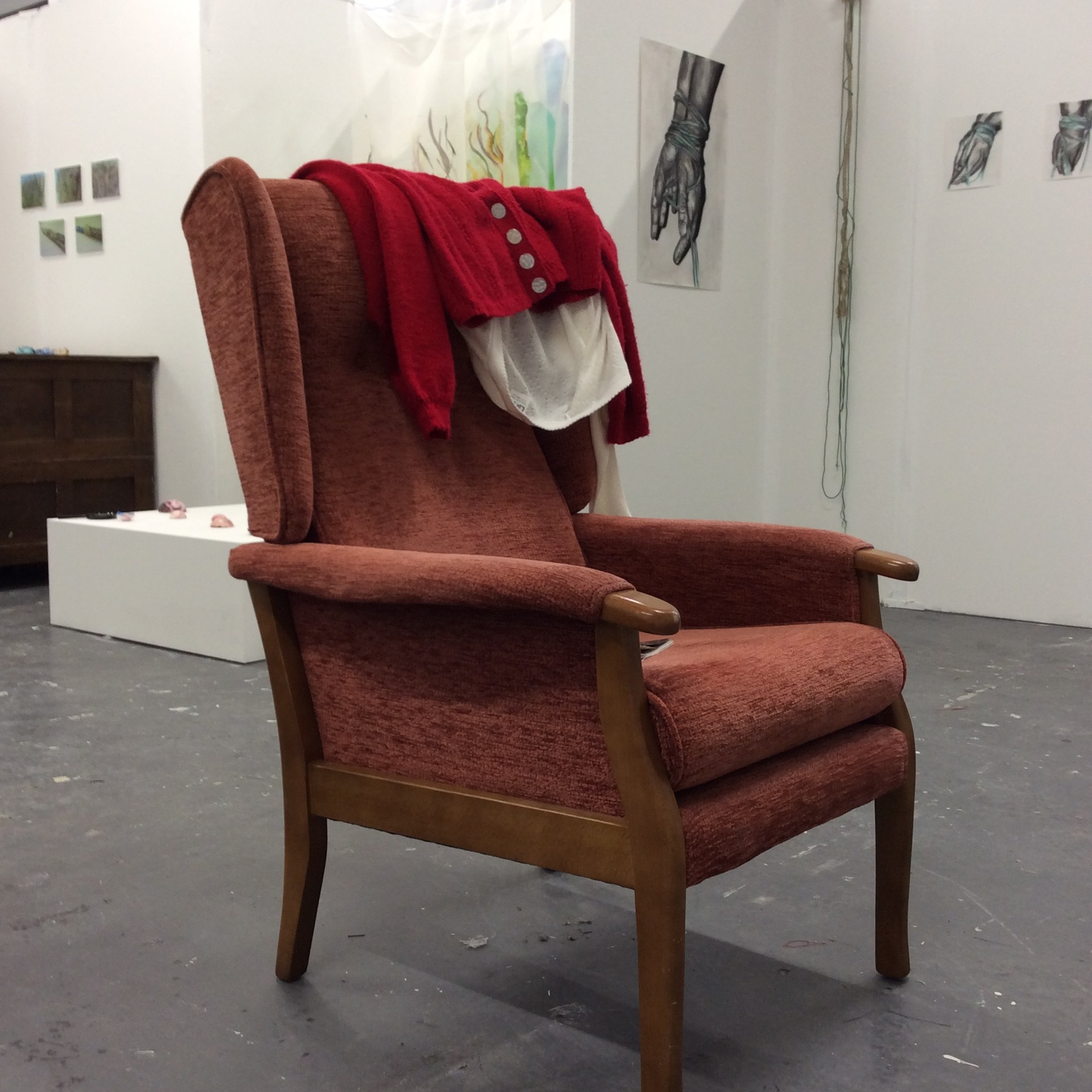
I found the “People’s Friend” magazine under the chair seat with an envelope addressed to “Mum”.
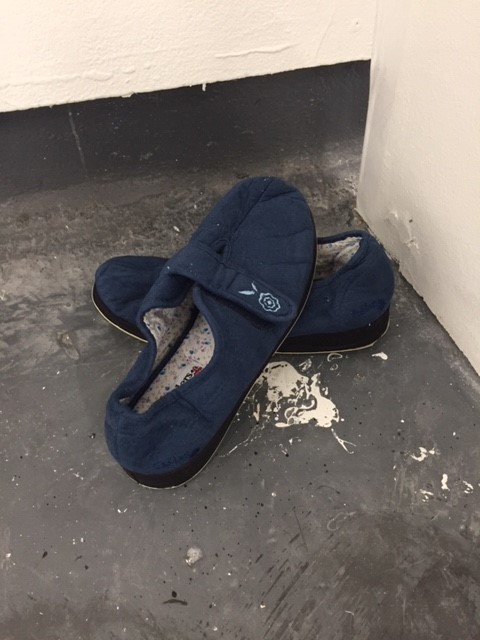
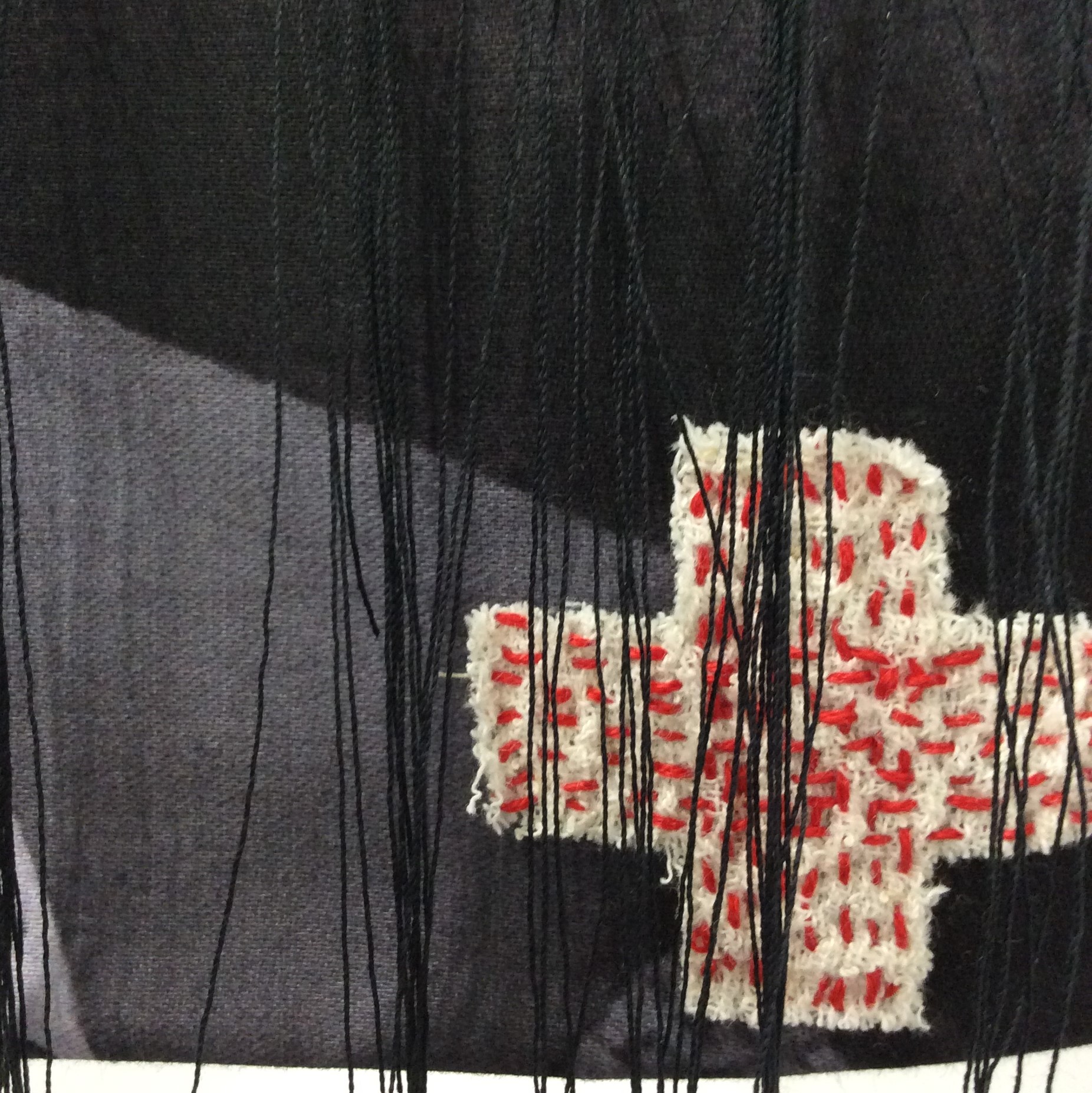
“I used to be a nurse you know”

I think I have been stitching her into my memory. More loose ends than I thought.
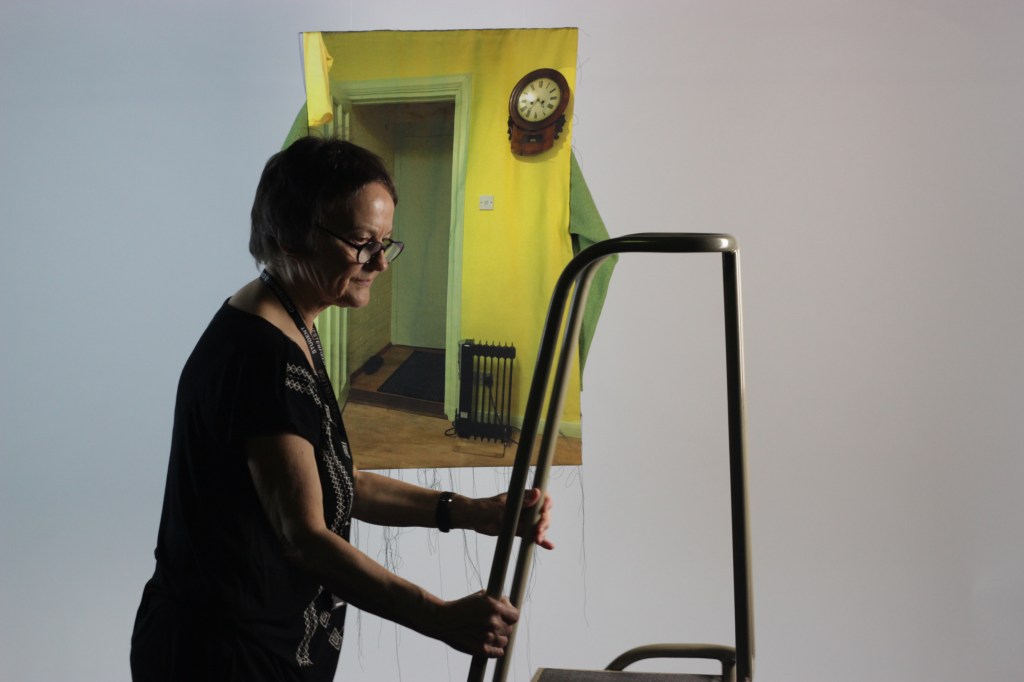
The final outcomes

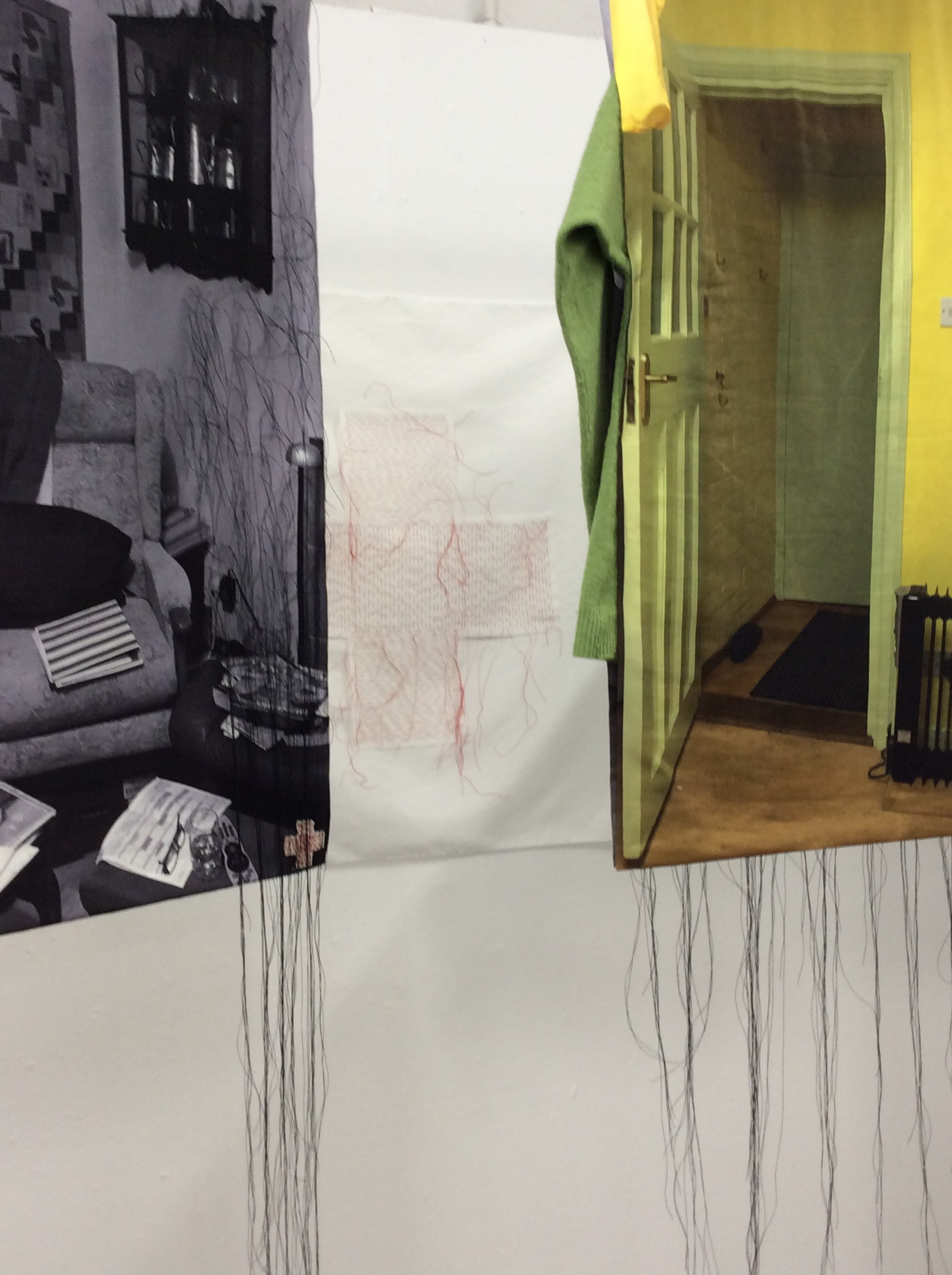
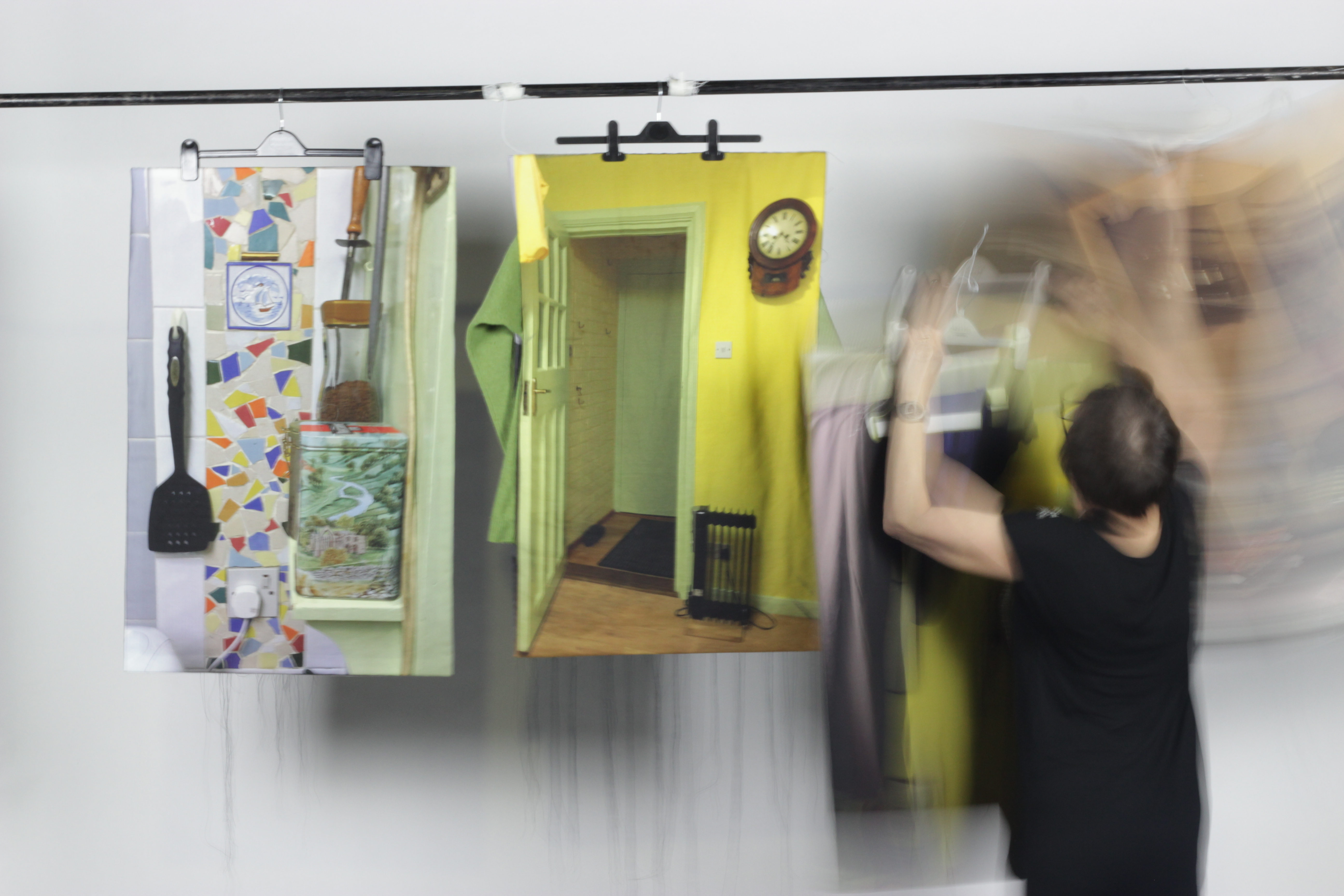
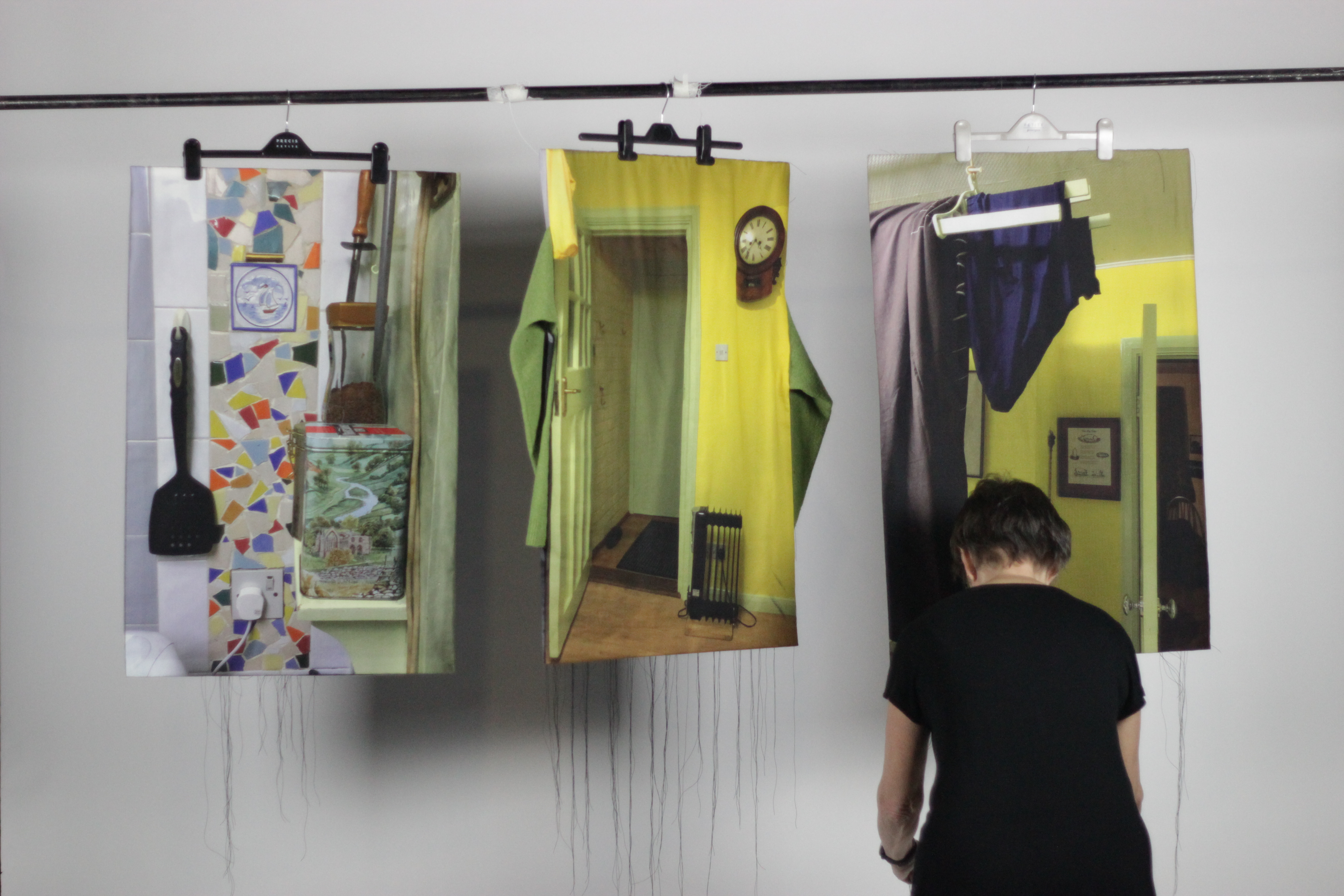
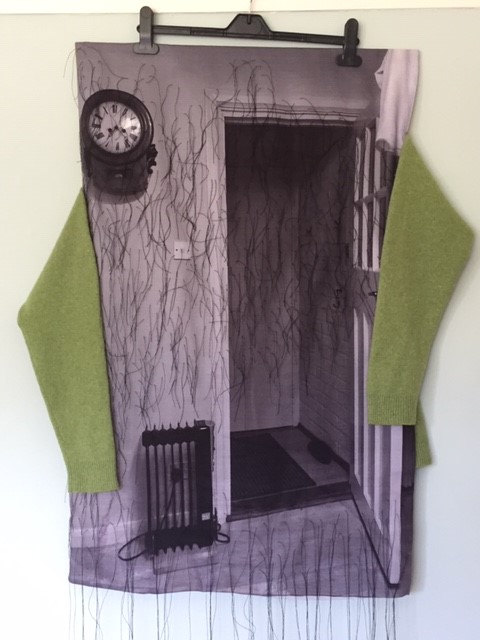
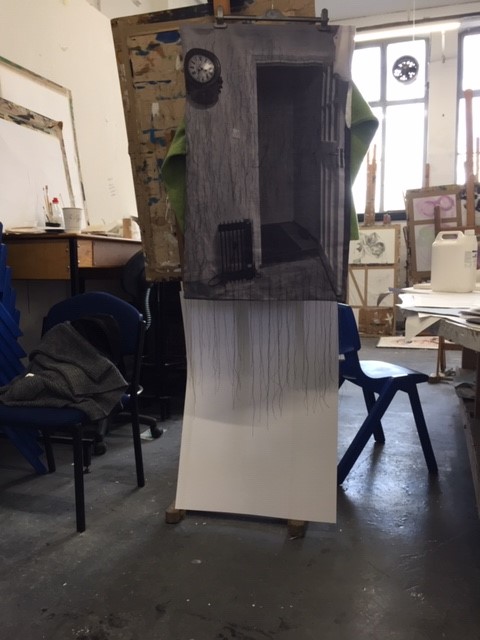
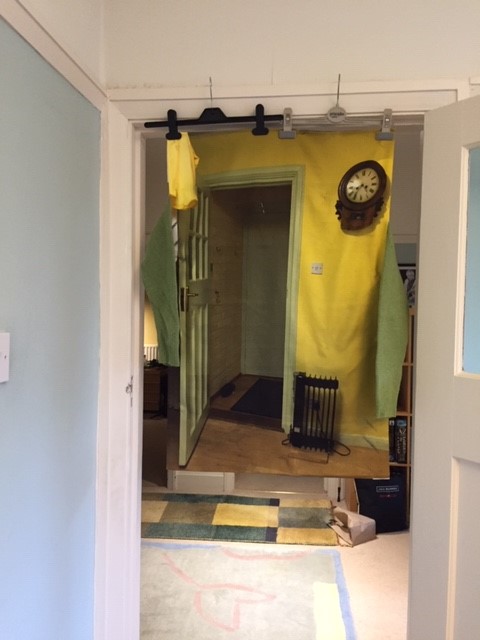
Over the past week I have worked every free waking hour to complete fabric photographs. I’m not sure what to call them. Are they textiles? I have made five pieces. One with a cardigan inserted and many loose ends. Three with loose ends. The fifth has two sides but no loose ends. I anticipate that I have more than I need but I wanted choice at the point of the exhibition installation. Today I am working in the Photographic Studio with Ben (technician) and Ricki (fellow student) to take photos of the five. It will help me to decide which to use and provides a different angle on presentation.

It’s a serious business!

The hanging method is good (fine cotton crochet thread is discreet but slow. Good for the exhibition if there is time and patience.

For speed I have used clothes hangers to move the pieces around. I especially like the shadows behind some of the slides. The coat hangers work well with the domestic nature of the work. It will be necessary to get close to the work. I hope people will move around and go back and forth to look. Is it all too obvious? I wanted to make the photographs talk more. I hope I have succeeded.

Final outcomes – almost

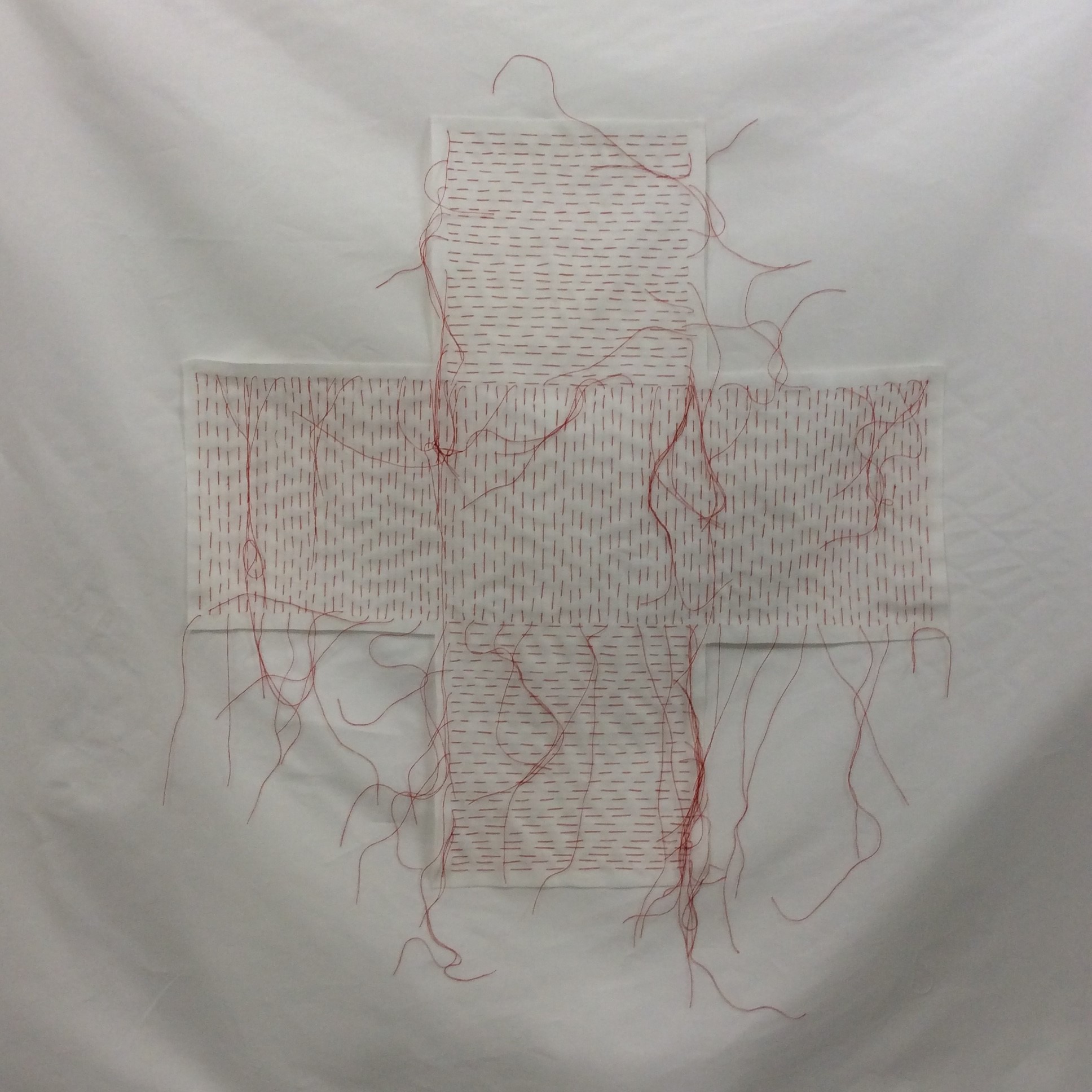
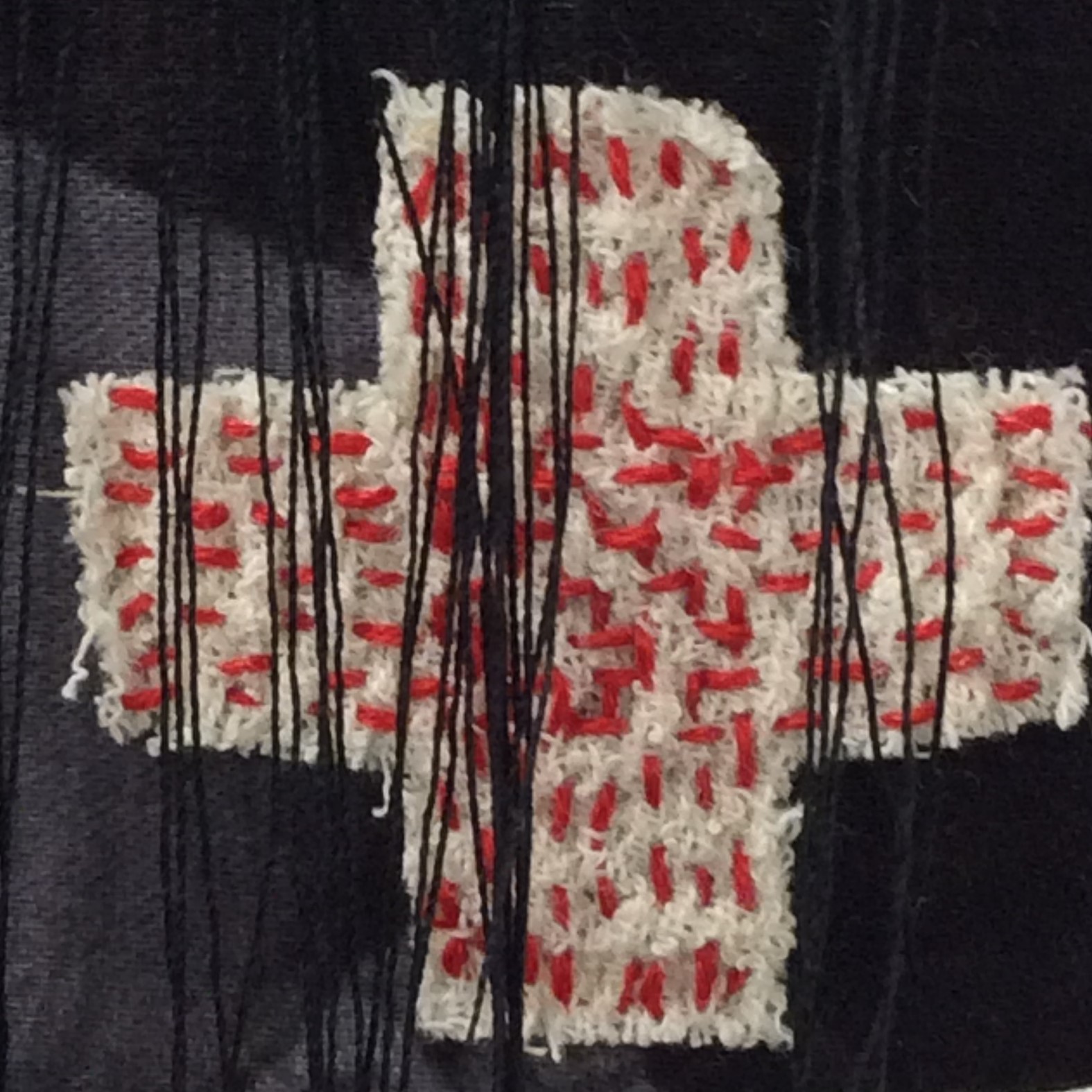
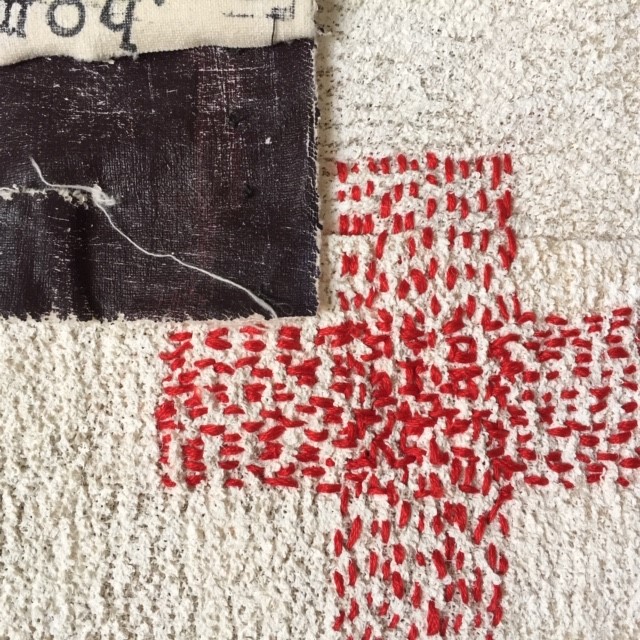
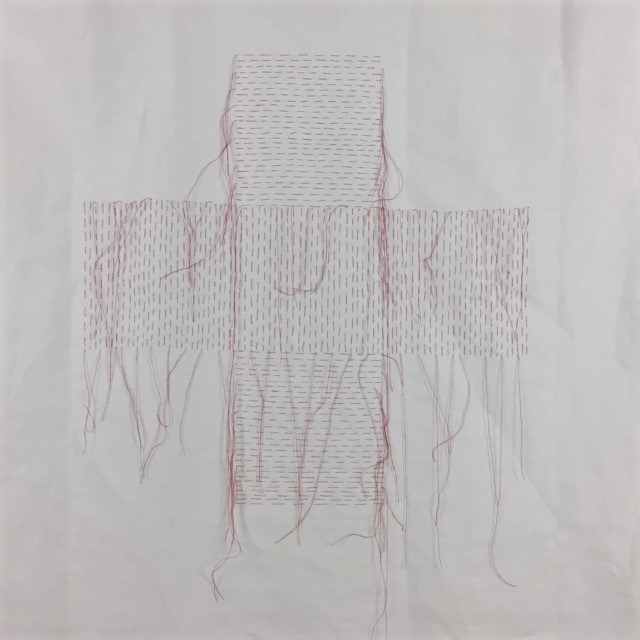
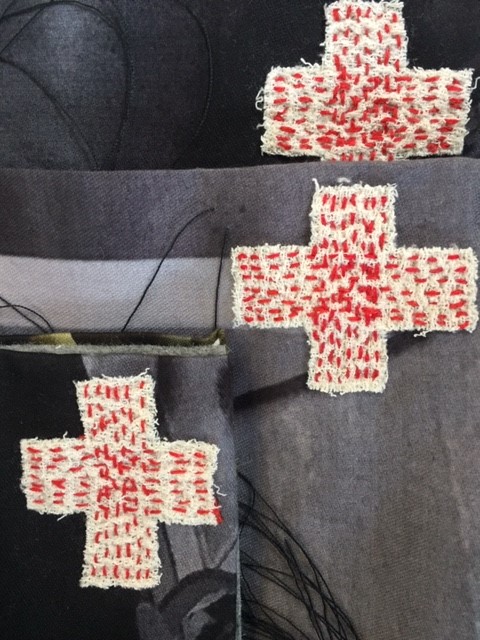
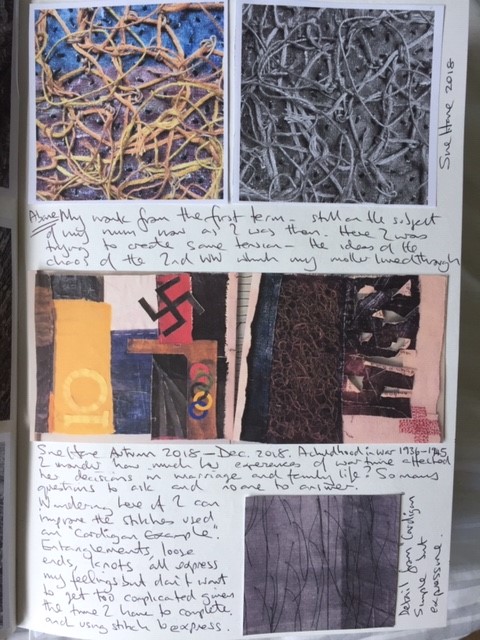
I have made small red crosses using embroidery threads. They are influenced by work by Hannah Lamb and Lynn Setterington. I used the symbol in earlier work during this course in which I explored my mothers life from 1936 to 1946 (10 years to 20 years of age). During this period she did well at school, trained to be a nurse, won medals and met her husband to be who reputedly said “there will be no marriage if Sheila doesn’t stop working”.

Even now there are men with loud voices who think we women should get back into the kitchen and not have access to maternity rights.

David Orme at Sidney and Matilda Gallery Sheffield

Apart from working on my bibliography and strengthening aspects of my final outcome I arranged to meet Jo to go to David Ormes’s exhibition “LOT”. It seemed relevant to us both. His method is to paint large pieces of canvas which he then draws by cutting until a shape reveals itself. It most likely will not have a function, the shapes are abstract but he does transform painted canvas into new forms. Through his method he is creating, collecting and arranging objects which the viewer tries to make sense of. There are similarities with my muddling through my mother’s life to try to understand it. Like David Orme’s huge canvas’s I never will fully grasp it, her life can only be appreciated by looking at what I can see, touch and feel.
On the left Ninteen Solid Objects (1) and on the right Twenty Two Solid Objects (2) Acrylic, oil, cotton twill, felt lined box frame

A very helpful and friendly person. I hope he manages to sell some of his work. It works at its best large scale. It is tactile, restful and intriguing.

Family feedback

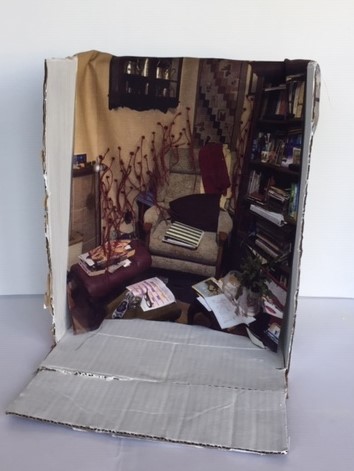
I had a family visitor today, my sister Ann. I wanted her to see the work before the private exhibition. She understood it all immediately. I showed her the cardigan version. My husband Phil, said he didn’t get the cardigan. Ann replied immediately that “It looks like she’s in there, that’s it”. “You’ve been on a journey” she reflected. The loose ends resonated with her. We have lots of them. She spotted the box version, with extrusions from the wall and this led us to sharing our feelings about discomfort in certain places at home as children. Anxious anticipation. She suggested a bright element to the black and white side to represent motherhood, parenting and children. This was strange because someone else had suggested this. However, although motherhood was important to mum I think the NHS nursing cross better reflects her true self, her lost career replaced by marriage and its trappings. From my perspective she unwittingly influenced me to be very independent the exact opposite to herself in marriage.

After Ann left I realised that I had not specifically followed up artists who analyse the concept of trauma. I had explored, for example Louise Bourgois and Tracy Emin who take a lot of influences from childhood. Dorothea Tanning who makes no claims to trauma but her work seems to me to be saying something about the experience of growing up and family life. Then there is Paula Rego – her themes are ownership, use/misuse of power, childhood and sexual harms. So next I read Kulasekara’s essay on Representation of Trauma in Contemporary Arts which was interesting http://www.athensjournals.gr/humanities/2017-4-1-3-Kulasekara.pdf and provided more to think about in the future.

Prevaricating as usual

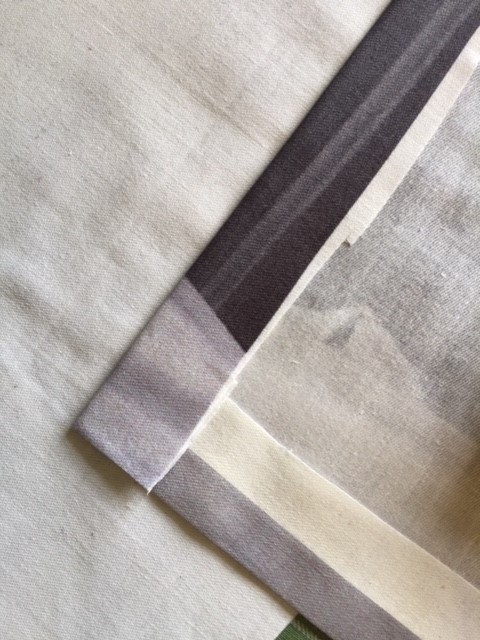
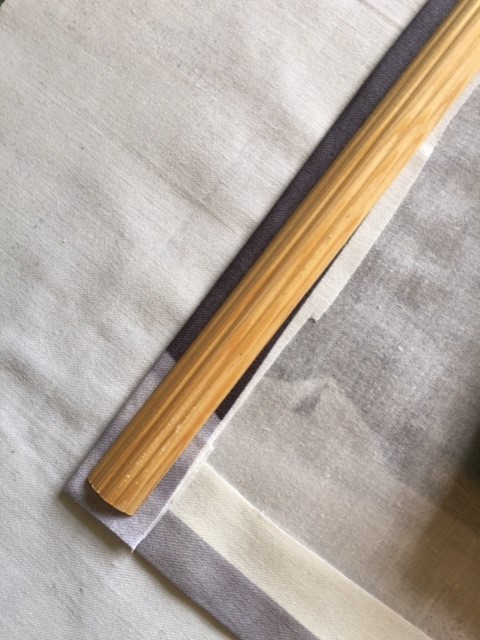
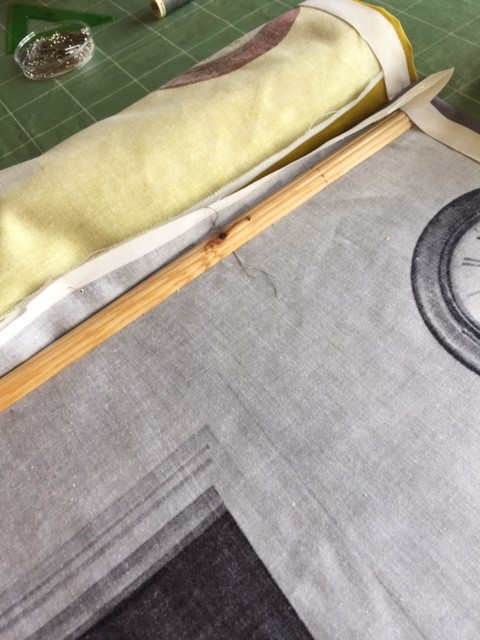
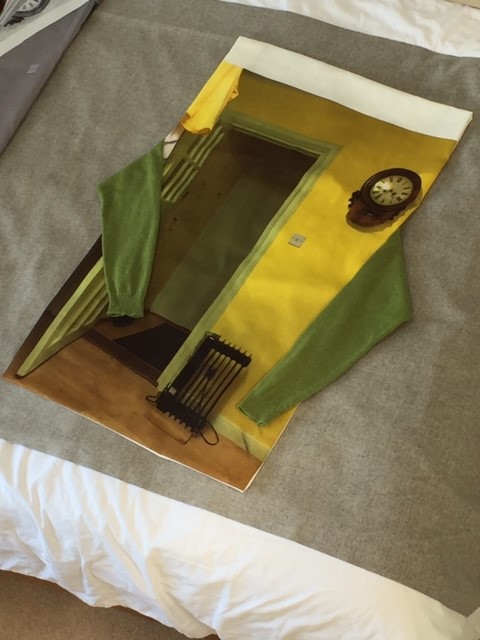
I have decided to only have one piece with one of mum’s cardigans sandwiched in between (I have several left here more by accident than design), more might imply a group of people, not just mum. For the others I am making them plainer and inserting very thick grey felt between the colour and black and white sides. Chosen for its strength and solidness, flexible but firm. Nice to sew into but has depth. 100% wool ideal for mum. Tested out ideas for finishing the edges. I have decided to keep the layers and show them as part of the work. The dense layer of felt – could have been even thicker.

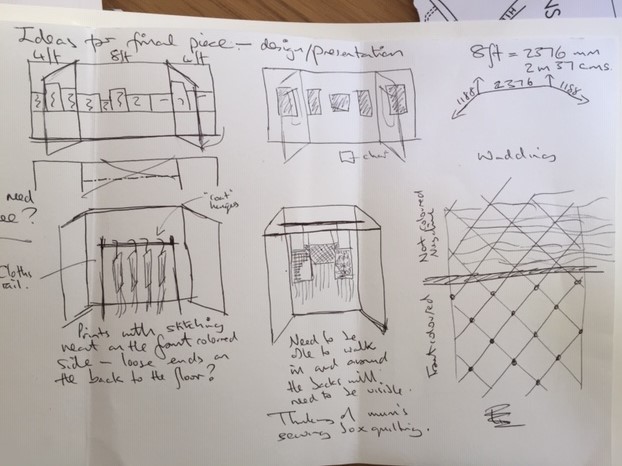
So why am I prevaricating still about what I am doing? Whilst continuing to make more pieces I have also gone back to this construction.

I really like this idea but it would have to be huge to work. It would also be very expensive to print something this size on fabric which it demands. Perhaps if I get my points I can push this further on the degree course. I like the use of fabric for personal subject, it is touchable, not hard.

Started construction of the cardigan sandwich.

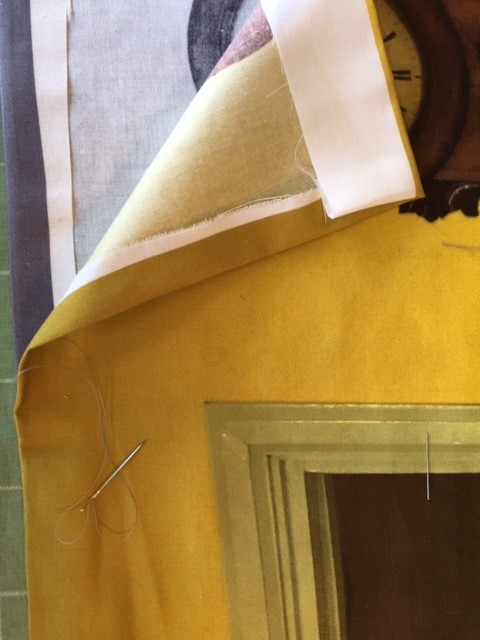
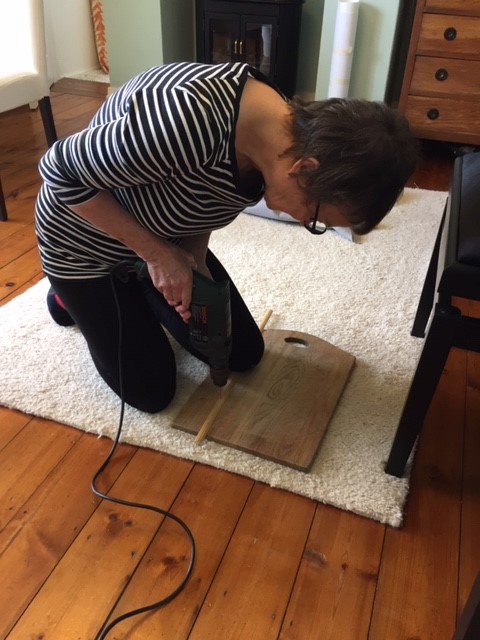
It’s all very technical now. How to make a well constructed piece? I have decided to go ahead with the cardigan sandwich. It gives the right feel of “goneness” but lingering. I do enjoy the construction. Working out problems, such as how to sew together, how to enable it to hang correctly, how to present the pieces. Still pondering over stitches. I have printed a colour version and a flipped black and white version of each photograph. The coloured version is what you see. The surface. The black and white is representative of what you can’t appreciate when you enter a family room. This emotional history and events which have shaped the inhabitants. The “what if?” and “whys?” The process, this term is very personal, exhilarating and exhausting.

Pages of my sketch book. Ideas for stitches. I want to imply loose ends.
Jan Beaney and Jean Littlejohn offer some great ideas but they are not loose enough.
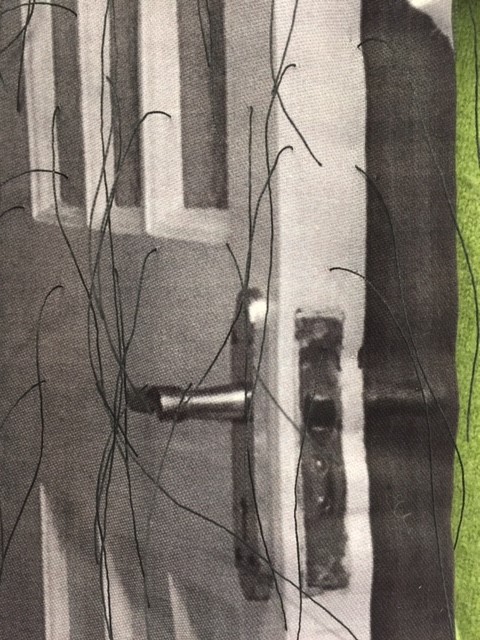
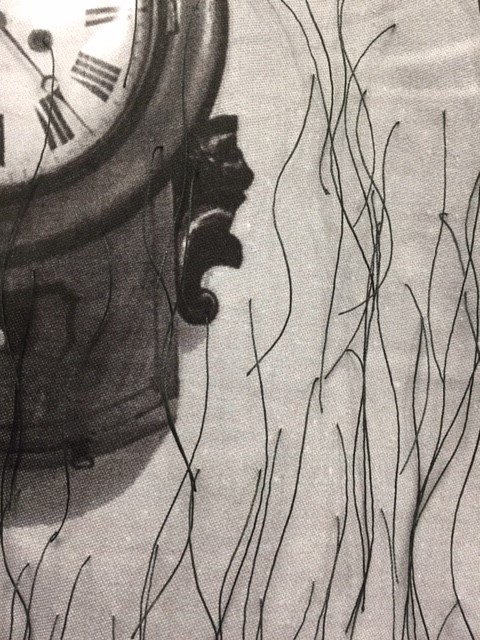
My own earlier work referenced here suggests entanglements. I have decided to use black threads shown only on the black and white side. They will be loose, removable and simply hang in place. Very loose ends,

After sewing the pieces together I started work on the black and white side.

These photographs gave me another idea, which was to photograph the images in the photographic studio in differing order to see how to hang them in the exhibition.

Testing ideas

I am thinking back to the first term and the idea of trapping items between material, so I mocked this up a after printing large photographs. Had to move the clock to the left using photoshop (with help) to achieve the correct aspect ratio and keep the clock and door in view. This seemed wrong initially but I think now that the photo’s overall authenticity is retained.

I am wondering if this is a step too far? Need to step back. Want to be stitching. Photos are marked in places with printing ink. Not a lot I can do at this stage. Very expensive to repeat and no guarantee of a better job.

The size relates to the space.

Some ideas have formed about how to use the space allocated. 4 feet + 8 feet + 4 feet.

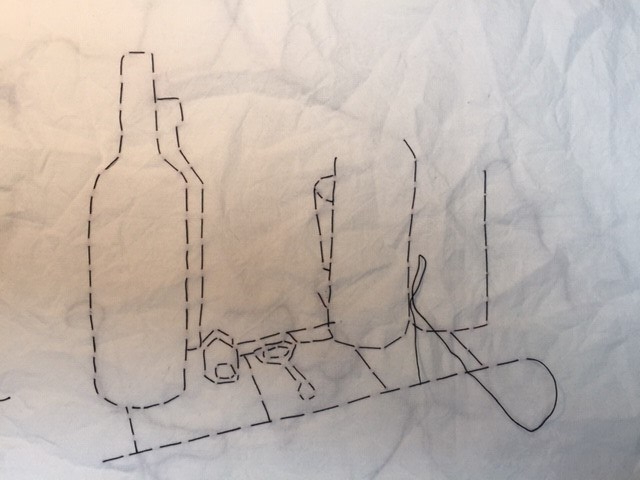
Drawing with stitch

I like to have more than one thing on the go at once. The colours and the details in this photo draw you in. This was the built in dresser next to the kitchen table where mum spent much of her time, clocks determined much of her day. Breakfast, elevenses, lunch, tea and a “little supper”. Drawing on Bernie Leahy, Rowanna Wells and Alice Kettle I can satisfy my desire to stitch whilst I think about where I am going..
Stitching gives the photograph a different more ethereal feel. perhaps closer to my idea of goneness and emptyness.
Placed against a window to let the light shine through the loose ends are visible. Then I applied a filter to the photo which gives a very pleasing look.
The back is interesting too. Looks as if it is dissembling somewhat.

Drawing in this way is something I will follow up in the future. I can envisage giant creations based on interiors or exteriors in a similar style to Dawn Clement’s work but drawn with stitch, embroidery and applique. Fabric collage.