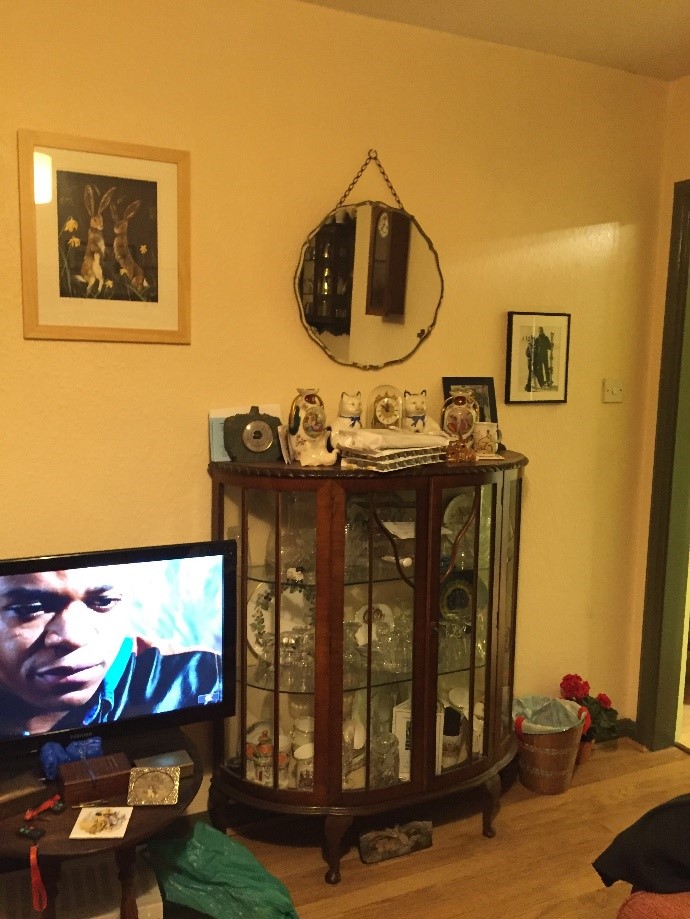
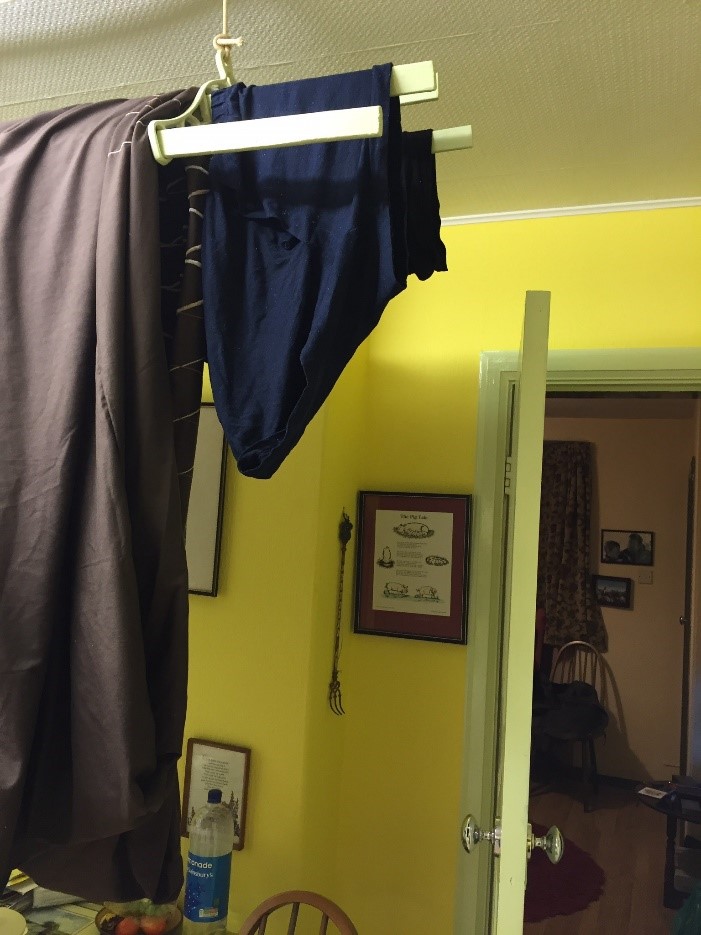
Wall paper

Loose ends brings me back to the photos. What can they tell me? My idea was to make a strip of wall paper using photographs. I’d need to learn aspects of Photoshop to do this. The photos needed sizing in terms of shape centimeters and pixels. They had to be placed on the document without gaps. This was difficult. I am not good at retaining new processes. Still I did it. I placed the kitchen clock periodically throughout the length of the wallpaper and carefully chose pictures related to the kitchen area. There was a colour theme too – yellow and green. The heater is perched on a wooden breadboard. It lost its feet somehow. Mum used to dry wet clothes on it regardless of the possibility of fire. This was her domain. An excellent cook.
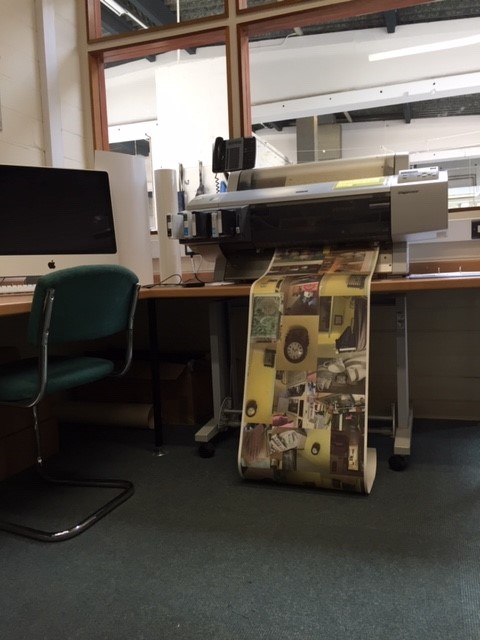
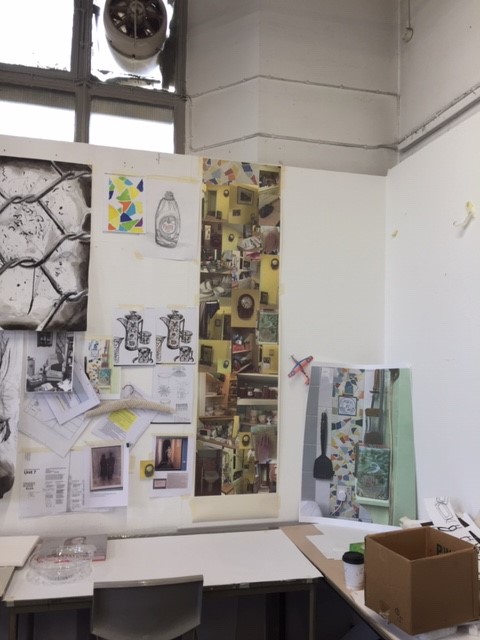
Wall paper coming off the printer.
The final piece on my bit of studio wall. It works well. I really like the repeated clock. The tyranny of time.
But I am not sure this is quite what I am looking for. It is not tactile. It can’t be stitched in this form. It does not suggest loose ends. I am certainly moving towards sewing again. I have learnt a lot by doing this. It will be useful.
Thinking of Norma Szakowna’s “Diasporas” which I love this image printed on voile or cotton – it might be more tactile with the possibility of sewing. I’ll see where it takes me.
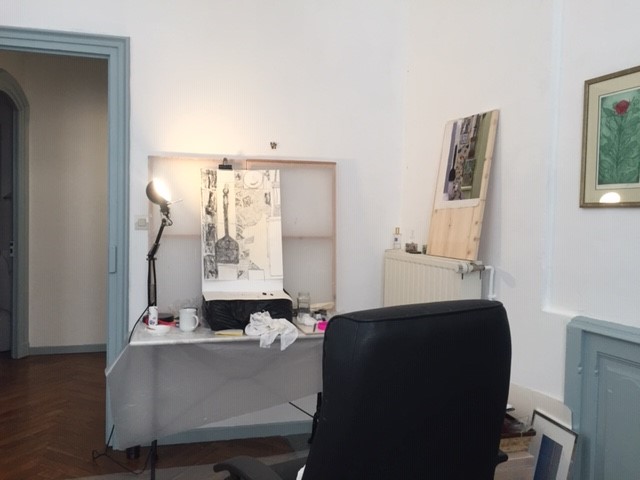
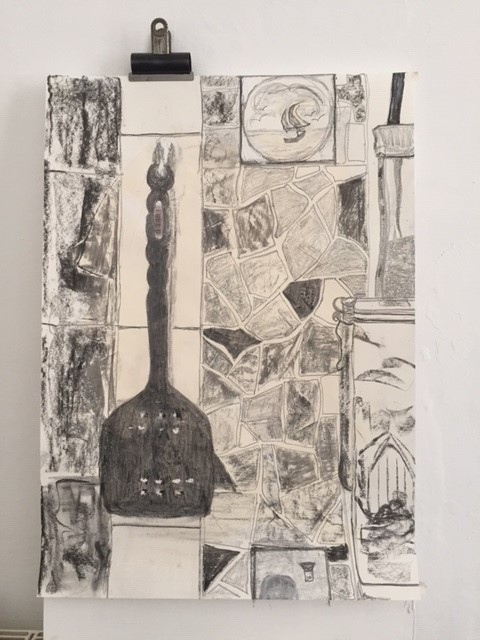
Kitchen drawing

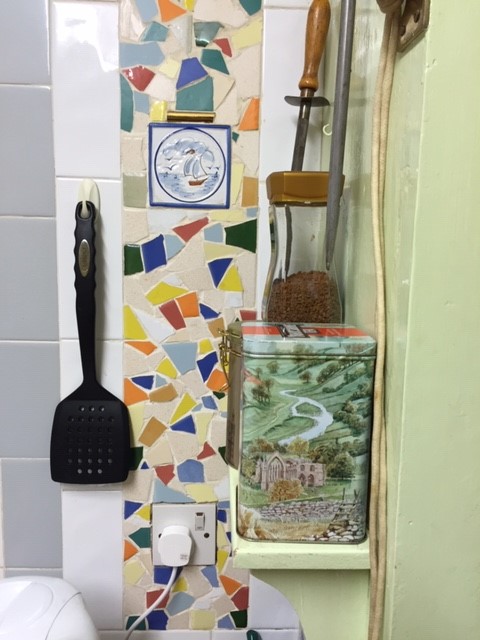
I based this drawing on my photograph of the kitchen in parent’s house. The tiles were off cuts. Creative and colourful. Love the tea tin.

Worked on this over several days using emulsion, graphite, chalk, charcoal.

Determined to draw

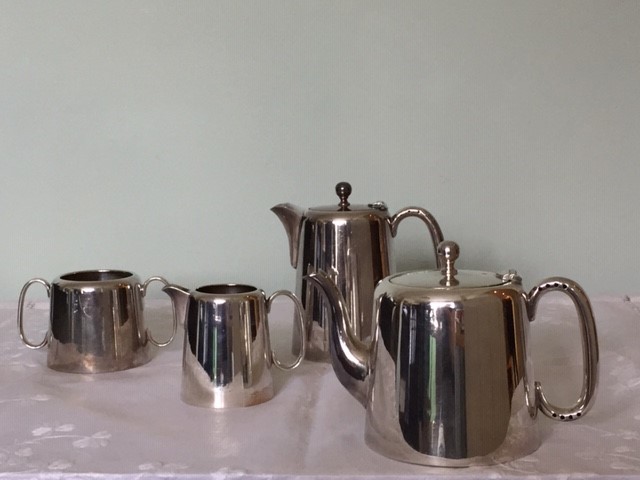
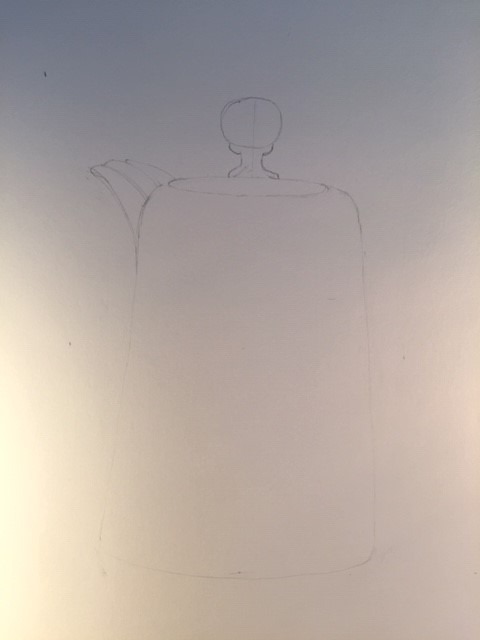
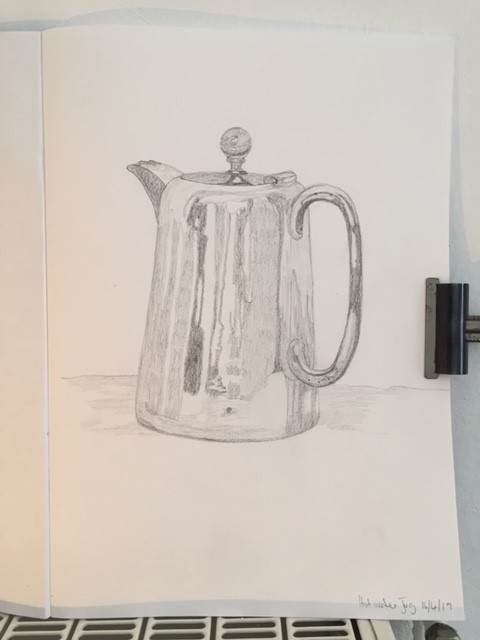
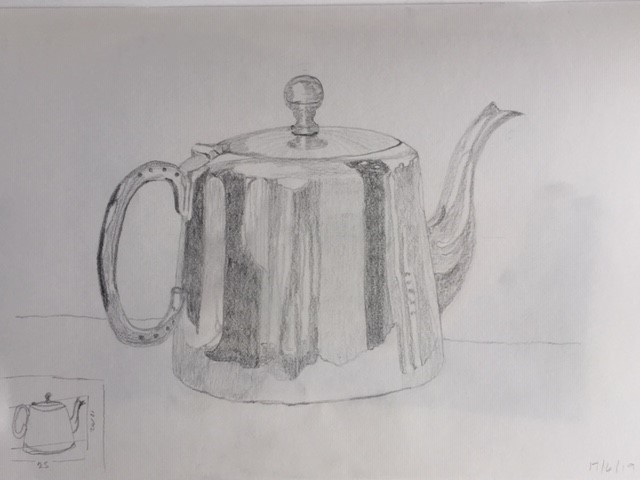
I planned to draw things related to my mother whilst on holiday in France. I took photos of a silver tea and a few other things to work from with me.

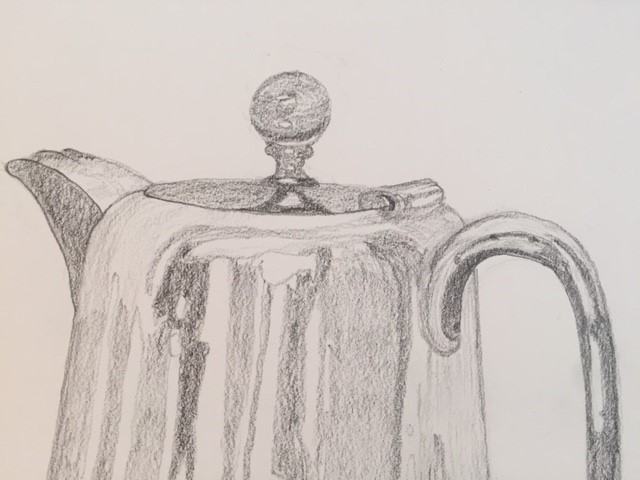
I worked on A3, new for me as I tend to draw on A4. Scaling was interesting. Making handles look correct was a challenge.

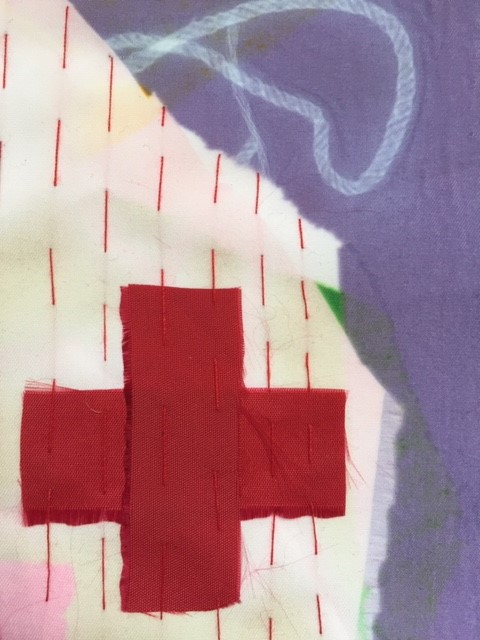
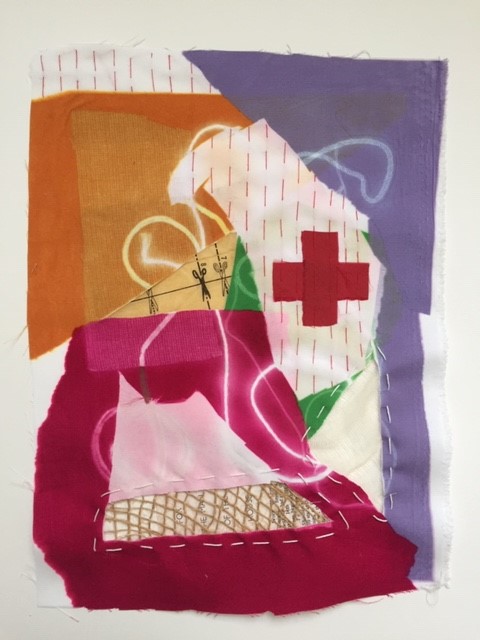
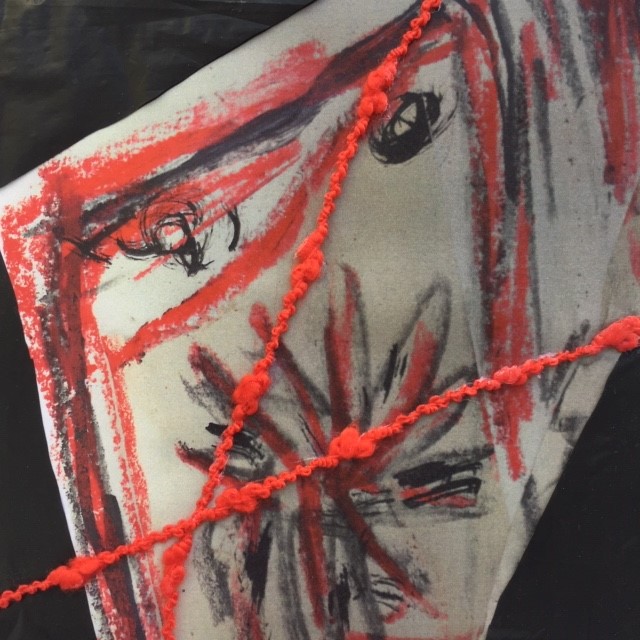
Other drawing included a red cross. Here I was thinking about my mother’s illustrious but short nursing career. She was the top performing nurse of her group and received three medals which were often referred to. “I was a nurse you know” she reminded us and told the staff in her nursing home at the end of her life. Shortly before she died a visiting nurse said “Thank you Sheila for being a nurse”.

This was a time consuming but satisfying piece of work. As I stitched I was able to think about mum’s life. Its vicissitudes. Loss of professional career. Career exchanged for mother hood and being a wife. Marriage and family. Why she made the decisions she did is a constant query. She was a disappointed woman. She would have made a fabulous Matron or progressed even further. Women need choices. Why is this still a battle? I call this piece “loose ends” – I decided not to finish the ends of the thread. I like the loose ends. Perhaps this is what my final piece is all about since I’ll never know what was what from my mother’s point of view.

LOOSE ENDS

Art galleries in Perpignan

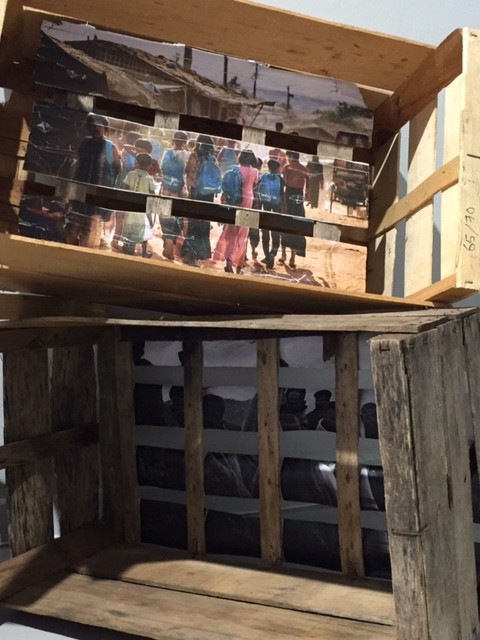
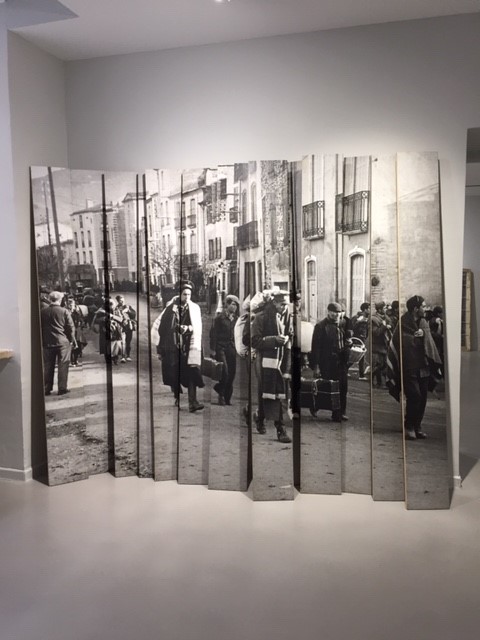
The main city gallery is the Musee D’Art Hyacinthe Rigaud. I saw three exhibitions. Emilie Dumas, “The essential is what is missing”, photographic paintings stripped of detail. I followed this with an exhibition charting the Baroque, Moderne, the Belle Epoque periods in the Perpignan art world and ending with arts in “Perpignan Ajourd’hui” . I reserved an exhibition of work created by Philippe Domergue for my last hour, “a mi-chemin (half way) – immages aux exiles de la terre”. I was lucky, the focus was on photography and exhibited in a very creative way. I’m going to focus on this exhibition here. He had used images taken during the exodus from Francos’s Spain taken by Manuel Moros in 1939 and photos at Camp Kutapalong (Bangladesh) by Vincent Tremeau in 2018. He had reworked images and placed them together in different forms such as wooden fruit boxes, crates, windows, on planks of wood. He created symmetry by focusing on hands, the colour pink, scarves and paperwork. It was very moving. he created mvoement using planks imaginatively. The reasons for fleeing don’t seem to change that much.

Here Dumas is showing how he selects aspects of the photographs for use in his final pieces with view finders .
Escaping from Spain and Franco’s regime in 1939 to France where most of these people would have ended up at Rivesaltes Camp (now a fantastic museum) which was a very harsh place. I like the use of the planks. The photographs were printed in pieces fixed to the planks. It gives movement. There are ways to add to the story a photograph tells.

Cut work, collage and stitching experiment

I took my heat press pieces to Perpignan with a view to making them work a bit harder. On their own they were good experiments but generally unsuccessful. Using, heat press pieces, knitting pattern, dress making pattern and other bits and pieces I created a piece based on aspects of my mother’s life. She was a very practical person and could turn her hand to anything related to family life, the household and home. This included sewing and knitting. She made dresses for me and my sister. Often we had the same pattern and fabric and I, as the younger one, had to wear both dresses as I grew into my sister’s. Sometimes this process took three years. Not a good look. Still, we were well dressed.
The cross often appears in my work. Mum’s nursing career was a formative aspect of my childhood. I knew I wanted to do something with my life beyond the village and her obvious longing of r her lost career and her photograph in uniform reminded me of this on a regular basis. I enjoy stitching and am now thinking of how to use my photographs together with stitch.

The print behind the webbing reads “For the man of the house”.

Three Glass Workshops

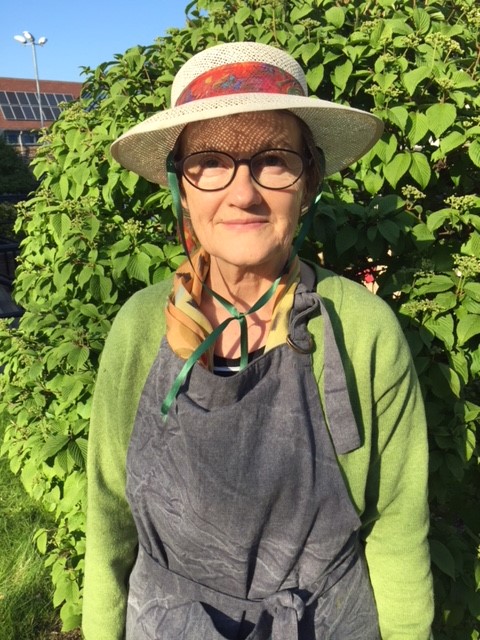
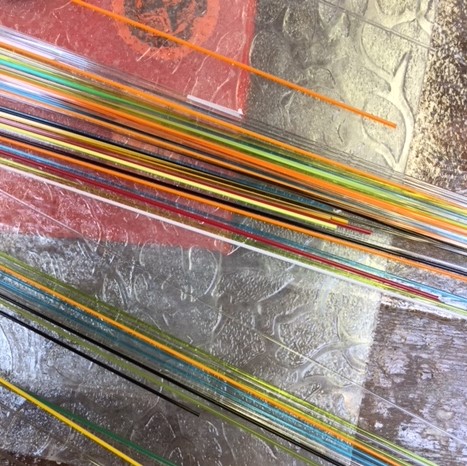
Working with glass is a little challenging since I fell thorough a cold frame roof window a long time ago. The noise of it breaking and cutting it is a challenge. Glass can be so beautiful whether coloured or not. Working with it is an eye opener, there’s so much to learn. Exploring things I inherited from my mother I based my design on her hat band.

A fellow student, Sarah, suggested I wore the hat. Not really my style – good for gardening

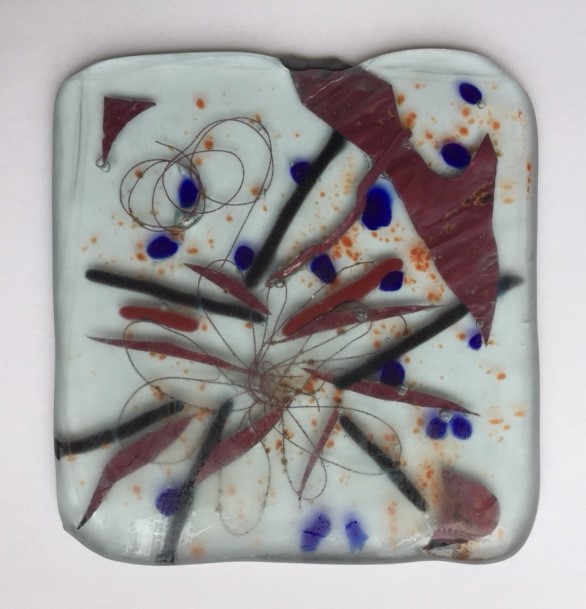
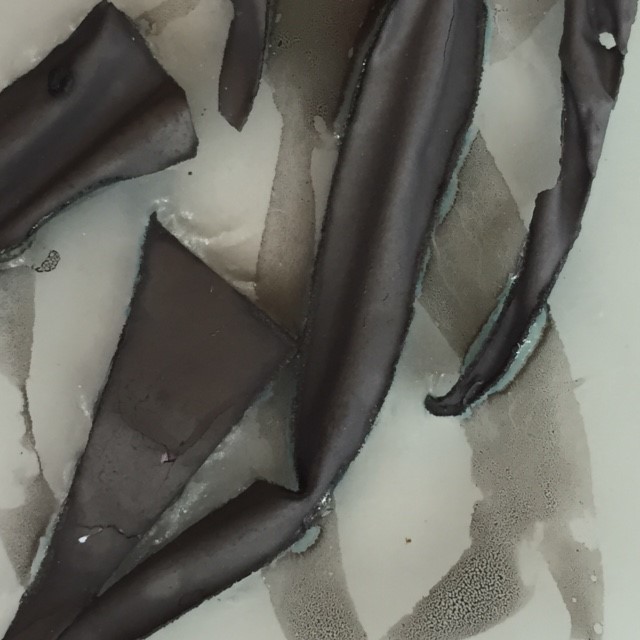
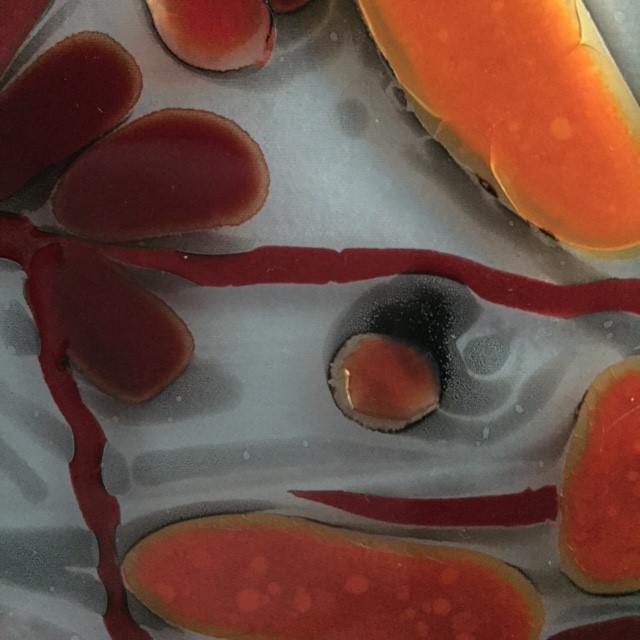
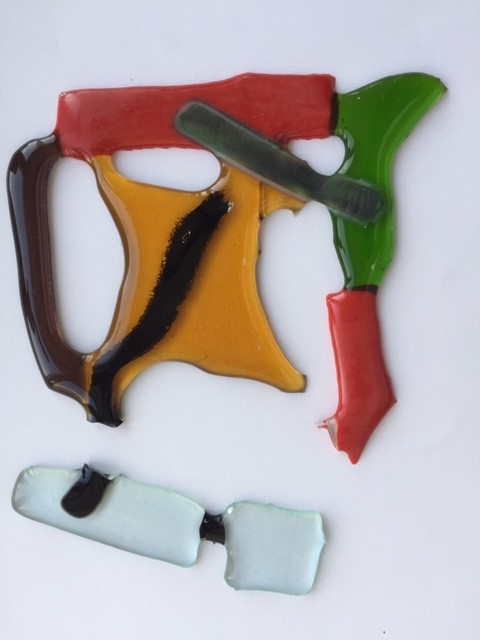
After firing things get interesting. I particularly like the RH side version even though the glass pieces were not a good fit and have split. It looks interesting. Working with glass is something to explore further another time. Photographing glass pieces creates interesting abstract images.

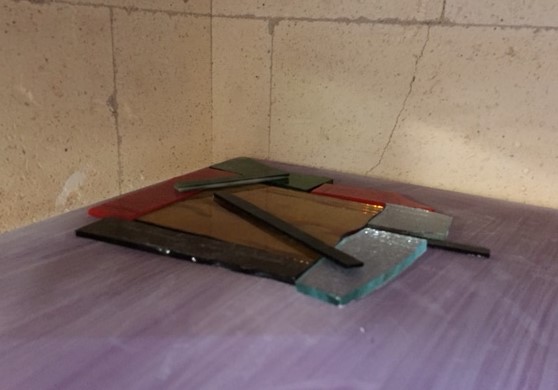
By the time of the last workshop I was able to cut glass. Here am fusing glass to see what would happen.

The last of the workshops. Something to come back to. Fusing these pieces didn’t work work well this time but could be progressed sometime in the future. Serendipity is great but more knowledge might give an element of control. Glass is a hard substance, it can be exceedingly beautiful – look at Dale Chihuly’s glass in Kew Gardens, but it is not a substance that will help me with the exploration of my mother’s life. I need something softer in my hands to ponder over.

Workshop 2 Smocking

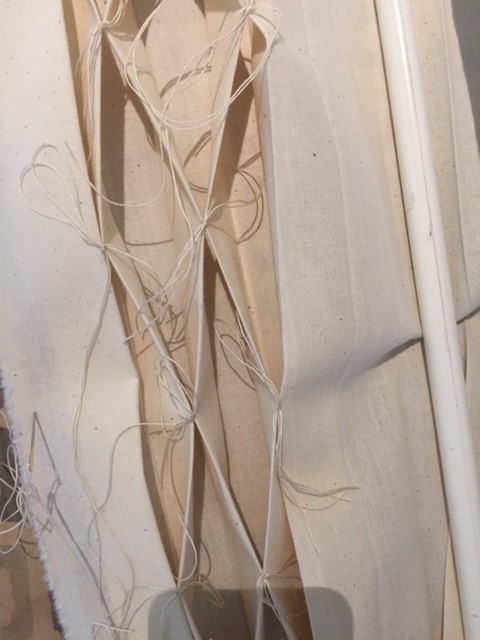
This is an exciting method made more so especially since I have explored Ealish Wilson’s Contemporary Fibre Art: Smocking (EalsihWilson.com) and modernist smocking via http://www.tatter.com. Smocking requires calm and thought. It is quite technical. It can also be practical and beautiful. I have also managed to mix smocking with photography.

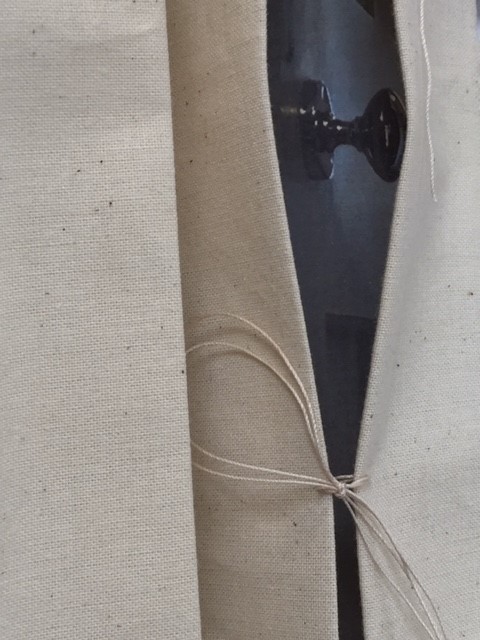
I slipped a strip of photograph in this space from one of the photographs from my parent’s home. It gives the sensation of “behind closed doors”. Interesting. I lost my smocking samples on a train so I hope someone is enjoying their find as it has not been returned. This is something for the future! Such a lot of potential beyond making dresses and so on.

A Mausoleum of Giants – Eye Witness Works Sheffield

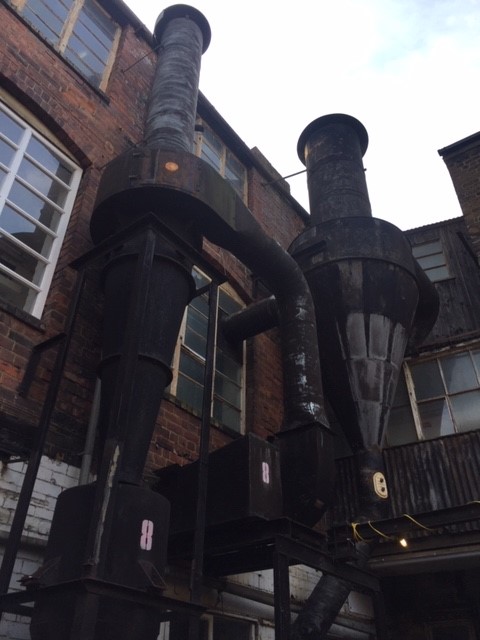
I had a wonderful time in the queue for this exhibition. Waited for several hours surrounded by lovely people. Met a mum with two creative daughters and Mr Mead. He and his girlfriend had travelled a long way for the exhibition. Look at his work on http://www.mrmead.co.uk/about and watch his first indie game develop on http://www.siltgame.com. Very talented. Like us all he was very excited about the exhibition, the building and its huge industrial remnants which I guess may appear in his work. It didn’t matter about the wait!

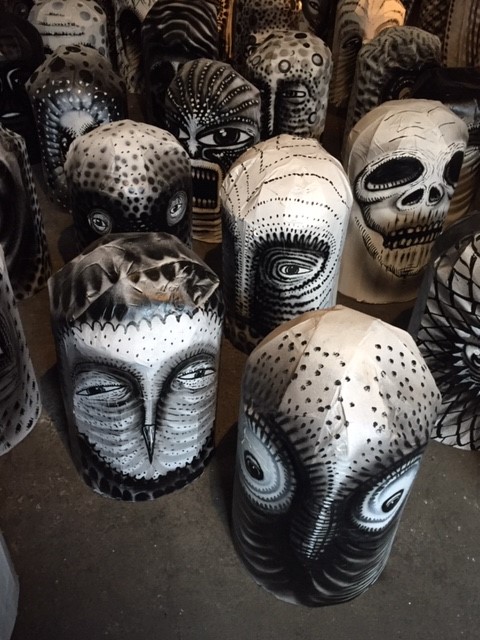
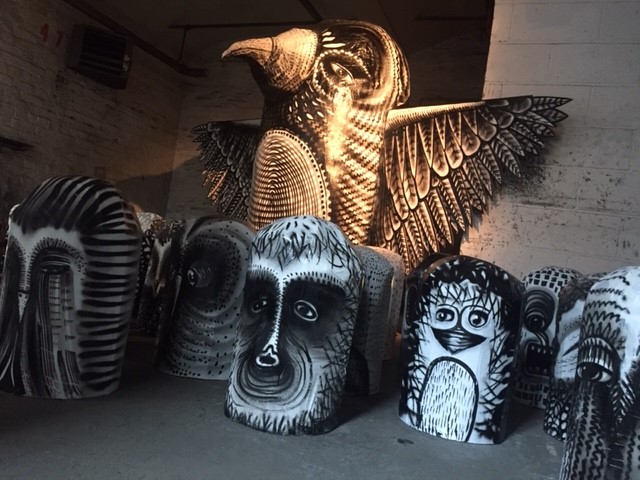
A fabulous use of an old building. Perfect place of the giants. I love the size, patterns on the ‘skin’, expressions on the faces. Building due to be demolished to make way for apartments. Exhibition a total success.

Phlegm made a Mausoleum of Giants for Sheffield! #phlegmgiants.

Contrasting one home with another using subject, black and white and colour photography

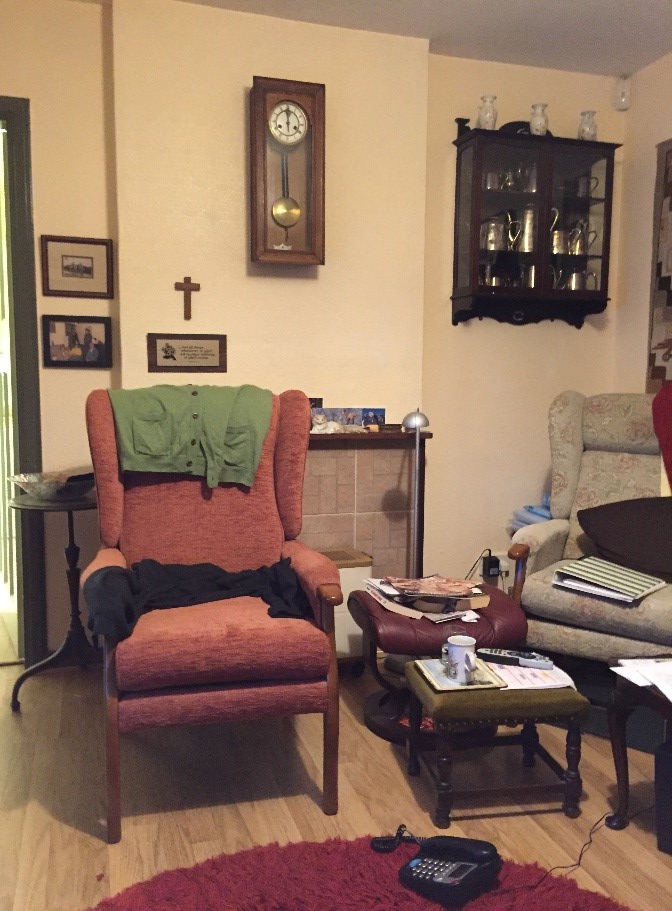
I was interested in the use of colour and black and white photography so I decided to take photographs of my home in black and white to contrast with the coloured ones of my parent’s home. I chose similar subjects. It is interesting how similar our needs are.

Culture often determines the meaning of colour and its effect. Black and white tends to refer to death and sadness in western society. In Egypt it signifies rebirth. White can be a colour of mourning, for example in China where red is a colour of happiness and not to be worn at funerals. The black and white of the more modern home seen below does not hide the modernity. Black and white photography is sometimes regarded as more sophisticated, a genre, a photographic method of choice. Colour can also add meaning to photos. Yellow is generally regarded as warm, cheerful, full of well-being. Martin Parr enhances very bright colours, reds, pinks, greens, yellows and blues in his work. It makes the viewer take notice.

We share so many characteristics. Collecting stuff, books, pictures and so on. You can only glean from what you see.

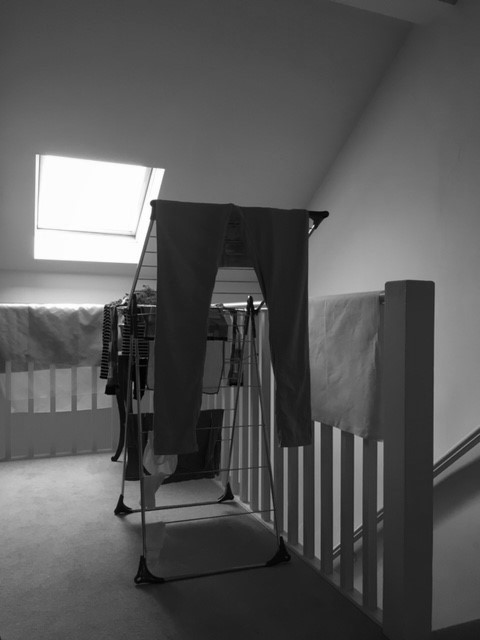
The washing still has to be done who ever you are.

So, things captured in photographs do only capture a moment in time, They tell of wealth, sometimes health, taste, fashion, time/period and so on. They can’t really tell the viewer about the lives of the people living in these spaces. My view is that photographs often reveal little about their subjects’ worlds even when they are peopled.