Workshops 1 – Batik and heat press

A very busy few weeks. Jo has led a number of workshops over the past weeks. I was struggling initially to see how I’d apply some of them. Strange how one thing leads to another. Now they seem very useful, creative. Playing with smocking I find it can be used to suggest secrecy, disappearance, going, goneness, hidden things. Not sure how I may use it yet but I see its potential. Cutwork is familiar, used in embroidery and similar to collage but with fabrics and mixed media. Layering can be very expressive. Tufting methods are also familiar traditional ways to reuse old fabrics – colourful rugs were a feature of my grandmother’s house. They were heavy things often made of old coats. Hard to shake clean. Haven’t tried all techniques but here are a few ideas based on objects or places relating to exploring my parent’s life.

A classic cardigan. In this case a little short. I recall this was because, “…well I only had this amount of wool… it’ll be comfortable to sit in, it won’t get sat on”.

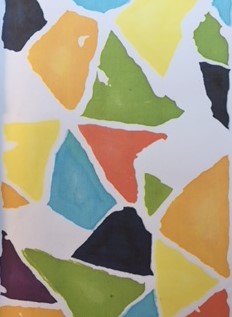
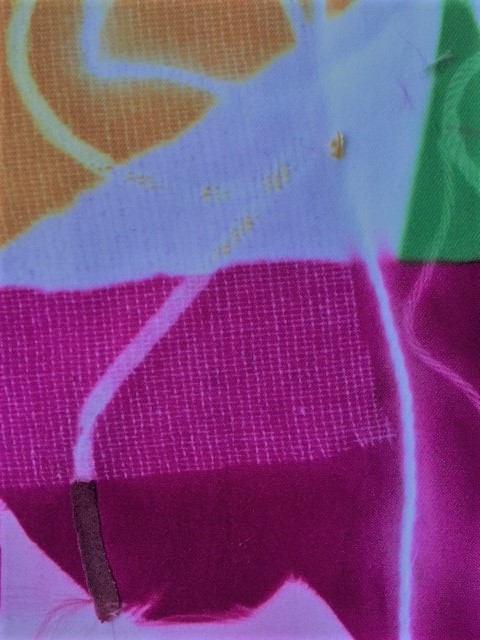
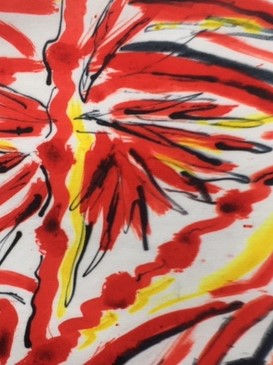
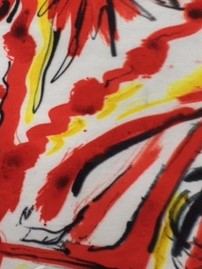
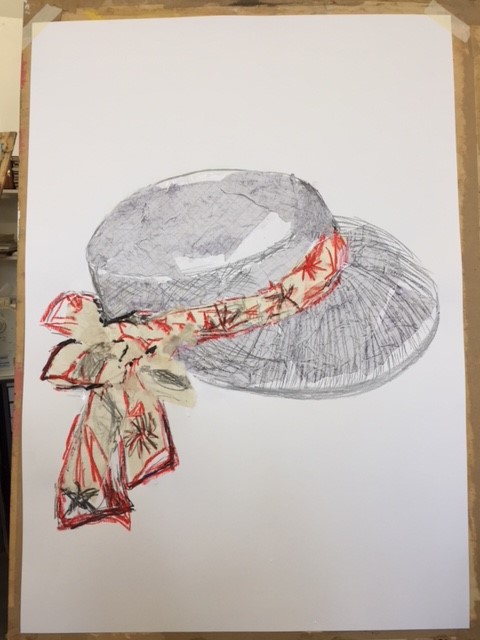
Heatpress images using sublimation inks based on mum’s hat ribbon. RH image shows colour before heat pressing. It is an amazing process with lots of applications.

Exploring the impact of black and white photography in contrast to colour

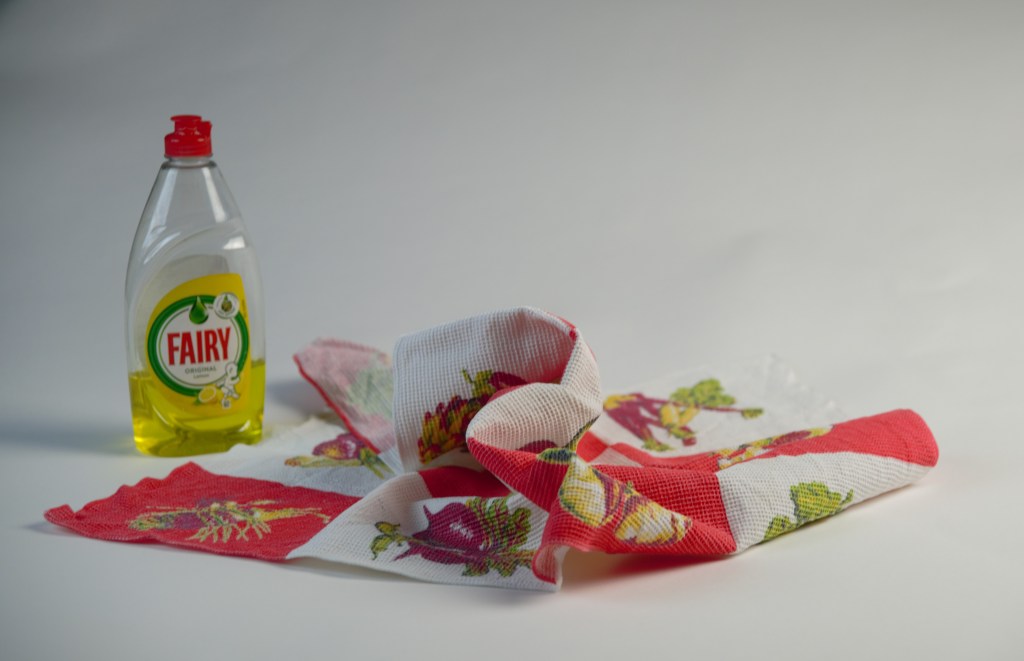
Using the photography studio my subjects were things my mother owned and used such as the brightly coloured T-towel in perfect condition, considered too good for washing yup and re-designated as a tray cloth, the lavender perfume or things I use, like washing up liquid, which appear in my photos of my parent’s home. I was simply trying out the difference between approaches. Here the black and white in the flat light looks cold, it deadens the subjects. My next experiment will be to compare my pictures of the home with similar subjects in my own home. I have decided to make photos of my home black and white. I’m wondering what the impact of black and white or colour has on the feeling photographs give. What does it add or take away? Martin Parr abruptly stopped using black and white in favour of colour because, it seems, he could use colour to emphasis aspects of his subjects. He could make the photos sing out “look at me” and so seems to focus on the amusing aspects of life in Britain rather than take a more sensitive approach.

Jon Snow – why are his comments a problem?

Ending Channel 4 news on the day that leave supporters gathered outside Parliament (Friday 29th April) he said “It’s been an extraordinary day…a day which has seen … I have never seen so many white people in one place, it’s an extraordinary story”. He was dismayed I think. Leave the man alone. A thankfully honest view inadvertently helping us to see where we are headed if we are not careful. The right is trying to assert itself so we need this kind of witnessing in the media, just like we need witnessing about all kinds of oppression, from the personal and national right through to worldwide political attacks on our human rights to retain what has been achieved and push for more.

Halima Cassell – Manchester Art Gallery – Sunday

This is the first time I have come across this ceramist and sculptor. I saw her wonderful work by chance. She uses stoneware, glass, marble, and a huge range of clays. Here are a few of her pieces. Strangely very moving, especially “Various Clays”, with or without its story.

Starting top left – 1. Amoeba Pool Cast lead Crystal Glass 2012, 2. Various Clays 2009 to the present [on going] 3. Pendula, Cygnes, Echo (top row L – R)Sidewinder, Foliata, Tulip (bottom row L – R) and 4. Horizon 1 and 2 2009 Hand carved black and brown stoneware.

Various Clays 2009 has a lovely and enduring story. Halima Cassell was born in India but grew up in North West England. She travels and uses her experiences to inform her work. Her work shows how she loves using different materials, shape and design. Her travels have made her question identity and how we define it. With this work, (Various Clays ) she intends to represent every nation state of the world using sculpted clay, each to represent a country. Her idea is that we are all part of the human family and that whatever our differences there is more that unites us. She has completed 39 so far and has 195 to do in total. So very beautiful.

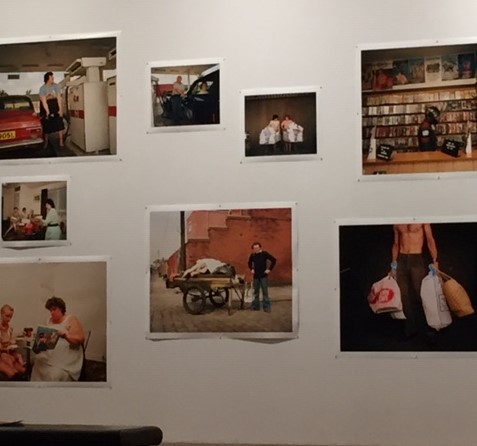
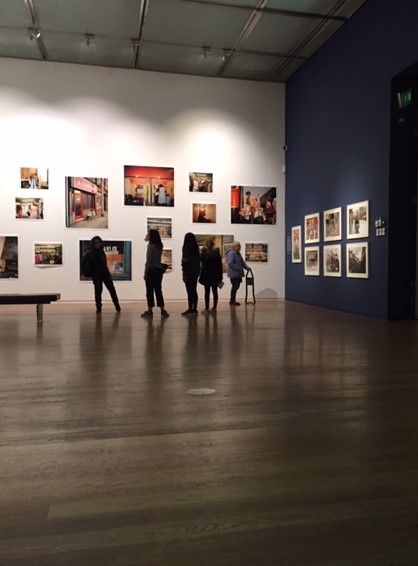
Martin Parr “Return to Manchester” Manchester Art Gallery

A week on my own and what do I do but wake up really early! Martin Parr’s exhibition would be great for my final piece. I thought it would complement yesterday’s “This life is so everyday”, so off I go to Manchester. Things may seem everyday but are they? This life is only seemingly everyday I think.

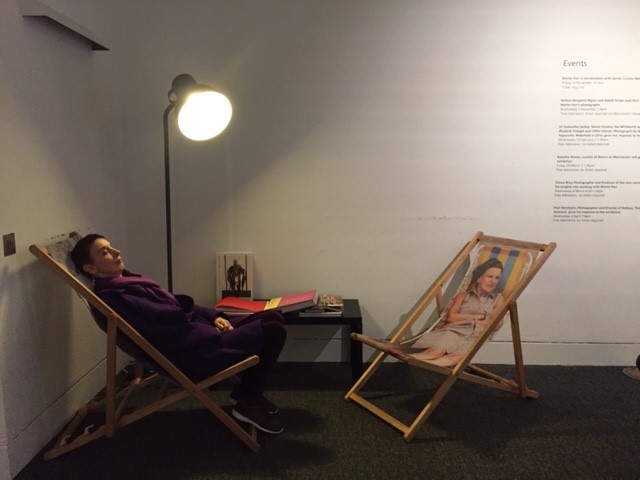
In the reading room. This lady kindly let me photograph her resting on top of the portly man. I should have asked her more. Was she the woman opposite? There’s a resemblance!

Martin Parr started off in black and white then took to colour film as it became more accessible when he was a young art student. I enjoyed the exhibition but wonder if he is really kindly toward his subjects or mocking? The gallery goers certainly enjoy it! Laughing, reminiscing, joking.

“He doesn’t romanticize”

“He photographs people just as they are…he doesn’t elevate people or make them more than they are”

A copy of a page in the Manchester Art Gallery notes. This is hilarious. I have been to similar parties and can hear this clearly in my head!

Lots of ideas from this exhibition. The Manchester Art Gallery set of Martin Parr Post cards I bought show ordinariness and sameness even when quite some time has passed, some things don’t change that much. I’ll see what I can do with contrasting black and white and colour photos of similar subjects in my home and compare them with my parent’s home? I know Martin Parr is popular but I am not sure that I get a good feeling from some of his work. Is he laughing at or with people?

This Life is so Everyday – The Graves Art Gallery Sheffield

The Home in British Art 1950 – 1880

Local residents, asylum seekers and refugees helped to inform the curation this exhibition using memories and experiences to add to the richness of the experience. This exhibition gives a good feeling for post war Britain in the home. The work of women feels important. The mundane is revisited and given significance. It is relevant to my idea for this term’s work. Thinking of how we portray family and home and how it can be such an untruth at times. Thoughts about women and how they home-make at the expense often of themselves. Thoughts about men and how they express being a man in a domestic setting with paint brushes, lawn mowers, at home on their patch and then out bread-winning. This was my mother’s life. A talented house wife, mother and granny with a lost nursing career itch. No photos this time since it was not allowed.

I loved Paint Brushes 1973 by Jim Dine etching on paper. He used domestic and garden objects to illustrate life and toil through his body. Burnt Breakfast 1975 by Sue Richardson, A fried breakfast created in crochet – suggesting being fed up with the traditional women’s role in the kitchen. In the kitchen 1977 by Helen Chadwick Wonderful prints of women literally inside the kitchen – fabric utensils. Interior 1964 – 5 by Richard Hamilton, I thought this could be my mother, the figure admiring a new washing machine, only I don’t think she’d adore it but would appreciate its practicality after suffering first the galvanized wash tub with posh and mangle, then a single spin dryer, then the twin tub. Divided Self I, 1970, Jacqueline Morreau, even now this resonates. Mum never allowed herself to fully acknowledge the divisions she felt. Finally, Privacy Plots III:: Suburban Hedge, 1970, Ivor Abrams, Those privet hedges, what delights and tragedies go on behind them?

In the book corner. This is really great idea, a comfortable settee with books relating to the exhibition and opportunity to comment. A couple of books caught my attention. “The Feminist Uncanny in Theory and Art Practice” Alexandra M. Kokol (2016) and “Art and the Home: Comfort, Alienation and the Everyday” ” (2015) Imogen Racz.

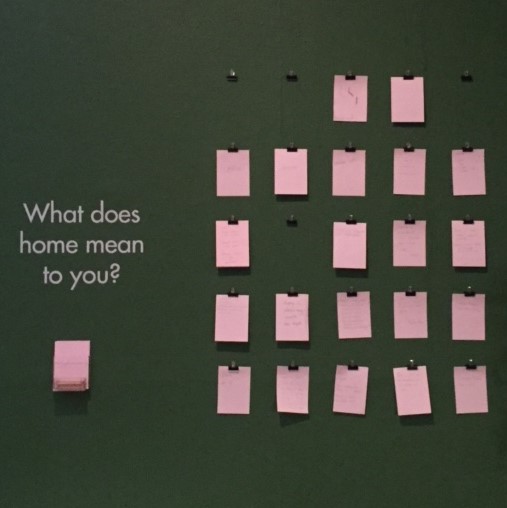
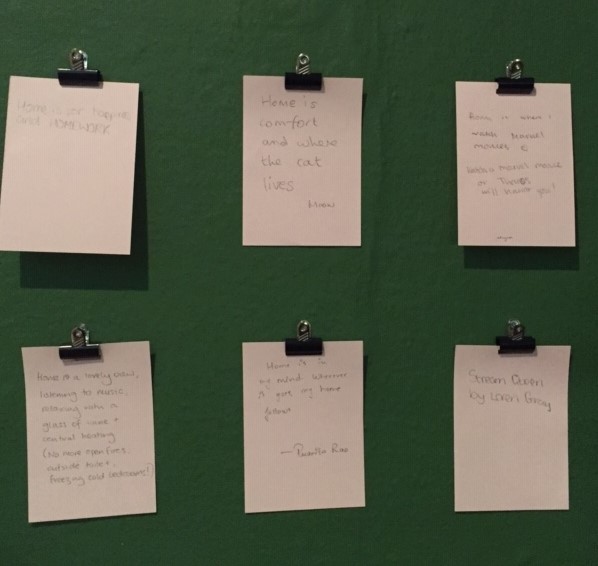
Most people answer this question in a comfortable way.

The Millennium Gallery Sheffield

A second visit with friends to the Leonardo da Vinci exhibition, “A life in drawing”. It is impossible to include photos in this blog because we spent time looking, indeed peering at the exhibits – not taking photos. He would have been fascinating to speak to though I guess women did not feature much in his life. On this occasion I specifically spent time looking at his landscapes and studies of the flow of water, thinking of his urge to control nature. How we have controlled it.


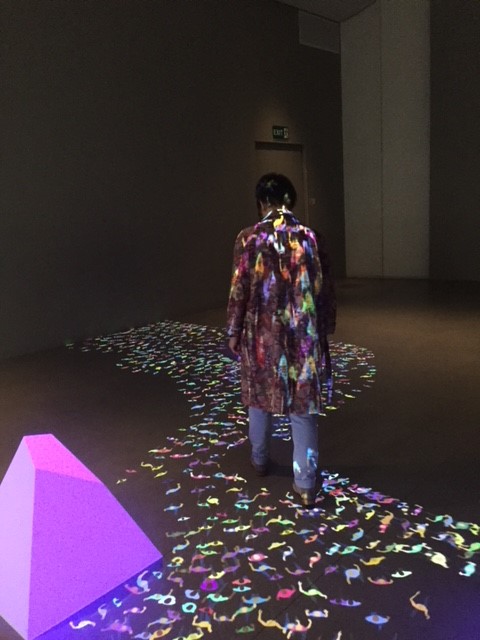
Linked to this exhibition is the “Vehicle of Nature” created by the digital studio, Universal Everything. It is a response to Leonardo’s studies of the flow of water which he created 1510 – 1513. He was, it seems, fascinated by everything. His studies of the flow of water are a joy to see. I feel certain he would have approved of “Vehicle of Nature” as it uses various technologies to create what is described as a digital river, which moves in waves across the gallery space demonstrating for example, the flow of electricity, humankind en-mass, water when interrupted by obstructions. It is very beautiful. The Vehicle of Nature by Universal Everything at Museums Sheffield. This is a superbly innovative Sheffield based collaborative, in this case working with Apple, Google, MTV and Sheffield based Warp Records.
Painting and drawing

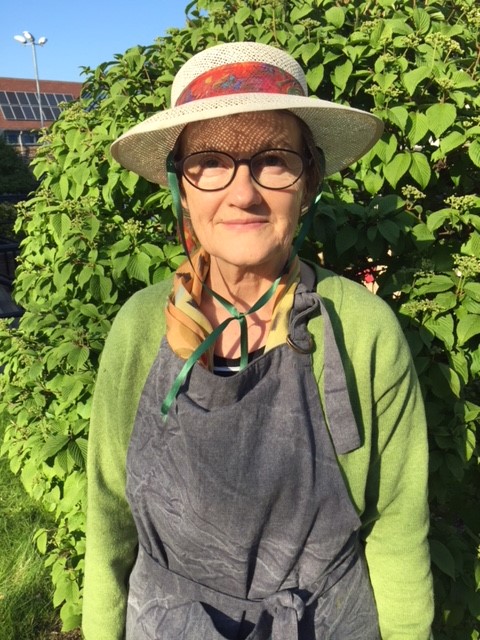
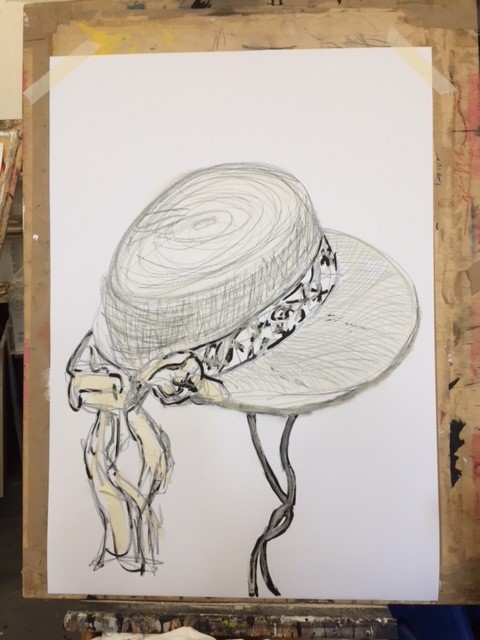
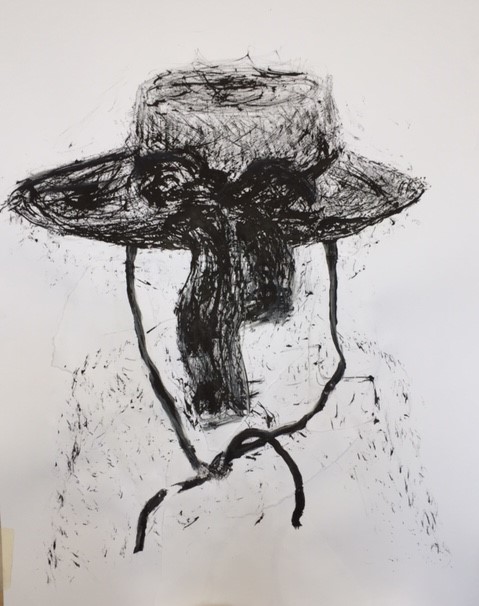
My subject is mum’s hat. She looked, as she’d say herself “a clip” in it! I have a few of her possessions which may or may not appear in the photographs. This is a good way to capture them. These photos of me wearing the hat were taken on my iphone by Sarah Catterall.

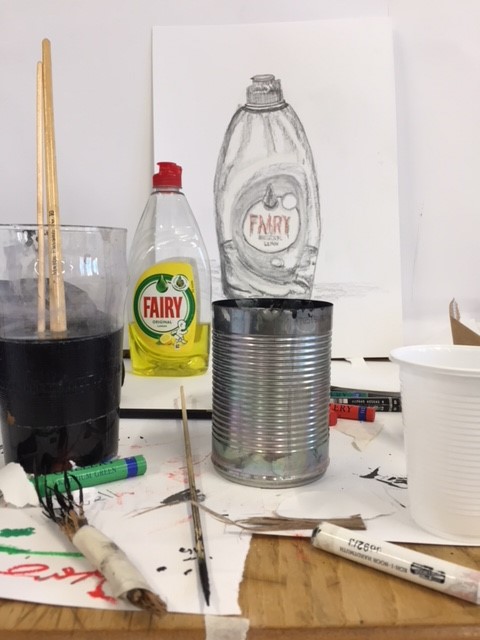
I drew and painted most of the day using different approaches and media.

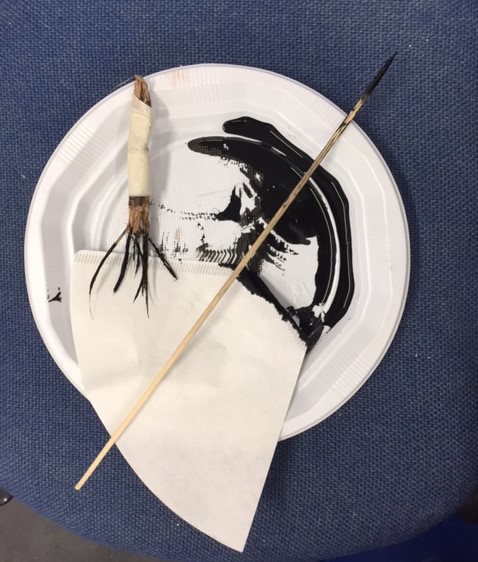
Made a drawing tool out of twigs and I really like the result. It was unpredictable and the textures were lovely for a straw hat.

An idea is germinating

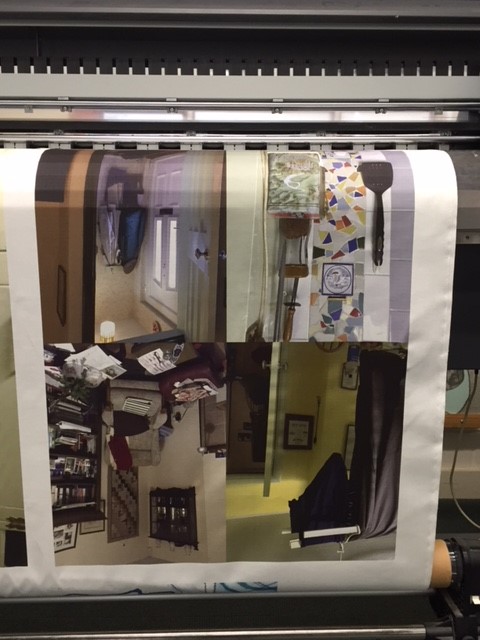
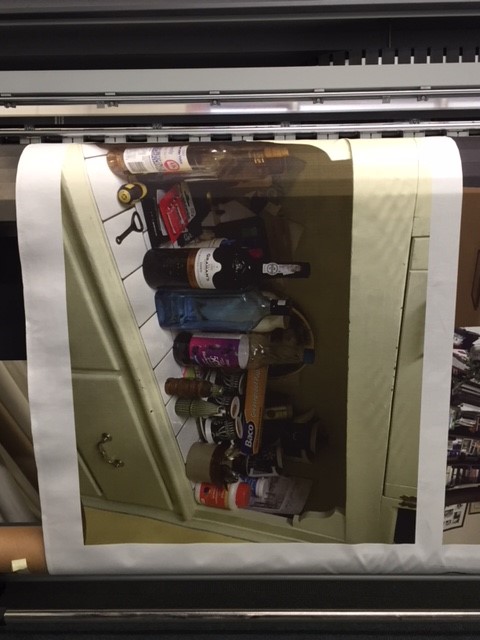
I’m experimenting by printing a sample of photos in large scale on fabric as well as paper. Inspired by my trip to White Cube and the RAA. I hadn’t realised that iphone photos were not designed to be printed but looked at on screen. Had to get to grips with Photoshop and increasing the DPI so that when enlarged they didn’t pixilate.

A good day. Amazing what extra dots can do!