My weekend of art and peaceful demonstration

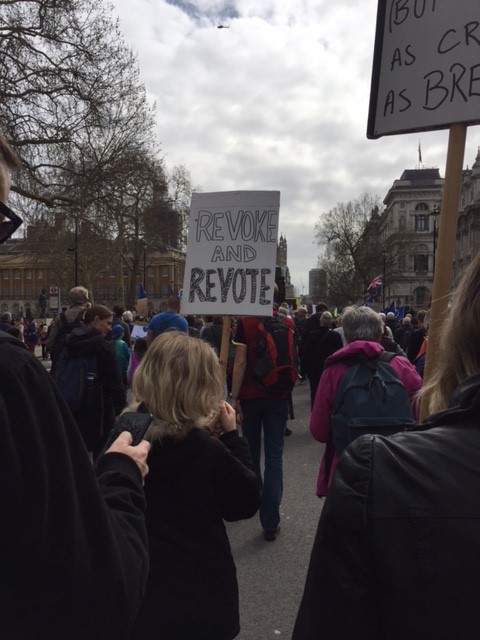
To London for the weekend. Surely when over a million people march through London
peacefully saying “Put it to the people” it must mean something? There were some fantastic people I marched with, from all walks of life, all wanting more say and another opportunity to vote, a simple stop to Article 50. Still I fear no change.
This picture of Margaret Thatcher met me in the toilet in the cafe opposite the White Cube. I couldn’t resist sticking my spare sticker onto it. I was sure that was what she was saying! Apologies for this minor bit of disobedience. I never thought she would feature in anything I did.

I love galleries which stay open late. It’s a good time to relax, contemplate and muse. On Friday night I stayed late in Tate Modern and enjoyed Pierre Bonnard, Dorothea Tanning and Jenny Holzer. I know Bonnard is popular but I am still not sure about his motives. Slow looking was recommended. I am a slow looker by nature. Why does the woman (his partner) in the bathroom have heeled shoes on? No-one takes their shoes off last in the bathroom! Why is there a creepy face behind the door in the dining room? Why did he play with two women’s emotions leading to the suicide of one of them. Was he just checking out that he should marry Marthe, even when he’d had 30 years to check her out? A last fling with Renee? Because he could? The domestic scenes are more beautiful and less disconcerting if you look quickly!

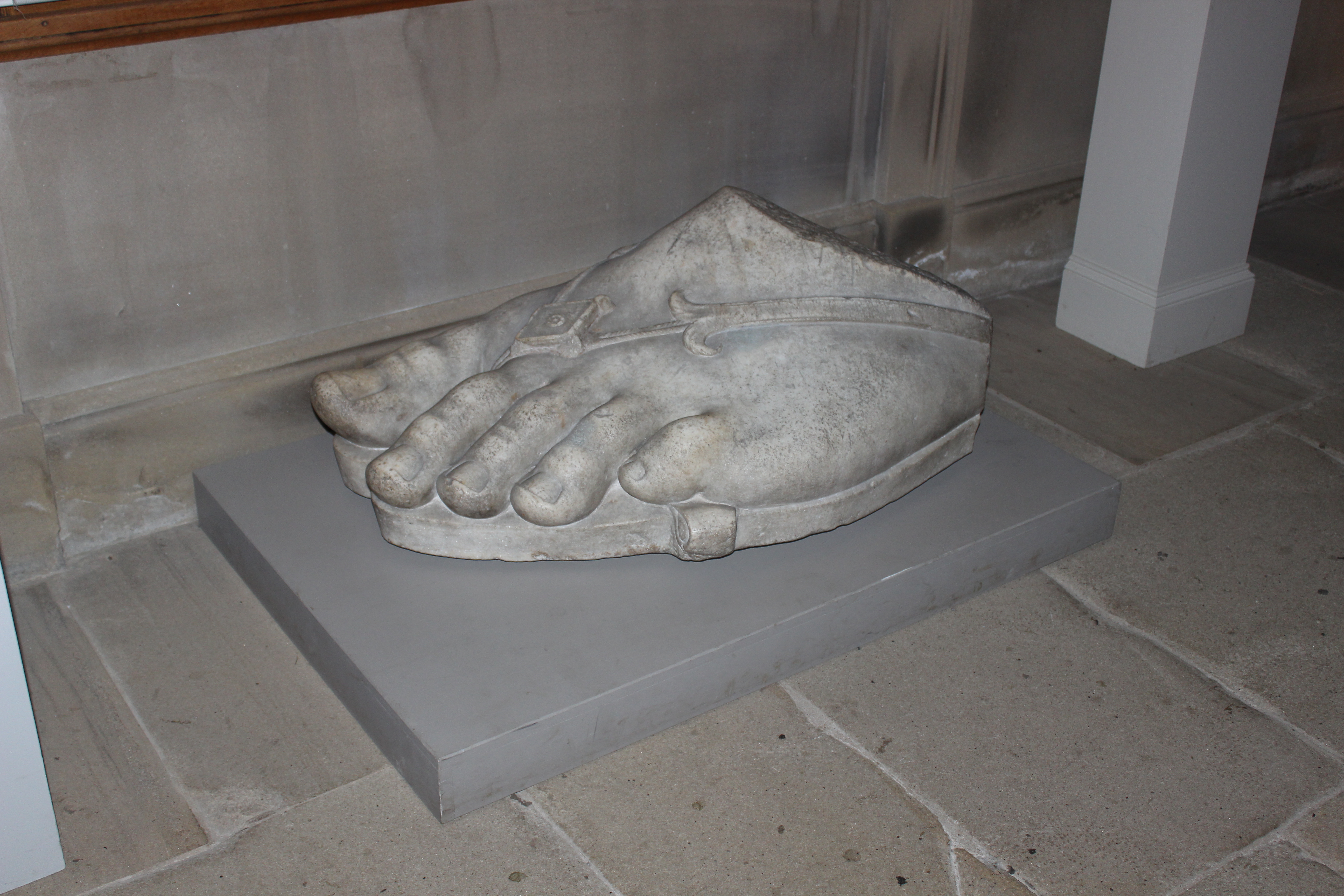
I’m not sure why I didn’t know about Dorothea Tanning. Her work is so striking and the range is extraordinary, painting, sculpting, stitching, use of doors in her work, installations. Hotel du Pavot Room 202 heavy with claustrophobia, a person climbing in and out of the walls, grabbing limbs and fingers – are they appearing or disappearing? “Behind the door Room 2” is fabulous. The foot strong against the wood of a piece of door built into the painting is really powerful. Is it her mother or father’s knee she is sat on? Is she kept in, trying to keep out or go in?

Her theatre sets are also intriguing. Doors, spaces, dark places. What’s going on behind? I might use some of these ideas for my photographs. It all resonates. She seems to be clear that she had a good family life but you would not think so from her work. Surrealism, psychoanalytical ideas talking? Her “By what love “, a sculpture a woman in chains (1970) tweed, wool, metal, chain and plush reminds me of Louise Bourgeois.

Jenny Holzer interests me because of the use of text in her work. I find the work on Truisms, and the Survival Series absorbing. Her late 1970’s question ” How do you cope – within and without – when all these views are present, sometimes clamoring, sometimes fighting, sometimes murderous?”, is so now. It could have been written for our current state of national and international madness. “BODIES LIE IN THE BRIGHT GRASS AND SOME ARE MURDERED AND SOME ARE PICNICKING” (1984?) has a visceral impact on me. Could she see ahead? Her collaboration with Pink Lady “If you expect fair play” strikes home – “I AM NOT FREE BECAUSE I CAN BE EXPLODED ANYTIME”.

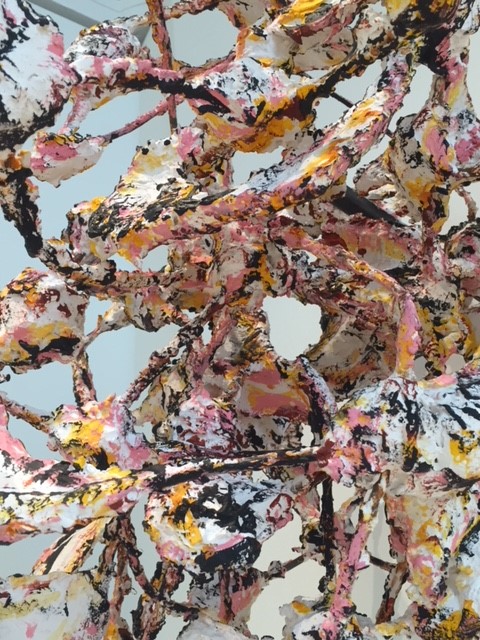
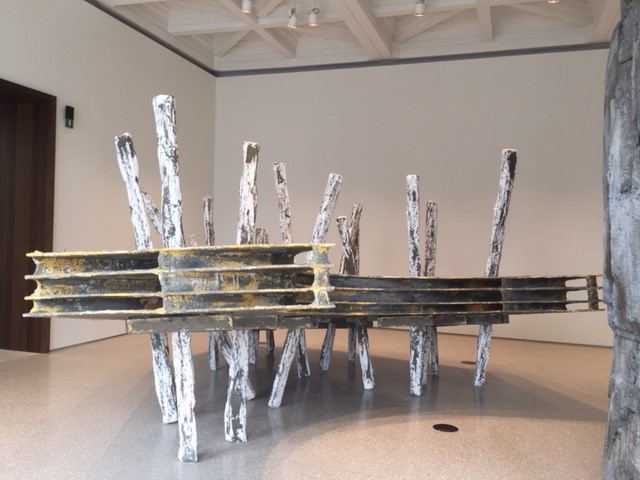
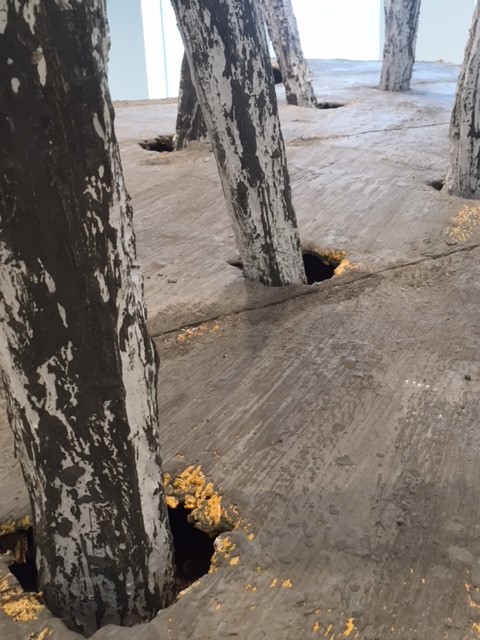
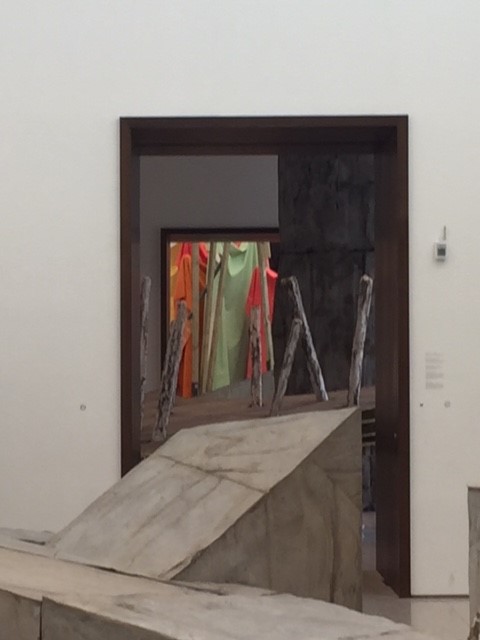
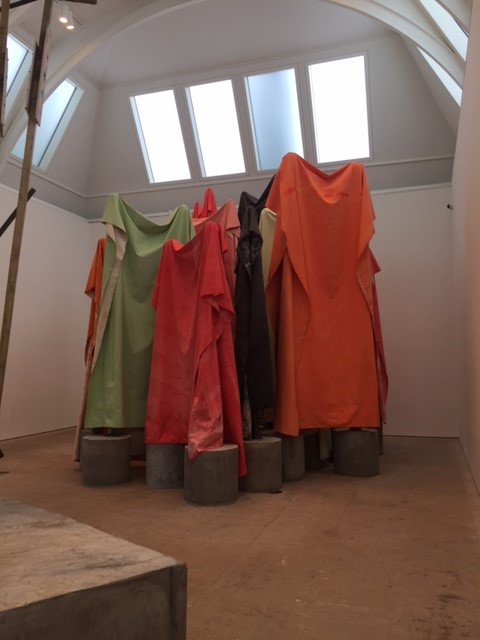
Phyllida Barlow at the RAA was my first stop here. “Cul De Sac”. I love her ability to turn everyday materials into monumental works. You don’t need a forge to create her work but
the materials, a lot of space, sometimes access to help and the vision of course. I love her work, first experienced at Margate Turner contemporary “Entangled Threads and Making ” 2017. Her work is made in a constructive and destructive way. It might not last. It might be as monumental as a huge bronze but it often has an impact that stays with you long after.

Makes you want to touch it and go into it!
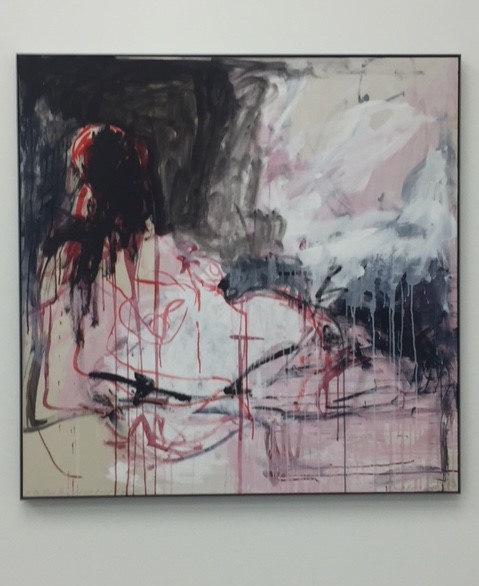
And finally my first visit to White Cube, Bermondsey. “A Fortnight of Tears” – Tracey Emin. I chose this exhibition because of its connection to my photographs and womanhood at least in aspects of subject and experience. The huge photographs – self portraits and her paintings have a visceral impact, you can see and feel the woman. No-one does this quite like Tracey Emin. I think men find her difficult, perhaps women do too. I overheard a man ask his female companion “Do you like this?” with incredulity. For me art isn’t necessarily something to desire to have your wall at home – it can best speak to you sometimes in a public space, in a setting big enough to allow it to be and you to respond. You can see it when you choose to look, that is if it is available.

In “The ashes” the film slowly circulates around the room and the focus is on the box containing the ashes of Tracey Emin’s mother. It is a strangely beautiful, sad, painful 3 mins 3 seconds.

The end of a really fabulous weekend!

Standing at the Sky’s Edge 21st March 2019

Richard Hawley and Chris Bush have done a great job. This musical captures much of Hyde Park Flats through the lives of three different sets of occupants from the first Sheffield council tenants to the modern day owner occupier and the developer Urban Splash. It includes different aspects of living in the streets in the sky, ideals about housing and homelessness, bikes on the balcony, love, crime, racism, bullying, education, milk deliveries, unemployment, aspirations, world affairs, the excitement of new life opportunities, how easily deterioration sets in, poverty and strife, needing more than a home to live well, the complexity of life and so on. All packed in to a very cleverly staged and well produced musical. Standing at the Sky’s Edge made me more determined to follow up my work based on my photographs. They have a poignancy worth exploring.

Exploring ideas

I’m thinking of memories and how we let them go not how we keep them. How do we hasten them on their way if we don’t want to keep them? How do we know if they are gone?

Exploring artists who have responded variously in someway to an aspect of loss, memories, the domestic, parents and relationships. I’m looking at David Hockney’s photo montages thinking of how to use my photos and the effect of movement he achieved. Also his paintings which are photographic and stripped of the sort of minute detail in my photos. Tracy Emin’s work including paintings, quilts, use of words and photographs, all so full of emotion. I am thinking that perhaps photographs can tell more of a story than is captured in a second. Diane Arbus is so skilled at making pictures which capture more than a moment in time, they at least make you ask “What ‘s the story? or, “What’s next?” Another photographer, Jonathan Donavan has undertaken a project “No place like home” in which he photographs a wide range of homes from extreme poverty to the luxurious, but all seem rather set up. I’m not sure what they are for other than to show the distance between rich and poor but perhaps that’s enough.

Louise Bourgoise’s work throughout her life explores significant relationships and she seems to have been searching for an answer to something in her drawing, sewing, sculpting, stuffing and so on. I guess she didn’t find it? Something for me to think about? Yoselof Tamar, particularly his sculptures related to the life of Emily Dickinson, suggest holding on to memories, actual things and keeping them safe for the future.

Matisse was suggested to me as an artist painter to explore with regard to interiors. His domestic still lives were clearly staged unlike my photographs. I am not sure they help me to decide on what I will do though the composition and colours are wonderful. They remind me of the madness of my parent’s kitchen with the broken tile mosaics, green and yellow paintwork all of which has its own story. Holly Farrell paints colourful domestic scenes and objects. They are lovely and slightly ephemeral. She simplifies compositions and draws the viewer in. I must take colour and composition into account when choosing which photographs to use.

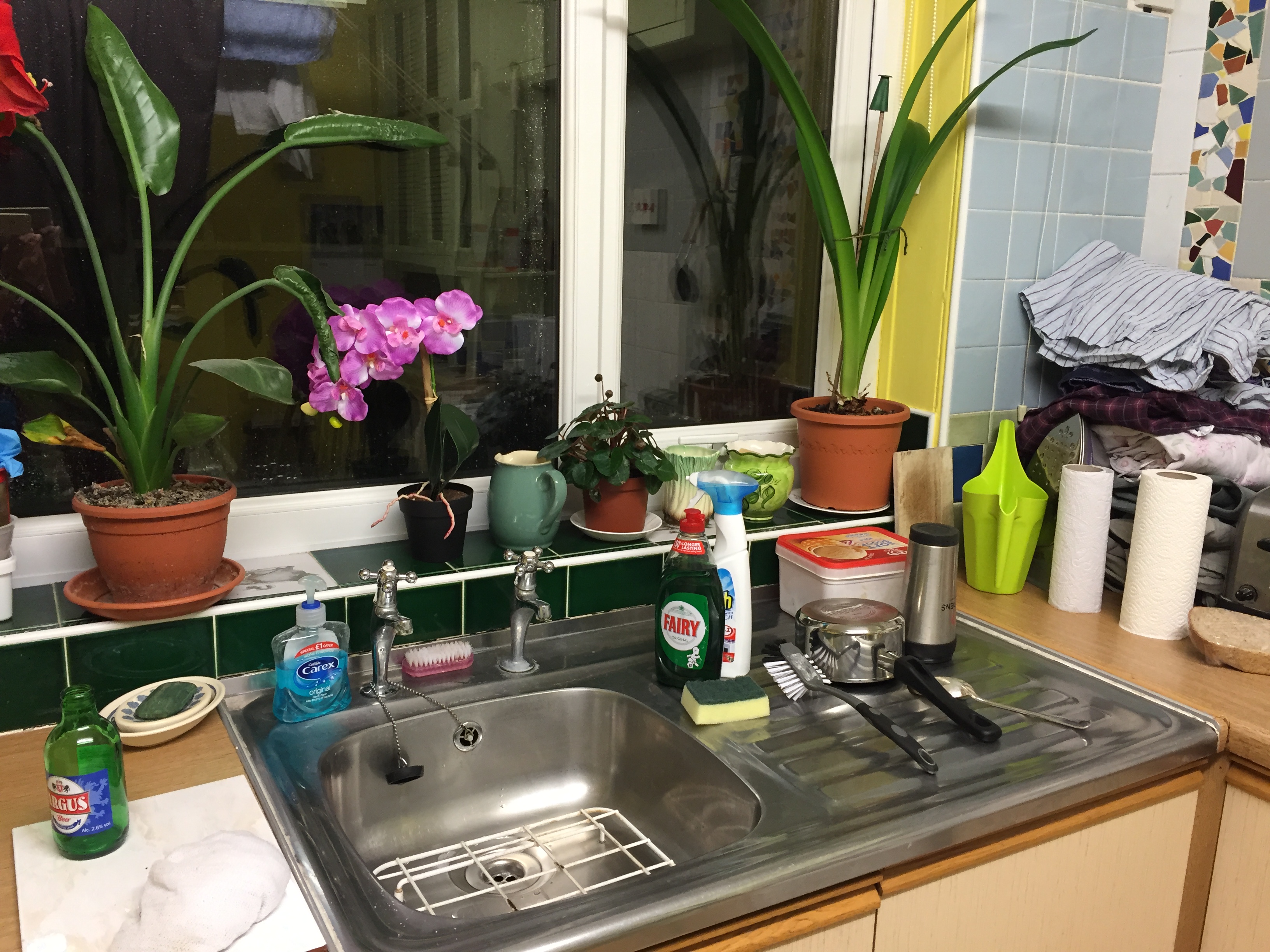
The colourful hot drinks corner with electric kettle, the Yorkshire Tea caddy, loose tea and instant coffee. The knife sharpening steels hanging down, the rope from the Sheila-maid where the clothes were hung to dry on wet days. The edge of the built in kitchen cupboard to the left and the slice ready for use in the frying pan. This is a really satisfactory photograph which was simply there all ready for me to snap on my iphone.

Photographs

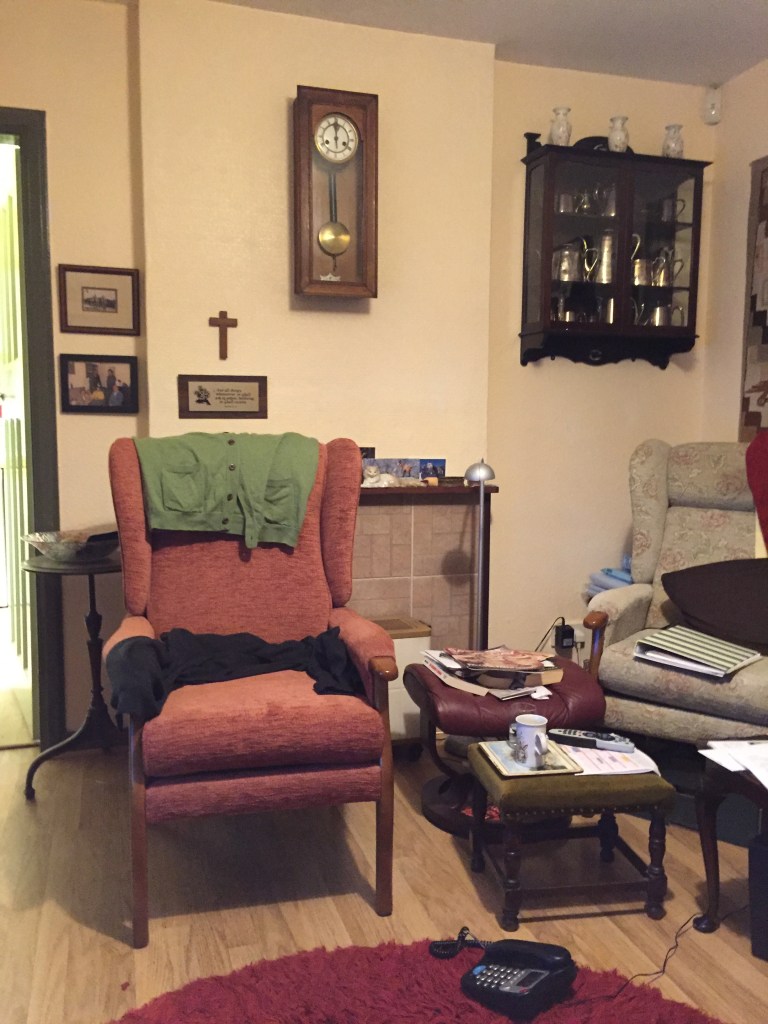
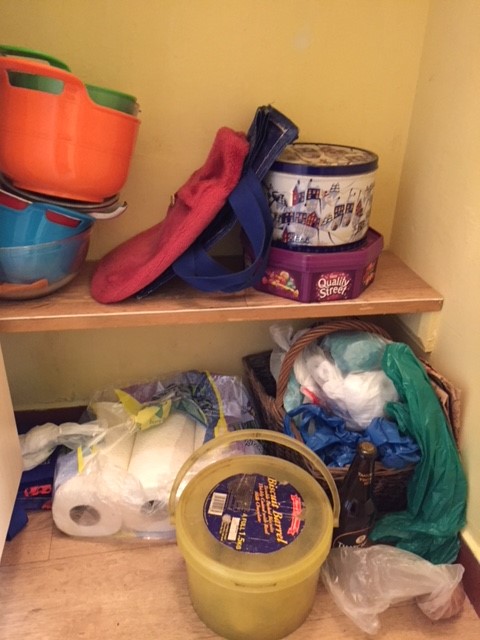
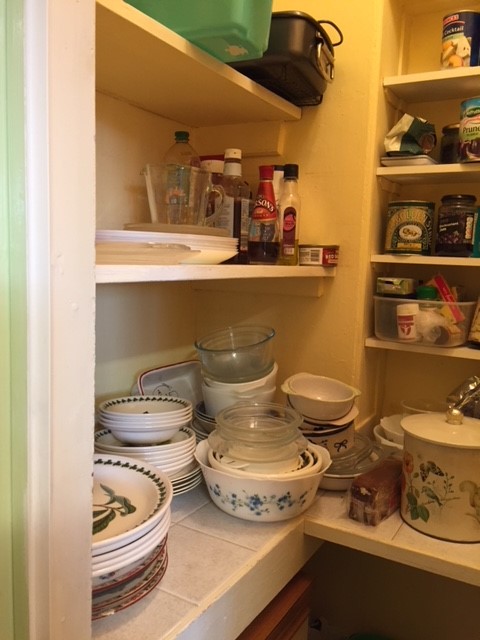
I had taken photographs of my parent’s home at the end of their lives. It was clear that they were not going remain for very long and whilst I was alone in their empty rooms, I was motivated to take an enormous amount of pictures. My father died first whilst my mother was in hospital and mum never returned home to live. She moved into a care home near to me in Sheffield. In retrospect, when taking photographs I think I was trying to capture an understanding of my mother that I had never had and couldn’t ask about. When she was widowed it was too late to ask questions as her dementia was too advanced. It was impossible to ask or talk in depth when my father was alive. The house was packed with stuff, sometimes grubby and the aroma could be heady. Minimal help had been reluctantly allowed. The photographs are a historical and personal record of a short period in time in the home of two people who had lived together in a very complex, often difficult relationship for more than 65 years.

I wanted to use the photographs as the primary source of material for my final piece. A completely different departure for me, away from stitching and painting etc. When the photos were taken I thought I’d use them in someway in the future but had not envisaged doing an Art Foundation Course at the time. I had moved from room to room and inside and out gathering stuff of their lives. It was like harvesting but for what purpose?

The photographs are intriguing and full of detail. They are personal, private I guess and not staged. My only interference might have been to open a cupboard door, move an object that might be completely masking a view. I had already cleaned the sink before I ever thought of taking photographs. Other than my mother in nursing uniform I have decided not to use photographs with people in them. There is no harm to be done by sharing the house photographs now but I do need to think about how I will choose particular photographs. Why one and not another?

My child could have done that!

I’m reading Why Your Five Year Old Could Not Have Done That – Modern Art Explained by Susie Hodge. It is a great book. Small but perfectly formed. It does help to answer, more effectively, a lot of disparaging comments I’ve heard many times especially at modern art exhibitions.

Here is an example by Susie Hodge who explains using Reading by Pablo Picasso 1932, a painting of Marie-Therese Walter in which he is expressing his love for her.

Susie Hodge explains –
His intention was “for it to appear innocent and childlike, but he also incorporated several complex and advanced ideas that a child could not have conceived, such as painting from several angles at once and mixing diverse ideas” and I add including in the face, two faces, that of Marie-Therese and Picasso himself kissing her. It is on first glance
childlike but on closer inspection stunning.

Picasso also reputedly said “It took me four years to paint like Raphael, but a lifetime to paint like a child.


Only four years to go then!

My week

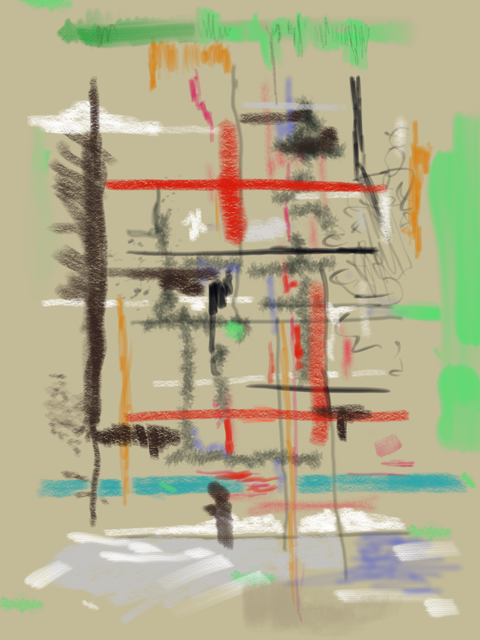
Really interesting afternoon with an introduction to drawing on ipad. I’ll have difficulty remembering processes but I do like it, surprisingly!

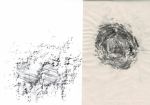
On the right a drawing of Jo concentrating on using her ipad and to the left an interpretation of the marks left over the years on a drawing board. Great for experimenting with layers, planning work and drawing when travelling. Needs lots of time for experimentation and practice.

Onora O’Neil (Philosopher) interviewed by Todd Gillespie in the FT (16.03.19). “I fear for democracy (in the light of the interface of social media in democratic processes) we now have to reckon that any election is being subverted before it begins”. “David Cameron will go down as one of the most catastrophic Prime Ministers in our history”. On the referendum “…a simple majority with an opaque question was irresponsible”. Need to know more about this woman.

Redback rocks – 16th March 2019

Always good to play a birthday party. Exhausting but everyone comes for fun! From the left

Phil (keyboards) Tony (guitar) Tony (vocals) John (drums) Wilma (vocals) Me (vocals) Dave (bass guitar) Andy (guitar and Mike (sax).

Goneness

Now working on the final piece. This is going to be challenging and self driven. No brief. Decisions about how to proceed and what to create are left to the individual. Looking forward to this!

I have three things in mind at this point.

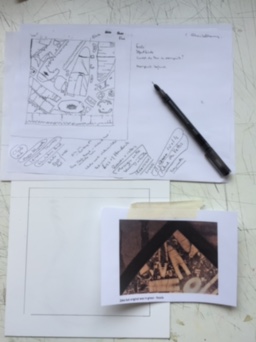
Firstly, to search for meaning in memories and loss as I have done so in a broad sense throughout the course. Secondly, in life some of us can’t ask the questions we want to and then it’s too late. After a death you can only search for answers in what a person leaves behind. IMG_1369Thirdly, whether when people you are close to die, can memories of emotional experiences (positive or not) recede sufficiently to and leave you with a quiet mind? Can they be gone?
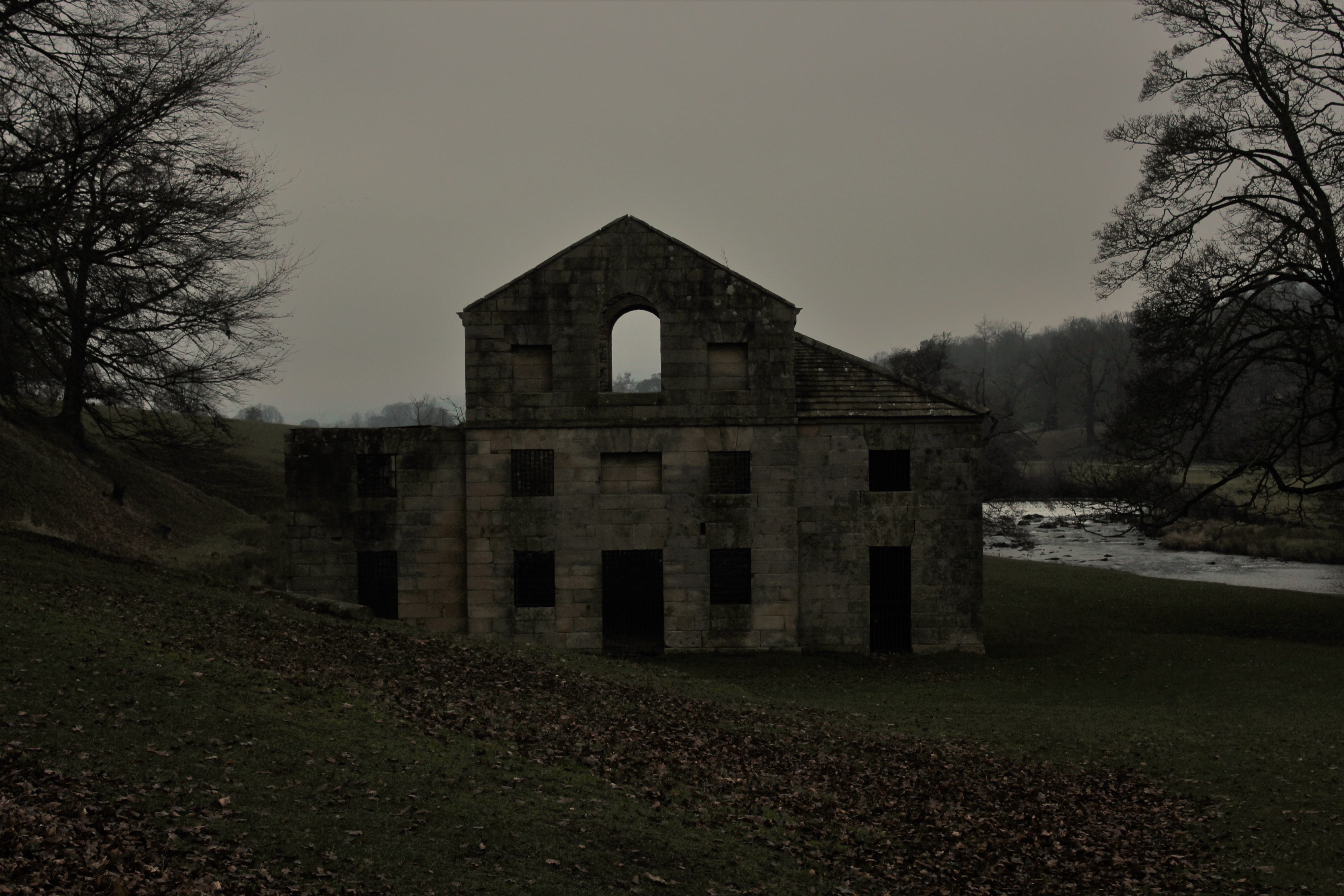
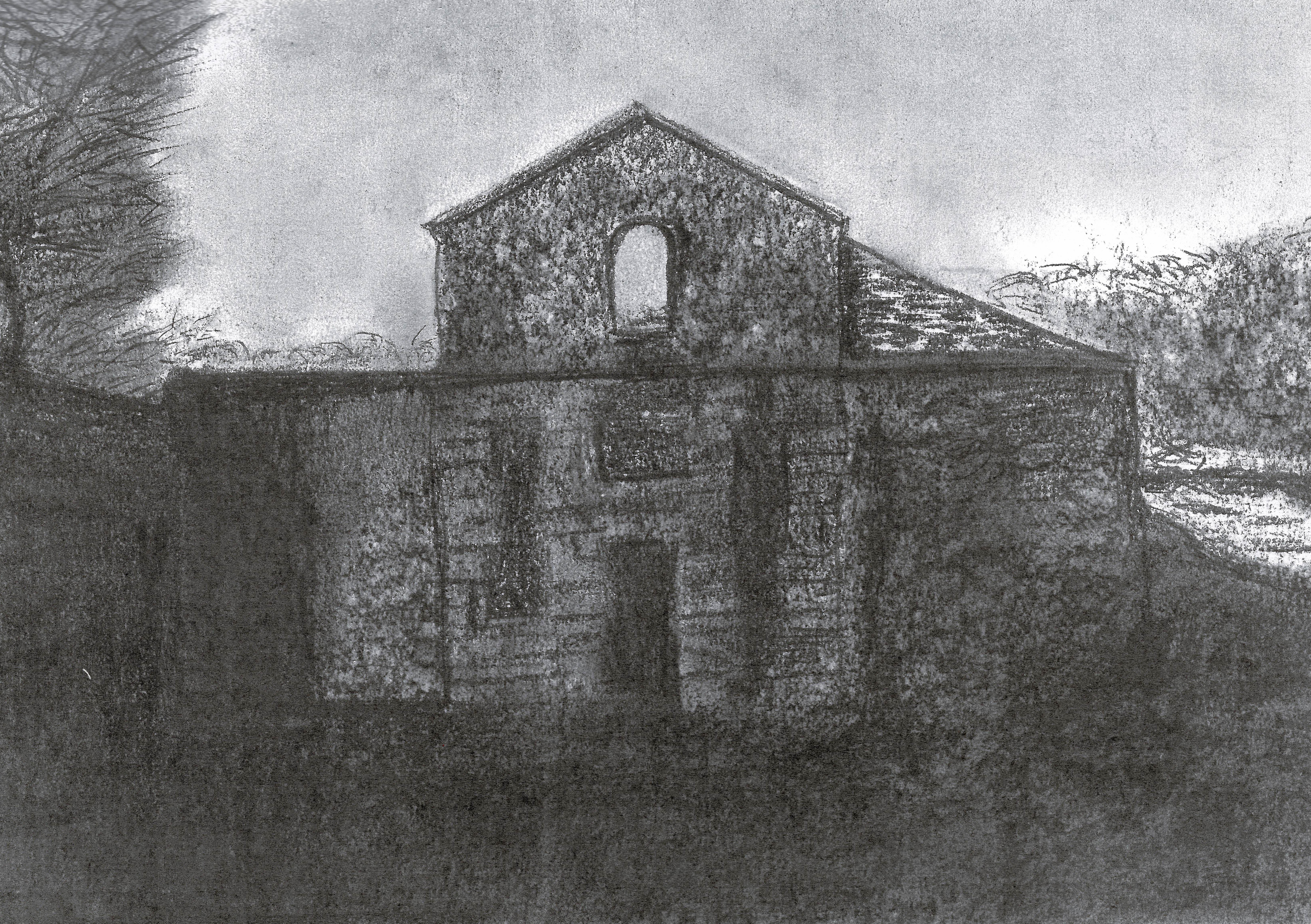
I couldn’t find a word to describe what I was exploring so I thought I had conjured up a new word “goneness”. But I see from the WWW that it is a word from the mid 19th century. It means the quality or fact of having gone. I was searching for a word that described something ephemeral, something in-between being here and having gone. Still goneness”  will serve my purpose for now.

Is it possible to find answers from the debris of life?

House 2

February was a cold month. Visits to Paine’s Mill at Chatsworth in particular were cold and wet. I was drawn back to the mill frequently. Something to do with the marks left by people over time, the light on the building according to the time of day and the impact of the weather and storms over time and at the times of my visits.

IMG_4194 (3)

Paine's mill for blog

Charcoal and graphite drawing started on site but it got too cold.

Lino

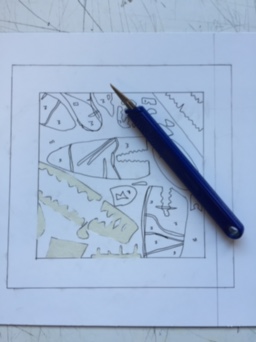
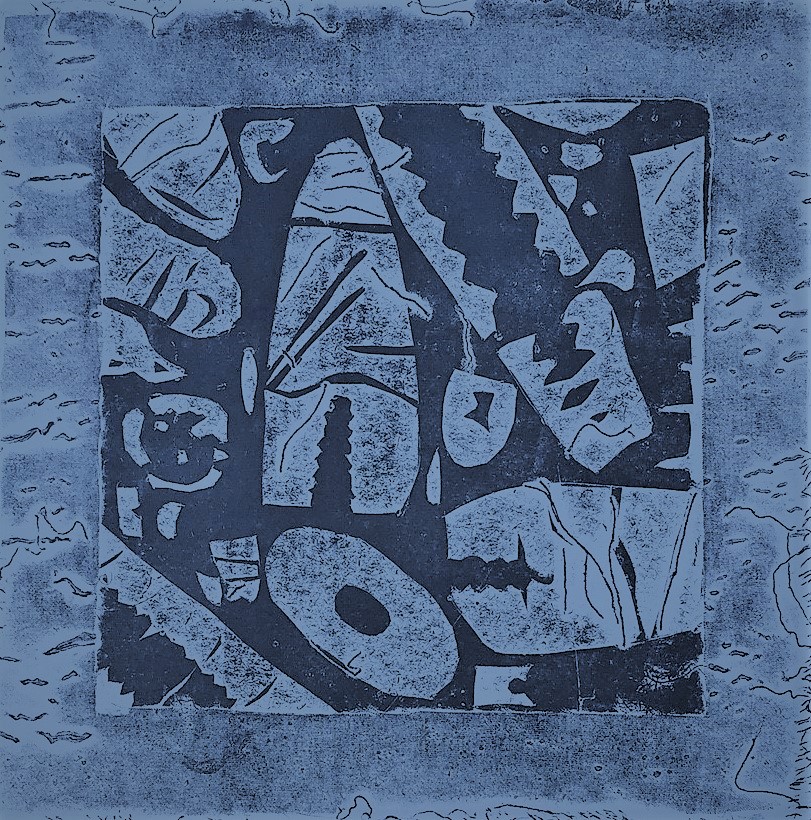
Experimenting with lino cut above

IMG_6150

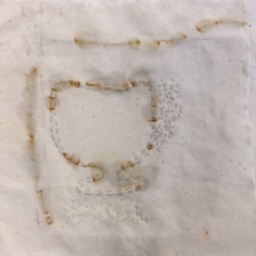
Experimenting with stitch on calico and felt above

Researching the 12 Dukes and the millers. There is so much to learn about the Dukes. So much documented history of their influence on the local economy, the landscape and many aspects of the British way of life. Politics played a major part in securing their position throughout generations. Clever moves and shifts to maintain allegiances with the monarchy whatever their religious or political persuasion. The millers don’t share this historical archive. My enquiries show that they are barely recorded even though their role in feeding the estate’s people and cattle was, I expect great. I decided to meld the Dukes and Millers together in my final piece through stitches and cloth in the hope that sometime soon the archivists will look beyond the House and find out who the millers were, what they were called, where they lived with their families and why they are so particularly left out of the records when others of similar standing are so visible.

embroidery Paine's mill _000125

I have continued my experiments with stitching. I like the idea of representing succession, repetition, over and over again, some disruption but as long as there’s a man in the family all will continue along the male line but each time it will be different. The Dukes were all individuals as of course were the unknown millers but I can’t stitch them as there is little to know. I ma relying on the solidity and strength of the millers wheel and the circular mark on the left by the mill door. I fancy a bell there to ring the miller to warn of visitors so they can enter safely. I might be wrong.

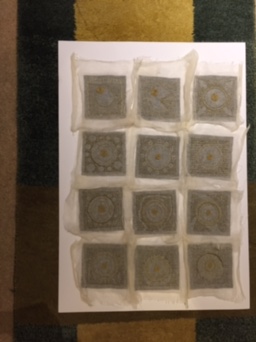
I envisage twelve stitched squares for each Duke and Miller. The 12th Duke lives on of course so how I will end the piece is open at this stage.

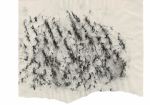
Rubbings from the mill inspire stitches.

What to do with the Chatsworth colours – especially the blue

Chatsworth blue seems important to the marketing strategy. But it is an impossible task I think. Even though the colour is what it says on the tin there are so many variations from the past to re-cover. My experiments with a paint sample show that the colour alters according to the number of coats so unless it has the full amount of coats the blue alters as it does also over time, given the light and weather and so on. My view is that there is too much Chatsworth Blue! It is starting to make the place look too corporate and without soul. I will use the blue sparingly in my work.

Fun experimenting with colour

Visit to Sheffield Millennium Gallery. Leonardo Da Vinci drawings are being shown all over Britain and we have a selection showing here in Sheffield. They are gorgeous together with his timeline, the explanation of materials and his interests in everything in the world, the human body, anatomy, water, sculpture design and so on. A wonderful intellectual force of a man.  These photos show an accompanying exhibition along the corridor. I hope its OK to put these here. A connection to Leonardo’s explorations of the movement of water and blood and the interruptions met on the way. Fabulously and mesmerisingly done. Check this out.

               The vehicle of nature by Universal Everything. An immersive installation by this digital art and design collective.

Millenium Gallery Sheffield


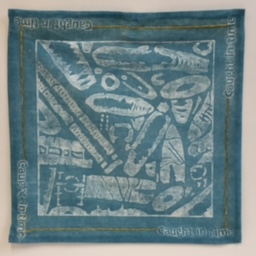
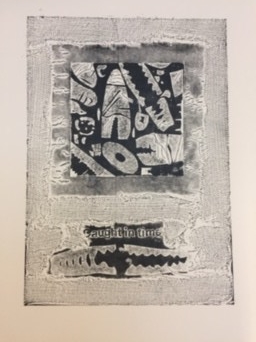
Alongside the Dukes and Millers I have decided to make two handkerchiefs since all classes needed something to wipe their nose on if they had a sniffle, especially when snuff became popular. Through my research into handkerchiefs I discovered that Lady Georgiana Spencer and Queen Marie Antoinette were friends. Story has it that Queen Marie  complained to King Louis one day (oh how bored and spoiled he and she must have been) that her handkerchiefs were not consistently the right size for her. So, the dutiful husband decreed that handkerchiefs should be nine and a half inches and ten and a half inches square. Thus the size of handkerchiefs was set for the rest of the world! Men of course have a bigger nose! The fossil print from earlier would be good for this. I developed it for the Duke and also a plain cloth handkerchief for the miller.

Preparing my collagraph printing block for the Duke’s handkerchief

The fossils are based on a table top I saw in Chatsworth House and local fossil limestone such as that found at the “Once a week”  quarry on Chatsworth Estate. They date back 365 million years to the carboniferous period.

“Caught in time” – I like that – it works on several levels.

Spent time off from sewing Dukes and Millers and went to look for a selection of fabrics to print the handkerchiefs on. I included old bolster pillow fabric, old cotton pillowcases, cotton lawn, linen old and new. In the end I chose new cotton lawn for its softness and acceptance of the printing ink. Though if the current Duke was to test it out he’d get a blue nose! The ink is as close to Chatsworth blue as possible.

The Dukes

IMG_6366

I turned the edge with a tiny stitch and gave the Duke some bling to match his house with gold thread couched into place. I like it. Definitely catches the moment. Is it catching a sneeze, a response to snuff, a tear, a lost era, a fossil of time…

The Miller

What of the Miller’s handkerchief – if he had one other than his sleeve. I decided on calico left over from making aprons or pillows or rough clothing. I didn’t finish the edges but I did give the miller 12 pieces of gold thread, one for each Duke, one for each month of the year, each representing golden corn growing on the estate.

IMG_6328

 The Dukes and the Millers emerging at my workspace

Each square was planned to represent aspects of life on or off the estate relating to the Dukes’ activities. There is little information about the millers and after looking at other local mills such as Cauldwell’s Mill at Rowsley,  I decided to focus on Paine’s Mill as much as it was a working mill over the centuries and as it gradually became dilapidated and regarded as a folly as it is today in contrast with the Golden House overlooking it. The view point and working mill planned by capability Brown and Paine is reduced to looking quaint.

Hours of stitching brought me nearer to the history of the place. I used wool felt, fine scrim, embroidery threads and worked each design according to the story of the place.

IMG_6356

Earlier marks found on the mill inspired collage and painting and now stitching.Taken in haste this photograph is difficult to see however each square tells a different story culminating in the ruin of the mill and its gradual absorption back into the Derbyshire lands unless it is given a new life.

IMG_6362IMG_6361

Here the Dukes and Millers rest in two books,  1 – 6 and 7 – 12. The current and 12th Duke is Peregrine Andrew Morney Cavendish (DOB 27th April 1944). His father was Andrew Cavendish, 11th Duke of Devonshire and mother was Deborah Mitford. Andrew Cavendish died 3rd May 2004. The estate is said to be worth around £800m. I have left a golden thread hanging for him in the second book and as a nod to future Dukes, or Duchesses, should a woman succeed in the future or to the nation should it ever inherit the estate. The last miller was Mr Wilfred Johnson (up to 1950) and previous to that George Hogkin (his initials are believed to be inscribed on the building). Other millers, back through the centuries to the medieval mill are lost in the archives if they were ever there.

IMG_6184

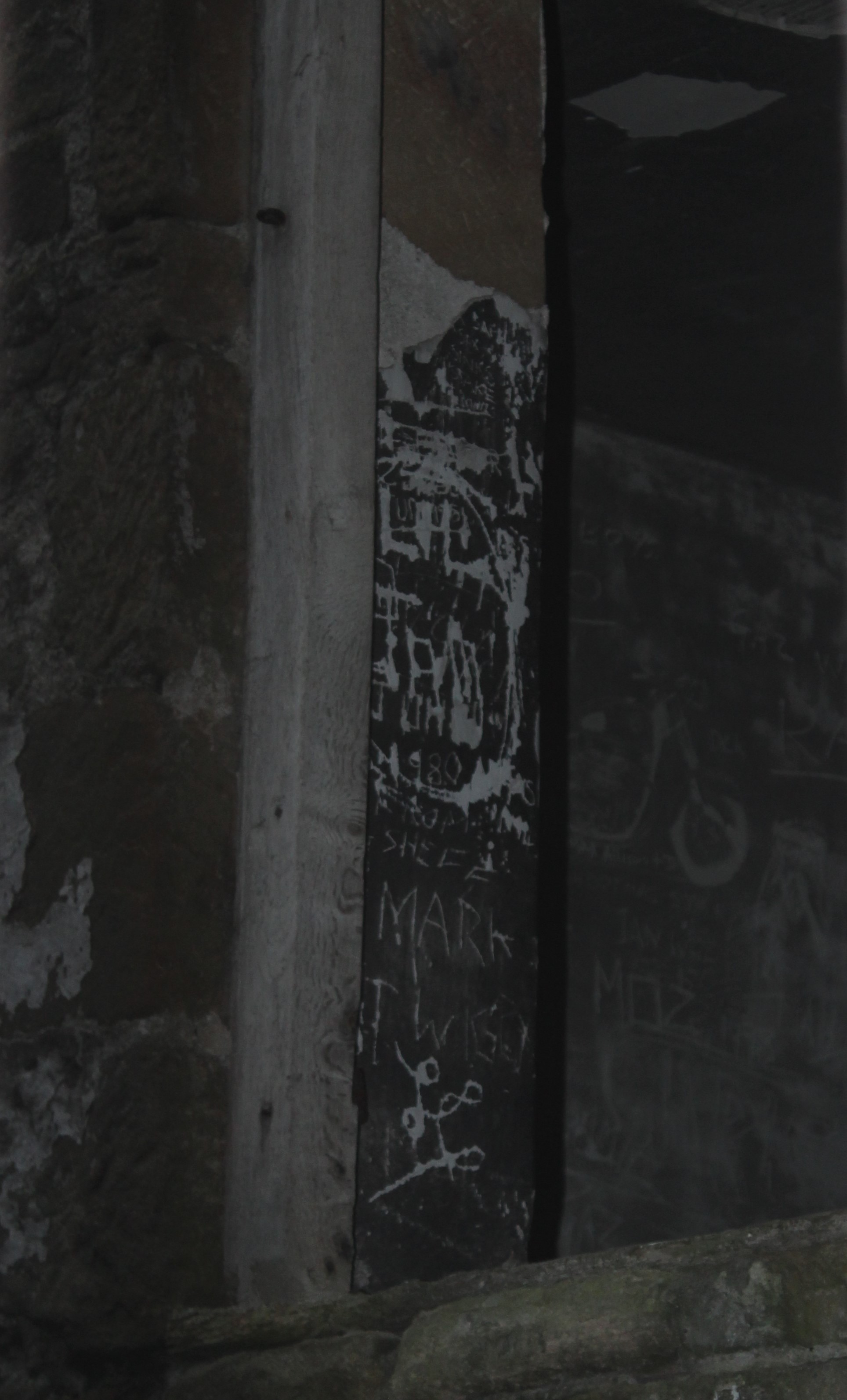
A new lease of life might spoil something good. Pity if it means losing the graffiti old and modern which gives it a bit of an edge! I wonder what went on up there in the loft?

IMG_4214 (2)

Who were Mark and Twiggy, who owned the bike and what were they up to in 1980?


“House”

                                                       Like fossils the “House” and its contents are caught in time. 
Enormous investments have been made to realise the Master Plan. Chatsworth House shines like a golden jewel when the sun is out. Set this against the ruins of Paine’s Mill, on the south of the estate and a certain jarring occurs.  The mill has become a neglected folly instead of the “eye catcher” it was supposed to be. No bling for the millers or celebration of Paine’s and I guess Capability Brown’s  idea that a mill could also be beautiful as well as utilitarian. Some visitors, I discovered,  don’t recognise its function. I asked myself why more millers, who worked at Chatsworth’s  mills for over 400 years, were not recorded in the archives (this is as far as is known, their names could be hidden in there)  given the important function of a corn mill for the estate and the House. I expect the flour was gritty and grey from the millstone grit.  The millers seem to have left their marks (initials and dates) in the stone of the mill, but are largely forgotten. The House, Bess of Hardwick, the Earls and the Twelve Dukes are in contrast so very visible and celebrated.  Why is the mill and its heritage so neglected? It seems to be a sign of the times. Extreme wealth on one hand and on the other the neglect of those who have the least.  It is time for a change, but the focus on the EU will prevent it, it is a distraction, we need to look closer to home.

IMG_6130IMG_6140IMG_6132                                                                                                              Collagraph 1

IMG_4053 (4)                                                                                                              

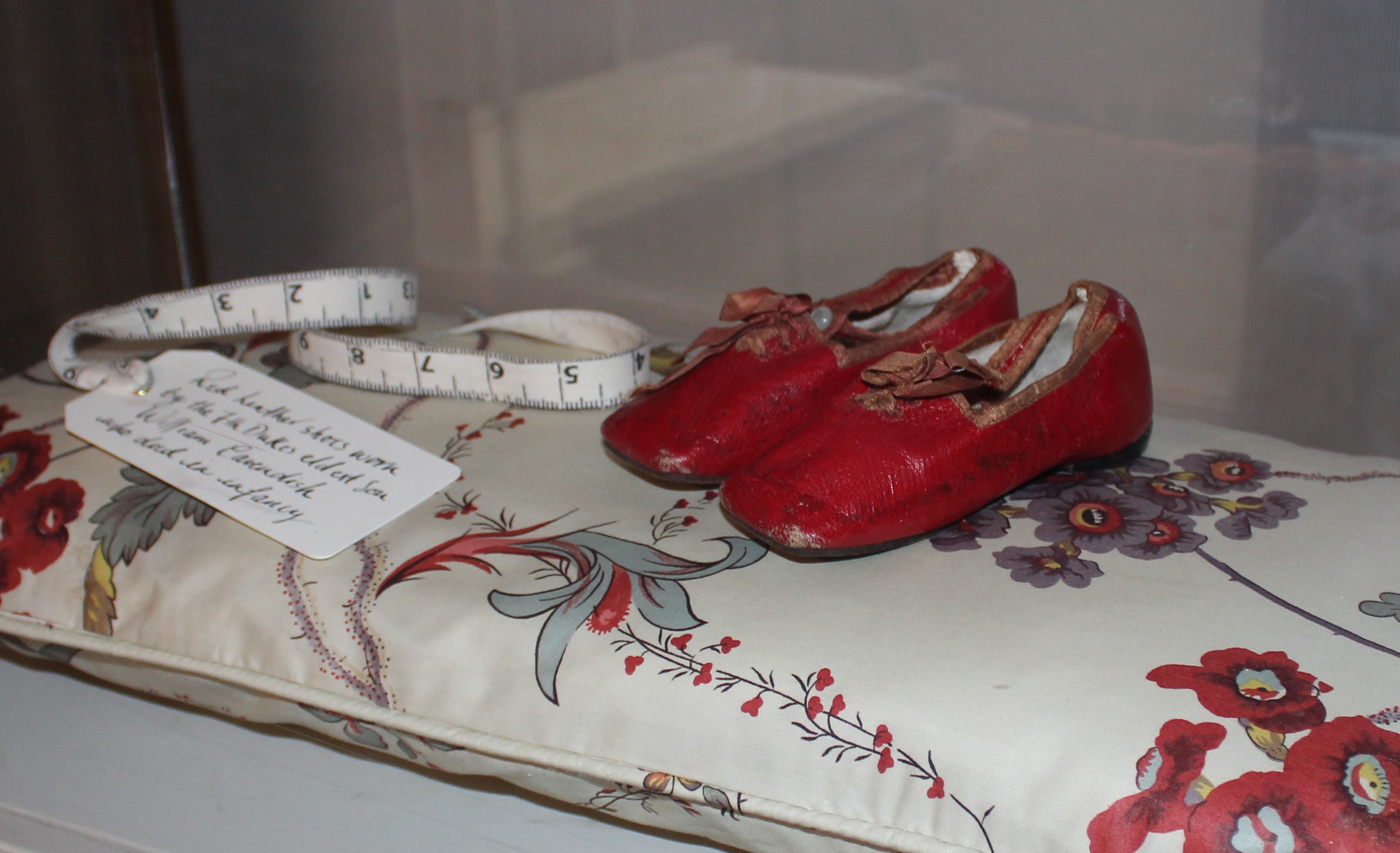
Shoes hold a lot of history.

Shifted from the house to the mill. So little to find out in the archives but the mill itself reveals a long history, some of the millers left their mark in initials, names and dates but most are forgotten.

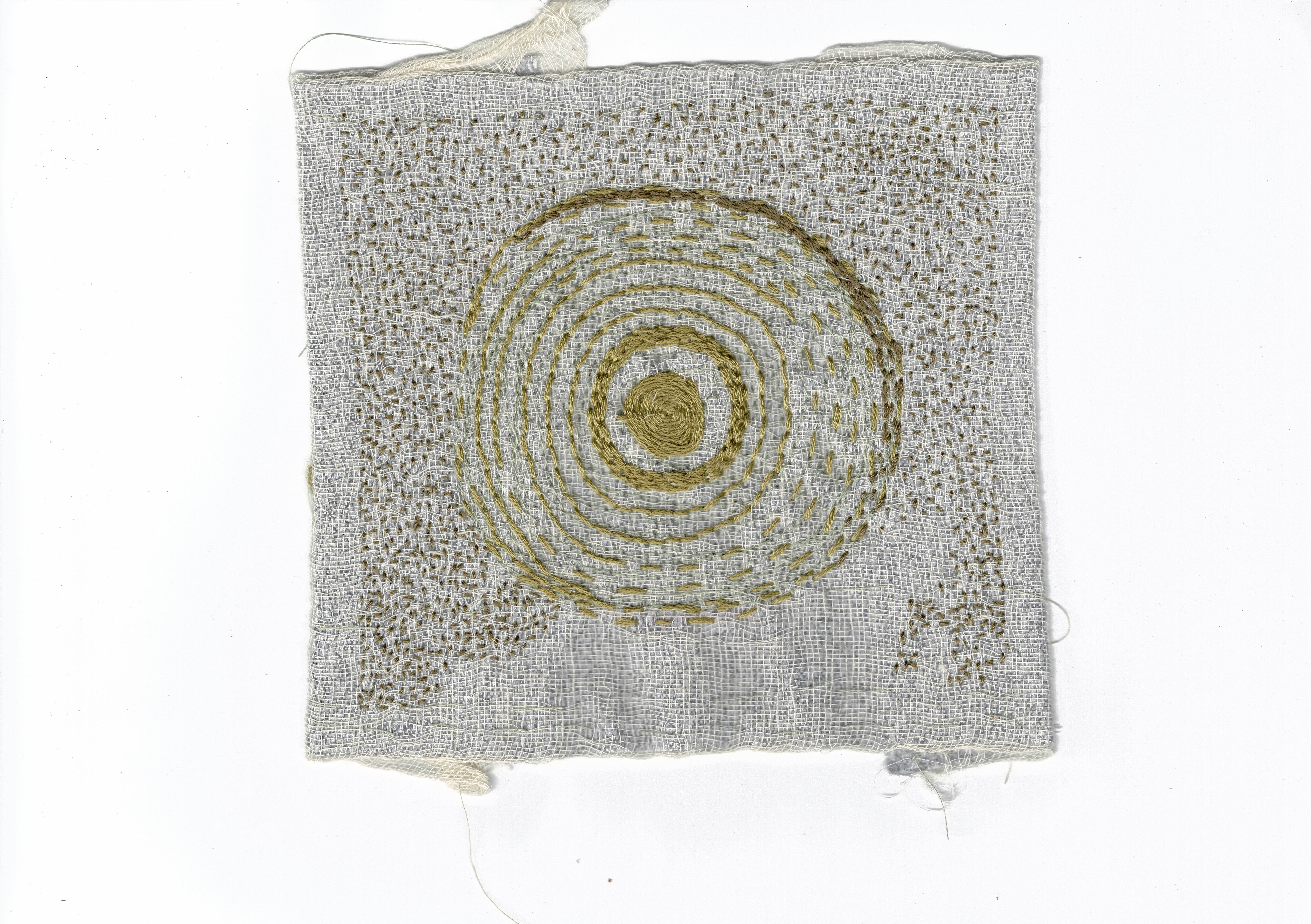
My interest in the marks people leave behind them grew. I decided to focus on this round mark left by the front door of the mill. What had been there and was it filled in with something? What gives it its colour? I am told it is metal but I’m still not sure. Stitching and fabrics lend themselves to the textures of the stone. Grey curtain fabric with texture covered in scrim, tacked into place and embroidery to begin building up the shape.

Visit to the Hepworth, Wakefield. So much to see but I’ll pick one artist out. Love Michael Dean’s work.

Then on to Alice Fox at SNAPArts, Wakefeld. I love her work. It is lovingly done and often so creative with the discarded stuff of life (vegetable, mineral or people made) rejuvenated. IMG_6100

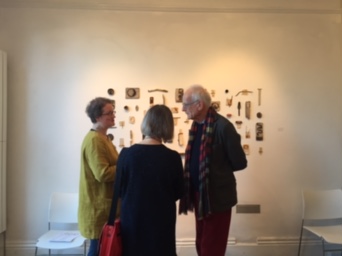
Here she is in the gallery happy to explain her work, contribute ideas and share methods. She often uses rust to bring out the qualities of collected metal items such as bottle tops. In one piece she holds bottle tops in place by lots of tiny stitches. Underneath them are photos of my attempts to try her method of using rust, objects, fabric and stitch chemical reaction, to draw with.

IMG_6166Next post back to the mill!